
- Joined
- 27 Jan 2008
- Messages
- 29,811
- Reaction score
- 3,696
- Location
- Llanfair Caereinion, Nr Welshpool
- Country

We have seen attempts at a steam turbine powered railway engine fail, and hydrogen fuel cells need very pure hydrogen, be it to heat our home, or for transport, it seems the answer lies in multi-fuel.
However, how ever much this seems the way to go, this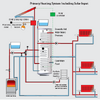 idea costs a fortune to install, so be it a steam generator in a railway engine driving the wheels with electric motors, or a hybrid car with petrol and electric, multi-fuel has its cost drawback.
We where I volunteer have a problem, this summer steam trains could not run due to fire risk, and I know some heritage railways are looking at oil fired steam engines.
But we have ways to store energy now which are transforming what we can do, be it hydrogen, or electric batteries, pumping water up the hill side to use latter, or using low power generators combined with batteries, so the generator runs more efficiently.
This youtube video
started to make me think, is there any need to convert steam to electric to drive the wheels, or can it be used directly?
We it seems have seen trains stop due to lack of hydrogen, and damaged fuel cells, but multi-fuel is not easy either, a heritage train converted to run on waste oil, only runs on waste oil, can't mix coal and oil, and even coal, it seems Welsh steam coal did not produce the sparks we get from Polish coal, so we would need USA style smoke stacks, we where I volunteer maybe, we have no bridges or tunnels so height is not a problem, but most those in Wales do have some structure they go under, and whole reason for steam is to look heritage even if there is a petrol compressor hidden to work air brakes, we can't see it.
South Africa and USA used a lot of oil fired steam engines, when you look at the size of some, it is clear no one person could have shovelled enough coal or wood.
Even domestic hot water, using PV solar panels and an immersion heater works better to using sun to heat water directly, losses on a pair of electric cables are far less to water pipes.
But the idea often does not work, I know in Algeria in the 1980's I lived in a portacabin with the box type AC, which also could heat as well as cool the cabin, some used to reverse the coolant flow, and work as a heat pump, but most had simple elements for heating, as when used to heat, the units would freeze up.
At below freezing the air has very little moisture in it, but between zero and 16ºC it can have a load of moisture which can freeze, even on the cooling cycle, at 120ºF we would find not working due to ice build up. To reverse every so often to remove ice, is clearly reducing efficiency.
Anyway, aim it to get people thinking about multi-fuel, and if it can realistic be used?
However, how ever much this seems the way to go, this
idea costs a fortune to install, so be it a steam generator in a railway engine driving the wheels with electric motors, or a hybrid car with petrol and electric, multi-fuel has its cost drawback.We where I volunteer have a problem, this summer steam trains could not run due to fire risk, and I know some heritage railways are looking at oil fired steam engines.
But we have ways to store energy now which are transforming what we can do, be it hydrogen, or electric batteries, pumping water up the hill side to use latter, or using low power generators combined with batteries, so the generator runs more efficiently.
This youtube video
We it seems have seen trains stop due to lack of hydrogen, and damaged fuel cells, but multi-fuel is not easy either, a heritage train converted to run on waste oil, only runs on waste oil, can't mix coal and oil, and even coal, it seems Welsh steam coal did not produce the sparks we get from Polish coal, so we would need USA style smoke stacks,
we where I volunteer maybe, we have no bridges or tunnels so height is not a problem, but most those in Wales do have some structure they go under, and whole reason for steam is to look heritage even if there is a petrol compressor hidden to work air brakes, we can't see it.South Africa and USA used a lot of oil fired steam engines, when you look at the size of some, it is clear no one person could have shovelled enough coal or wood.
Even domestic hot water, using PV solar panels and an immersion heater works better to using sun to heat water directly, losses on a pair of electric cables are far less to water pipes.
But the idea often does not work, I know in Algeria in the 1980's I lived in a portacabin with the box type AC, which also could heat as well as cool the cabin, some used to reverse the coolant flow, and work as a heat pump, but most had simple elements for heating, as when used to heat, the units would freeze up.
At below freezing the air has very little moisture in it, but between zero and 16ºC it can have a load of moisture which can freeze, even on the cooling cycle, at 120ºF we would find not working due to ice build up. To reverse every so often to remove ice, is clearly reducing efficiency.
Anyway, aim it to get people thinking about multi-fuel, and if it can realistic be used?