
- Joined
- 17 Sep 2025
- Messages
- 1,868
- Reaction score
- 83
- Country

You (and most other people) won't detect a difference for two reasons:No idea i voted remain, but people who voted leave will say that we didn't get the Brexit that they were promised, even though i voted to stay, iv'e not noticed any change to be honest, contrary to the popular belief on here from some doom mongers, ie the great tomato famine and massive queues at Passport control.
1. Any difference will be a slow progression, like a snail crossing a motorway. It's indiscernible, but it happens.
2. None of us, as an individual, are capable of making a 'what' if' comparison. Even experienced and talented economists would struggle to make an authoritative study alone. Although I suspect some on here are capable of leading a team of experts to produce a worthwhile report.
There may be other reasons, such as it being difficult to identify and separate other economic factors.
Fortunately some teams of experts have produced such reports. Here's one of them:
The average Briton was nearly £2,000 worse off in 2023, while the average Londoner was nearly £3,400 worse off last year as a result of Brexit, the report reveals.* It also calculates that there are nearly two million fewer jobs overall in the UK due to Brexit – with almost 300,000 fewer jobs in the capital alone.
New report reveals UK economy is almost £140billion smaller because of Brexit
Mayor reveals London’s economy alone has shrunk by more than £30billion
 www.london.gov.uk
Here's another:
Trade
But the working assumption of the Office for Budget Responsibility (OBR), the government's independent official forecaster, is still that Brexit in the long-term will reduce exports and imports of goods and services by 15% relative to otherwise. It has held this view since 2016, including under the previous Government.
Immigration
There has been a big fall in EU immigration and EU net migration (immigration minus emigration) since the referendum and this accelerated after 2020 due to the end of freedom of movement.
But there have been large increases in net migration from the rest of the world since 2020.
Travel
It (the introduction of the EES) will replace the manual stamping of passports. The impact of this is unclear, but some in the travel sector have expressed fears it could potentially add to border queues as people leave the UK.
Law
According to the latest government count there were 6,901 individual pieces of retained EU law covering things like working time, equal pay, food labelling and environmental standards.
...
In May 2023 ... only 600 EU laws would be axed by the end of 2023, with another 500 financial services laws set to disappear later.
....
All other EU legislation was kept, though ministers reserved powers to change them in future.
etc.
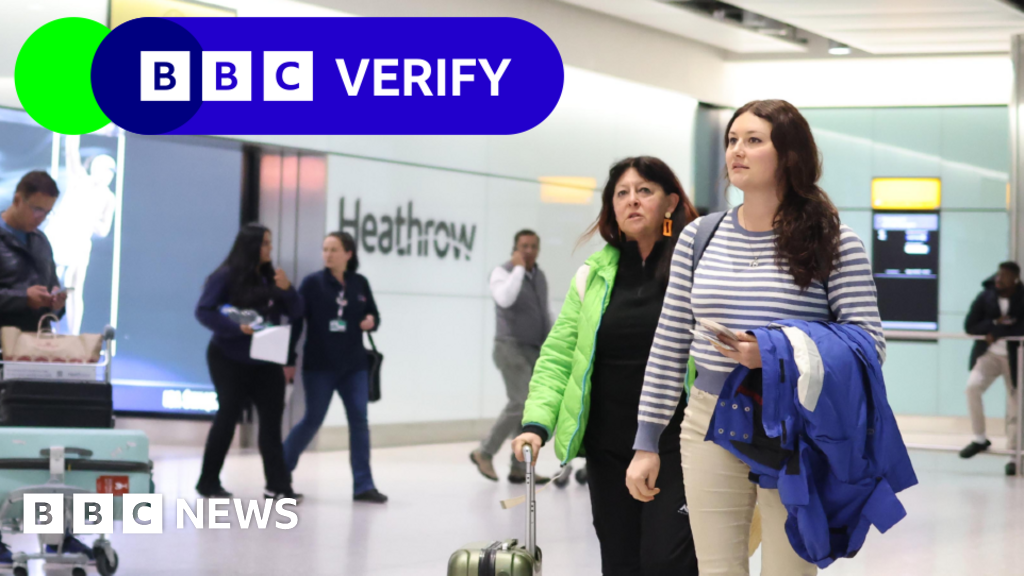
Five key impacts of Brexit five years on
The UK left the European Union on 31 January 2020.
 www.bbc.com
Of course you're not obliged to agree with their findings, and you're free to find a report which agrees with your opinion.
But I hope you can now understand why you, alone, won't discern any difference.
Overall, it's generally negative, seriously negative in some areas. And it will only get worse, i..e. cumulative.


