
• Looking for a smarter way to manage your heating this winter? We’ve been testing the new Aqara Radiator Thermostat W600 to see how quiet, accurate and easy it is to use around the home. Click here read our review.

Ford Ka MK1 Coolent flush - query and questions

Started to look over the valve cover removal procedure using the service guide:
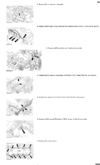

Screenshot 2024-08-02 at 13-37-00 Ford Workshop Service and Repair Manuals Streetka 2003.5 (01...png

It looks pretty straight forward, however, this is one hose that is not referenced on the guide, and it's a bit more obscure how to move or remove it to access the valve cover. On their guide it seems to be routed around the side, and just needs to be unclipped. On this it is routed over the engine cover.

It comes from the brake master cylinder vacuum component.
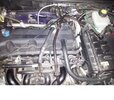
fengine1.jpg

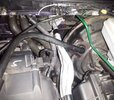
The connection to the brake component does not look removable:
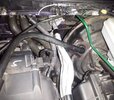
fengine2.jpg

Then it has this connection about half way:
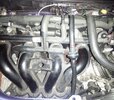
fengine4.jpg

And terminates in the engine block as part of the air in-let
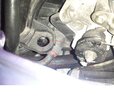
fengine5.jpg

I assume it's the vacuum line. But I'm not sure the best way to remove or dismantle it.
The connections are not similar to the other more simple hoses. It's very rigid and cannot me easily moved aside.
 
Last edited:
It’s just a push fit into the brake servo....dont try to separate this pipe anywhere else.
Just ease it out with gentle twisting, add some silicone spray if you like and move it aside.
John
 
It’s just a push fit into the brake servo....dont try to separate this pipe anywhere else.
Just ease it out with gentle twisting, add some silicone spray if you like and move it aside.
John


Just to clarify, that is this connection, correct?

fengine2.jpg

Just want to be 100% sure.

Also, should expect air to escape etc. Just want to be prepared for any noises that may make me think I've broken something :LOL:
 
Yep, that’s the one......there may be some vacuum in there but I doubt it!
Gently ease it out, the end is serrated for a good seal. Apply some silicone spray as you replace the pipe.
John
 
Yep, that’s the one......there may be some vacuum in there but I doubt it!
Thanks, I only mention that as I'm sure I knocked that connection while wrestling with the heater control valve and I heard a pssst of air escape for a moment and I thought I had damaged something.
 
Yes, with the engine running there will be a vacuum in the servo.
The other end of the pipe goes to the inlet manifold ( or vacuum pump if a diesel).
John
 
Just reviving this thread a bit, as I was planning to replace the rocker cover gasket as mentioned on page 2, but...I never got round to it.

Now the weather is improving, I may give it a go. In the mean time, I found this rather nice video.


My only questions are actually related to what I asked on page 2.

1) In this video he runs a bead of sealant around the surface the rocker cover mates to. But according to you guys on page two, the gasket sealent should only be used to keep the gasket from falling out of the rocker cover when installing.

So I assume he is wrong to do what he is doing.

2) In this video he removes the rocker cover without moving that brake servo line, which makes it a bit more awkward. On page two you guys said it was just a push-fit into the brake servo and removing it was not an issue.

Just thought I'd check those two points.

If there is anything else I should check or that the video is incorrect about, I would be most appreciative.
 
If you do remove the servo pipe, just be a bit careful when pushing the pipe back into the servo that you don’t push the rubber seal into the servo. Lube the pipe first with a drop of brake fluid. If you don’t have any spare, just dip a clean finger into the brake fluid reservoir and wipe it onto the pipe.
 
Just reviving this a bit.

One delay after another and I never got round to doing the valve cover.

So picking up where I left off here, I was reviewing that video again. I noticed that he bought brand new bolts for replacing the cover.

Just wanted to check if that was a standard/recommended thing or pointless if in good condition

Thanks
 
Last edited:
Feels nice and secure but I was very paranoid about cross threading the plastic.
Tip for this, in any scenario where a metal screw screws into plastic (such as when you're reassembling eg a hair dryer you've taken apart), is to put the screw in place, ensure it's straight and aligned with the hole but rotate slowly it in the unscrewing direction first.

It will, at some point of its rotation drop very slightly back into its hole, indicating that the thread at the start of the screw found the point at which the thread wound into the plastic ran out, and the screw thread is now resting as fully as it can on the plastic thread slot. If you start screwing inwards carefully now the screw should track easily down the already- cut slot in the plastic. If it goes really right really quickly, stop, back out until the screw drops again, and try again (some screws have twin threads that are sifferent heights)

Once you get used to the technique, it really helps find the original cut in the plastic rather than the screw cutting a new one, which can be disastrous for the plastic integrity over time
 
After I posted that, I looked on a few forums that these bolts could be "stretch bolts"? A once torqued you can't re-use them type.

Or is this not the case or misinformation?
Stretch bolts on a cam cover? Well I’ve never heard of that before.
 
Stretch bolts on a cam cover? Well I’ve never heard of that before.
Maybe the posts I read were mis-describing and referring to the cylinder head or something. I thought it odd, but thought I better check after the guy in that video bought new ones.
 
Back
Top