
Please help if you can. I've disconnected a radiator because i need to replace and reposition it before the new kitchen arrives next friday. I had it all straight in my mind that i'd use compression couplings to extend the pipework and install the new radiator. BUT having removed the radiator (with great difficulty because everything was so old and seized up) and removed some floorboards, i was gobsmacked to see the copper pipes to the radiator valves attached to grey plasic pipes and couplings. The closest I can describe them is like washing machine pipes. Does anyone know what they are and whether (and if so how) I can extend them? Or even if they should be there in the first place??? Please don't be too technical because i'm only a beginner. Any advice would be much appreciated. Thanks.

You are using an out of date browser. It may not display this or other websites correctly.
You should upgrade or use an alternative browser.
You should upgrade or use an alternative browser.
grey plastic heating pipes?
- Thread starter fixitqueen
- Start date

sounds like it's poss hep 2o.
you can use compression fittings to connect the plastic pipe to the copper pipe.
you can use compression fittings to connect the plastic pipe to the copper pipe.

don't forget the inserts 
sounds like it's poss hep 2o.
you can use compression fittings to connect the plastic pipe to the copper pipe.
thanks seco, was worried it was some unconventional diy botch job (there's a lot of that in this house!)
don't forget the inserts
thanks kevplumb. Sorry, don't know what the inserts are?
don't forget the inserts
thanks kevplumb. Sorry, don't know what the inserts are?
Is it a short length of rigid white plastic that you insert into the grey tube. Wasn't paying much attention to plastic pipes when I read up on it (didn't expect there to be any!), but now i remember seeing something like that. I'll have another look at it.
http://www.hep2o.co.uk/
Do the fittings look like those in the link?
They haven't been out all that long 10 - 15years??, its predecessor was the Acorn system which I'm fairly sure was grey(before my time), you mentioned everything was old and seized. Normal Hep20 installations are newish looking.
Do the fittings look like those in the link?
They haven't been out all that long 10 - 15years??, its predecessor was the Acorn system which I'm fairly sure was grey(before my time), you mentioned everything was old and seized. Normal Hep20 installations are newish looking.
useally about 20mm long.
can be metal or plastic.
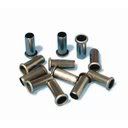
can be metal or plastic.
http://www.hep2o.co.uk/
Do the fittings look like those in the link?
They haven't been out all that long 10 - 15years??, its predecessor was the Acorn system which I'm fairly sure was grey(before my time), you mentioned everything was old and seized. Normal Hep20 installations are newish looking.
Yes, they do look like those, and they've got the name hepworth around the couplings (could that be the h?). The grey pipes go through the wall to a much newer radiator (with a british gas valve cap, if you can trust that!). So, it could be that the pipes were extended from the othe side of the wall and the old radiator was undisturbed? At least I hope that's what happened. (hadn't got that far when i originally posted).
Thanks threadjacker
useally about 20mm long.
can be metal or plastic.
Thanks serco, are they the inserts, they look like what i saw earlier. Just to give you something to tighten on the joint. That would make sense to me. Tell me if i'm wrong.
Thanks serco, are they the inserts, they look like what i saw earlier. Just to give you something to tighten on the joint. That would make sense to me. Tell me if i'm wrong.
stops the pipe collapsing when fitting the coupler etc.

The inserts can be stainless steel silver grey or black or white or grey plastic.
The real problem is that each tube has a correct type to us.
Its not always possible to guess but if the insert is fairly tight then its probably OK but if loose then almost certainly it is not.
Tony
The real problem is that each tube has a correct type to us.
Its not always possible to guess but if the insert is fairly tight then its probably OK but if loose then almost certainly it is not.
Tony
M
mysteryman
Hep20 has been around for 15-20 years now. Its predecessor was Acorn, which was dark brown, and that was first in use getting on for 30 years ago. They are excellent - as long as there is an insert AND the pipe is fully inserted into the fitting. The fittings will go straight onto copper, and you can get special O rings for 3/4 copper.
The inserts can be stainless steel silver grey or black or white or grey plastic.
The real problem is that each tube has a correct type to us.
Its not always possible to guess but if the insert is fairly tight then its probably OK but if loose then almost certainly it is not.
Tony
Thanks Agile, from being worried about this stuff, after everyone's posts i'm glad it's there. I'll extend as far as i can using the plastic pipe and then just use copper leading up to the valve. Even saves getting a pipe bender then!
Hep20 has been around for 15-20 years now. Its predecessor was Acorn, which was dark brown, and that was first in use getting on for 30 years ago. They are excellent - as long as there is an insert AND the pipe is fully inserted into the fitting. The fittings will go straight onto copper, and you can get special O rings for 3/4 copper.
Thanks mysteryman, this stuff sounds briliant. Is the lifespan expected to be as long as copper?

DIYnot Local
Staff member
If you need to find a tradesperson to get your job done, please try our local search below, or if you are doing it yourself you can find suppliers local to you.
Select the supplier or trade you require, enter your location to begin your search.
Please select a service and enter a location to continue...
Are you a trade or supplier? You can create your listing free at DIYnot Local
Similar threads
- Replies
- 8
- Views
- 7K
- Replies
- 30
- Views
- 11K
- Replies
- 2
- Views
- 1K