
Having a problem with lime repointing

Joined
2 Dec 2004
Messages
745
Reaction score
8
Country
United Kingdom
Hi all.

I'm having problems with the lime repointing job I'm doing on my house. The colour is inconsistent across batches and even within the same batch.

I deliberately chose a yellow aggregate, Ty Mawr "London". This is being mixed with Saint Astier NHL3.5 in a 3:1 ratio using the same container, by volume.

I'm mixing by hand, but I am mixing thoroughly.

Here is the difference between two batches. One is significantly more yellow than the other, which is what I wanted, and matches the sample I received. The more yellow batch was the first batch I made.
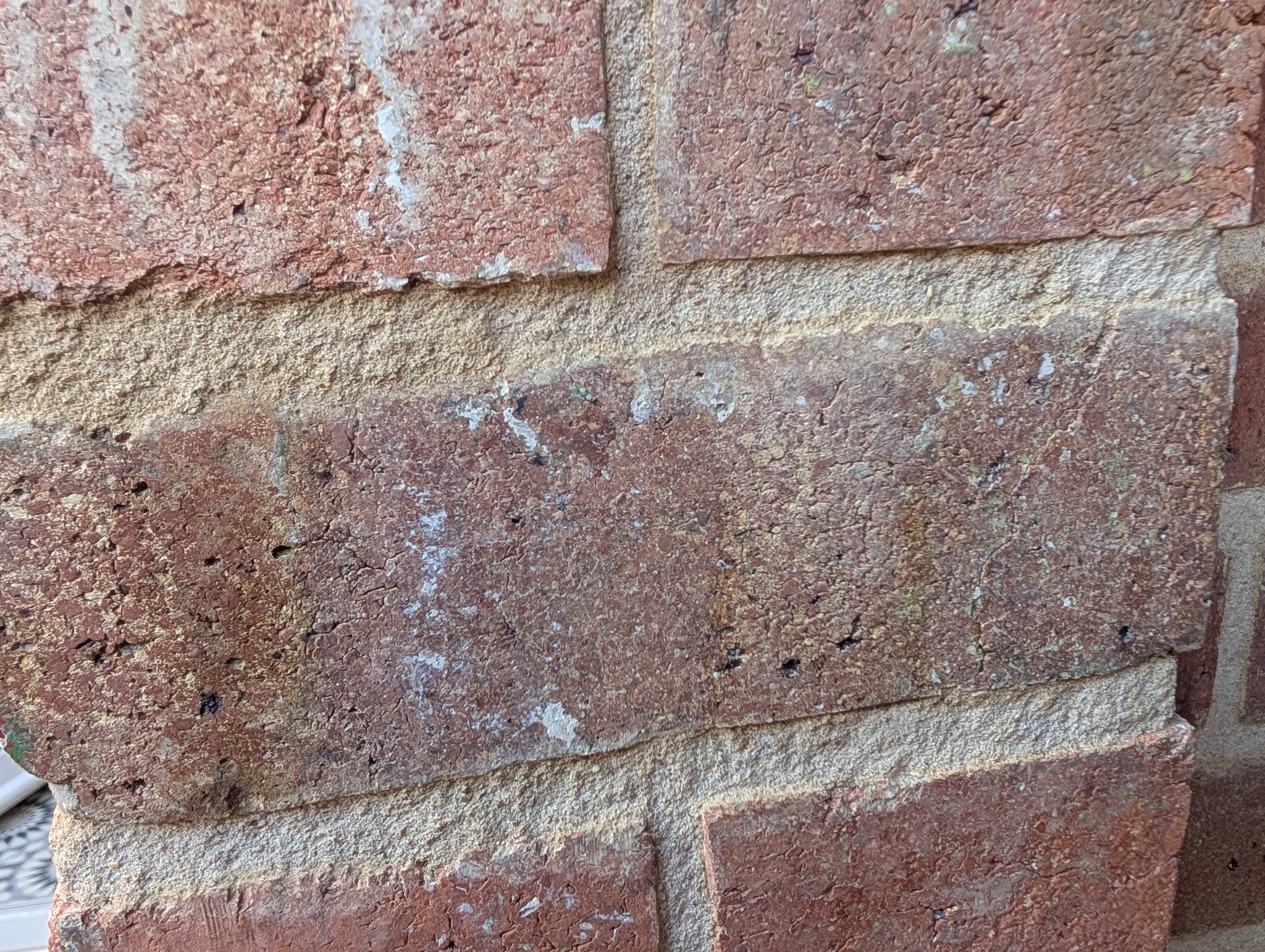
PXL_20260924_075614823.jpg


On later batches, large sections have dried whiter than I wanted. But within those areas, some sections are still much more yellow. Take this spot for example, yellower on the left, whiter on the right - same batch, applied the same, knocked back at the same time.
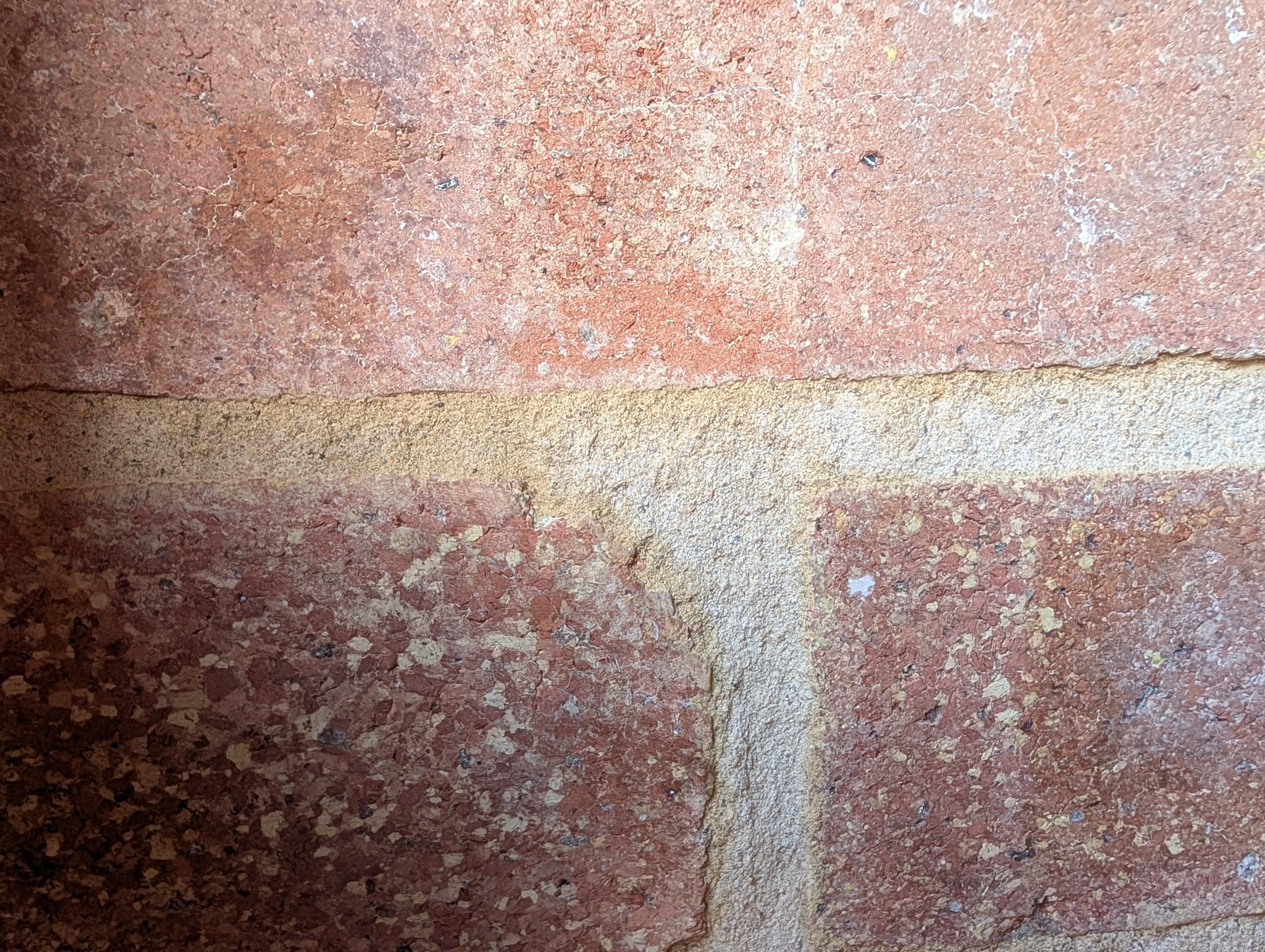
PXL_20260924_075621125.jpg


I've also noticed that within large areas of wall the bit closer to the bricks is more yellow, the bit in the centre of the joint is more white. I.e a framing effect. This is all over the place.
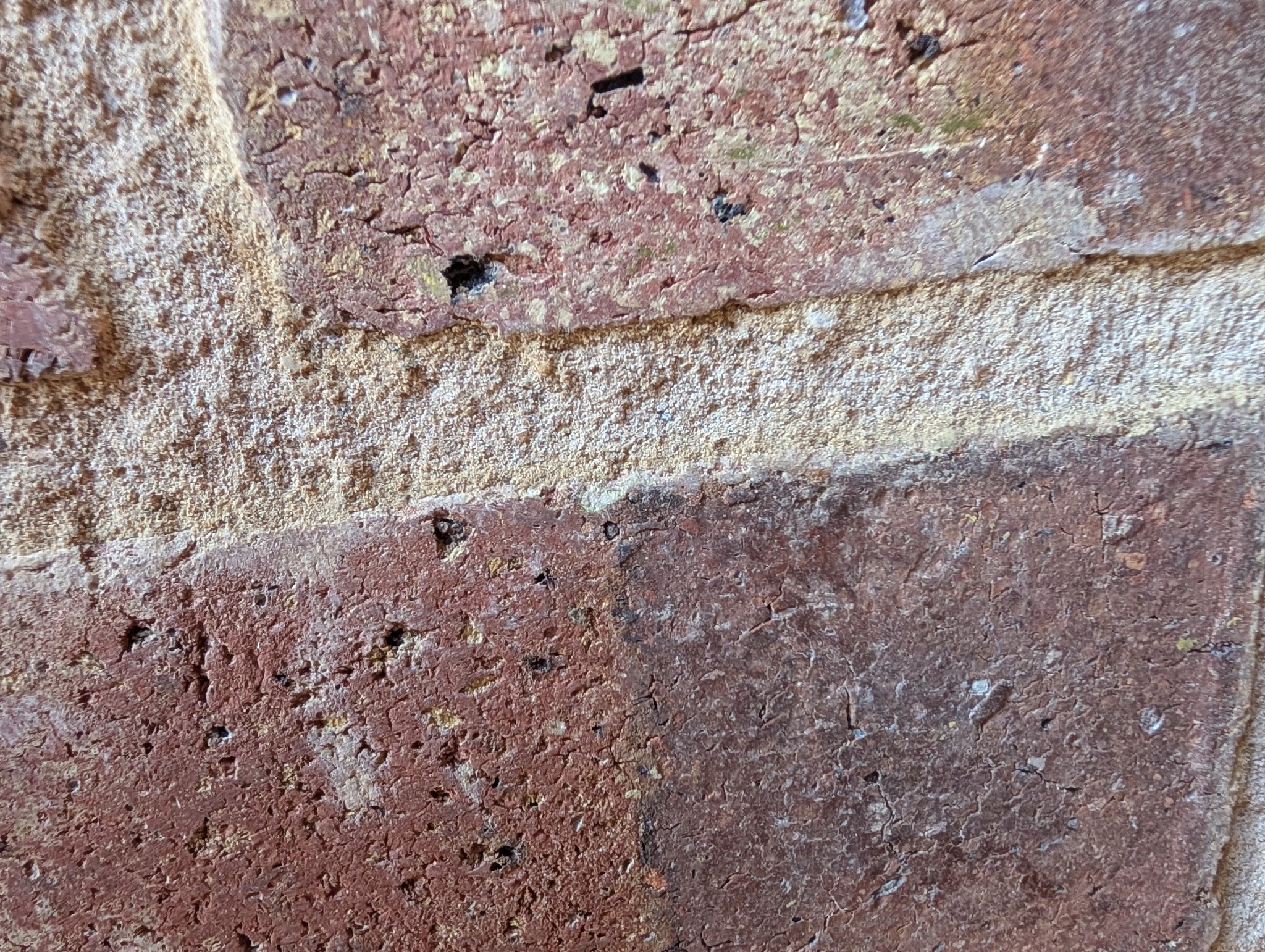
PXL_20260924_075705708.jpg


I don't know what is causing this colour difference to be able to resolve it as I continue the job. I want the yellow colour.
 
Whole colour differences in different batches is a mixing issue. Typically, if all the batches are prepared and used in the same way and to the same bricks in the same conditions, they would be expected to produce the same or very similar shades of dried mortar.

Drying conditions, and how the joints are finished can alter the shade. Did you mist and cover the wall afterwards?

With the edge banding, that is typically caused by uneven absorption and drying. Too wet or too dry bricks will remove the moisture differently to that in the centre parts of the joint, and this can affect the carbonation of the lime.

IIRC, this is a phenomenon and may or may not blend in in over time.

BTW, you may want to check your technique, as the brick arises look too pronounced and exposed. The joint should be flush with the brick face. Looks like too much is coming out when brushed, and that can lead to weathering of the bricks. Wrong brush type, brushing too soon or too enthusiastically can cause excess mortar to be lost.
 
I have mixed using the exact same container for every batch. 3 level container of sand, 1 level container of lime. Mixed dry in a wheelbarrow, very thoroughly so that there are no lumps of sand or lime left and the mix is consistent throughout.

Then I split the dry mix into two halves, add water to the first half, not too wet, let it settle for 20 mins, use it. Add water to second half, settle for 20 mins, use it.

I'm mixing enough to do about 3m2 per batch.

Did you mist and cover the wall afterwards?

Yes I wet the wall thoroughly first, let it surface dry, then repoint. I don't have any hessian but after knocking back I mist again every few hours for the first couple of days then less frequently on days 3 and 4. It hasn't been too hot, cold or windy.

Looks like too much is coming out when brushed, and that can lead to weathering of the bricks. Wrong brush type, brushing too soon or too enthusiastically can cause excess mortar to be lost.

I'm waiting until it passes the fingernail test, can't make a depression with thumb but can with fingernail. Then I'm knocking back with a churn brush I bought specifically for the job. I'm not going too hard on it I don't think, enough to texture the surface. I don't know why I'm not getting a completely flush finish,. Obviously the photo is a very close up, it looks flush from further away.

On one section I tried waiting longer to knock back, and the mortar had set up quite hard and was much harder to knock back with the brush.
 
Hi all.

I'm having problems with the lime repointing job I'm doing on my house. The colour is inconsistent across batches and even within the same batch.

I deliberately chose a yellow aggregate, Ty Mawr "London". This is being mixed with Saint Astier NHL3.5 in a 3:1 ratio using the same container, by volume.

I'm mixing by hand, but I am mixing thoroughly.

Here is the difference between two batches. One is significantly more yellow than the other, which is what I wanted, and matches the sample I received. The more yellow batch was the first batch I made.

View attachment 422883

On later batches, large sections have dried whiter than I wanted. But within those areas, some sections are still much more yellow. Take this spot for example, yellower on the left, whiter on the right - same batch, applied the same, knocked back at the same time.

View attachment 422884

I've also noticed that within large areas of wall the bit closer to the bricks is more yellow, the bit in the centre of the joint is more white. I.e a framing effect. This is all over the place.

View attachment 422885

I don't know what is causing this colour difference to be able to resolve it as I continue the job. I want the yellow colour.
That looks like there is colour staining from the bricks themselves? :unsure:
 
That looks like there is colour staining from the bricks themselves? :unsure:

It feels unlikely to me. These are old bricks, been around nearly 100 years. Yes I'm wetting them first but leaching colour? I doubt it.

Also the first wall was the right colour of yellow uniformly. The second batch is showing this edge banding effect on a more white centre.

The more I think about it, I'm leaning towards over tooling. On the first batch I think I overfilled it more then knocked more off with the brush. On later batches i may unknowingly have been trying to be more efficient with the application and tooling it more when placing. That could also explain why the centre is whiter than the edges - the centre is naturally getting more tooling from the narrower finger trowel?
 
NHL3.5 is best done in a mixer. Ideally a roller pan, but a drum is OK. Best method with a drum mixer is to mix it dry for 5 minutes, then add enough water so it's not balling up, but slightly dryer than you want. Let it mix for 15-20 minutes to get air into the mix which make it workable without excess water. If it's still a bit dry add a bit more water. Then let it fatten up for 20 minutes, and then another quick mix for 5 minutes.
Mixing by hand often means people use excess water to make it workable. You need to keep it misted for at least a week.
 
Thanks @stuart45 . So you think I may have added a bit too much water in the second batch, to try and make the mix a bit more workable given I don't have a mixer.

It's possible yes.

Hiring a mixer isn't economic because I'm doing this job a bit at a time at weekends, I would have to buy one.

Is it a big difference mixing with a mixer in terms of water added for the same level of workability? And would you expect that to result in a much lighter colour?
 
Thanks @stuart45

Is it a big difference mixing with a mixer in terms of water added for the same level of workability? And would you expect that to result in a much lighter colour?
There's a difference because if you think about how many times a mixer turns over the mix in just one minute compared to how many times you turn the mix over by hand before you've had enough, then you can see why with a mixer you get more air into the mix.
With excess water it tends to bring the binder to the surface.
 
I see. When I was mixing the lime it absorbs water so readily (unlike cement) it hardly needed any turning at all, so I didn't feel the need to use the paddle mixer for it.
 
Labourers used to do that when mixing up by hand on jobs. They'd mix up a gauge and then put one in to soak while doing something else. By the time they came to mix it up, the water had soaked in, so all they had to do was turn it over a couple of times. It wasn't as good a mix as when turned over in the mixer though.
 
BTW, you may want to check your technique, as the brick arises look too pronounced and exposed. The joint should be flush with the brick face. Looks like too much is coming out when brushed, and that can lead to weathering of the bricks. Wrong brush type, brushing too soon or too enthusiastically can cause excess mortar to be lost.

Any tips for getting better at this please Woody? I'm aiming for a flush finish but it does seem to naturally want to go very slightly recessed when I knock back the mortar. I could try and overfill the joints more. The brush I have is a proper lime churn brush bought for the purpose, not some generic brush.
 
It's normal with lime pointing for the arris of the bricks to be just visible after using the churn brush. The brush should be clean after use, otherwise you have used it too early.
 

If you need to find a tradesperson to get your job done, please try our local search below, or if you are doing it yourself you can find suppliers local to you.

Select the supplier or trade you require, enter your location to begin your search.


Are you a trade or supplier? You can create your listing free at DIYnot Local

 
Back
Top