Help Please!

I'd be surprised if it's anything to do with that. The fuse in that SHOULD be for the boiler only. Does the boiler appear to have power?
EDIT. Boilers tend to need a 3 amp fuse, and nothing higher should ever be fitted.

Boiler works fine. It only turns off when I cut the power to the sockets at the consumer unit
 
it should likely be a RING - a Radial its often thicker wire than i think i saw , not great photo of wire - ring 2.5mm radial maybe 4mm

A RING - comes out of the consumer units - connects all the sockets IN and OUT and then goes BACK to the Consumer unit
A Radial - comes out of consumer unit and connects all sockets IN and OUT - BUT stops at the end of the circuits on last socket

I think it is the thicker 4mm wire.

If it is Radial

Possibly the faulty toaster/ shock I got from it did something to the socket. Which is why every socket after the toaster immediately stopped working the moment I got shocked.

And why all the sockets before it are still working fine, including the boiler.

Is there any way I can easily tell it is Radial?

Unfortunately the wires on on that socket are hidden in a wall .
 
Last edited:
If what you say is correct I'd look in that socket first, then the next one along.

Screenshot_20251025_080617_Chrome.jpg
 
If there is only one cable going to the final socket in the drawing then it is probably a radial. Could be spurred off the FCU for the boiler but shouldn't be.

I've just remembered something about the final socket.

Originally when he was wiring the kitchen I told him I wanted an extra socket in the room next to the kitchen.

So I'm pretty sure what he did was finish the kitchen, take the cable through the wall into the room next door.

Fitted the final socket on the opposite side of the wall.

Also at the final socket there is a fused connector that feeds the kitchen electric underfloor heating (no longer used).


When you flip the switch on the fused connector next to the final socket, it cuts the power to the underfloor heating.

The underfloor heading fuses connector has had its switch flipped off for years as a way to deliberately disconnect/permanently turn off off the underfloor heating. It's been like that for years as the underfloor heating has not been wanted.

The final socket currently doesn't work.


Just trying add as much detail as possible.


Back to your original question in regards to how many wires at the final socket.

I'm not actually sure if there is only one cable going to the final socket to tell if it's radial.

I just know it's connected to the kitchen and has a fused connector next to it that's for powering the underfloor heating.


As far as my abilities go. I'd be comfortable, turning off all switches at the consumer unit.

Taking off a cover plate, to take a picture of the wiring and putting it back as found.
 
I think it is the thicker 4mm wire.

If it is Radial
do you feel confidant that you can remove the front of the sockets/fused connection and pull out slightly and look at the wiring inside

if so then as peter01 says i would look at 2 sockets - the end one on the right - just to see if it only has 1 cable going into it and no others coming out
annd the green one after the fused connection - maybe a cable has come lose there if it is a radial - if its a ring and a cable comes lose , then the others should still work - have a look at flameport diagrams


do you feel confidant in using a multimeter , do you happen to have one ?

the wire you can see
if you can see any markings on the cable that may identify the type of cable -

ringcircuit

Radial circuit

The circuit has a 32A MCB connection - so maybe a ring main with 2.5mm cable - if a radial - which I dont think was common many years ago , then a thicker wire proabbly 4mm - BUT there are all sorts of regulation regarding length of run - one of the experianced sparkies here will advice

if it provides other sockets in the ground floor , then i would expect it to be a ring and maybe they have done something else in the kitchen

Is there any way I can easily tell it is Radial?
if it SHOULD be a radial or happened to have been wired as a radial
May mean taking the front off the consumer unit and looking how many RED wired come out the top of the 32MCB - BUT not advisable as even when OFF there are live components in the consumer unit - i think its a ring based on your last post and cable going to other room from kitchen, so no real need to get anywhere near the CU YET - can be very dangerous - lots of things stil to do

EDIT
answered as i was typing
So I'm pretty sure what he did was finish the kitchen, take the cable through the wall into the room next door.

Fitted the final socket on the opposite side of the wall.
Yep that makes sense as i suggested earlier , may go through the wall

does the socket in the other room you think is connected - is that one working

 
do you feel confidant that you can remove the front of the sockets/fused connection and pull out slightly and look at the wiring inside

if so then as peter01 says i would look at 2 sockets - the end one on the right - just to see if it only has 1 cable going into it and no others coming out
annd the green one after the fused connection - maybe a cable has come lose there if it is a radial - if its a ring and a cable comes lose , then the others should still work - have a look at flameport diagrams


do you feel confidant in using a multimeter , do you happen to have one ?

the wire you can see
if you can see any markings on the cable that may identify the type of cable -

ringcircuit

Radial circuit

The circuit has a 32A MCB connection - so maybe a ring main with 2.5mm cable - if a radial - which I dont think was common many years ago , then a thicker wire proabbly 4mm - BUT there are all sorts of regulation regarding length of run - one of the experianced sparkies here will advice

if it provides other sockets in the ground floor , then i would expect it to be a ring and maybe they have done something else in the kitchen


if it SHOULD be a radial or happened to have been wired as a radial
May mean taking the front off the consumer unit and looking how many RED wired come out the top of the 32MCB - BUT not advisable as even when OFF there are live components in the consumer unit - i think its a ring based on your last post and cable going to other room from kitchen, so no real need to get anywhere near the CU YET - can be very dangerous - lots of things stil to do

EDIT
answered as i was typing

Yep that makes sense as i suggested earlier , may go through the wall

does the socket in the other room you think is connected - is that one working

1. I feel confident turning all sockets off at the consumer unit. Removing cover plates carefully to have a look at the wiring/take a picture. Then putting them back on as found.


Should I start with the first red socket? That's the socket where the toaster incident happened.

The second the toaster incident happened all sockets after immediately after all power.

I know because a kettle was plugged into a socket further down stream that was on and mid boil (plugged into now a red socket) , suddenly stopped working.

So I'm fairly certain the moment everything after the first red socket that lost power is when the toaster incident happened.

2. I don't have a multimeter and never used one.

3. The final socket in the other room has no power.

Hope this helps.
 
Last edited:
1. probablly best to turn off the main switch - NOT just the MCB trip - depending on how its wired its possible to get a shock off the neutral wires - and trip the circuit anyway , if any wires a lose and happen to touch earth

3. What about other sockets on the ground or 1st floor - then so assuming a ring , it goes from kitchen through wall to socket in other room and then may go upto ceiling or down to floor along to the next socket etc - as you will see from the link i posted about ringmains
 
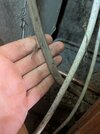
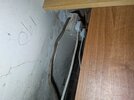
This is the last green socket location, the wire I have on my hand is the one that goes directly to the first of the red/not working sockets.

As you can see it will be a bit of a nightmare taking the cover plate off.

If have to start taking the kitchen unit apart. It's doable but rather not be the first thing I check.


48262.jpg
 

Attachments

  • PXL_20251025_084902872.MP.jpg
    PXL_20251025_084902872.MP.jpg
    243.9 KB · Views: 18
  • PXL_20251025_085356072.jpg
    PXL_20251025_085356072.jpg
    259.8 KB · Views: 19
3. What about other sockets on the ground or 1st floor - then so assuming a ring , it goes from kitchen through wall to socket in other room and then may go upto ceiling or down to floor along to the next socket etc - as you will see from the link i posted about ringmains

Using a working table light, makes it easy, to go around testing which sockets are working.
 
1. probablly best to turn off the main switch - NOT just the MCB trip - depending on how its wired its possible to get a shock off the neutral wires - and trip the circuit anyway , if any wires a lose and happen to touch earth

3. What about other sockets on the ground or 1st floor - then so assuming a ring , it goes from kitchen through wall to socket in other room and then may go upto ceiling or down to floor along to the next socket etc - as you will see from the link i posted about ringmains

Using a working table light, makes it easy, to go around testing which sockets are working.

Not touched any sockets yet. So I'll turned it all back on at the consumer unit.

Tested sockets with a table light. ALL downstairs sockets working APART from the first red socket in the kitchen then nothing works onwards from that.

The table top socket to the right , fridge washing machine socket to the right, final socket to the right that goes into the other room. ALL not working.
 
and onwards - you mean the sockets in the kitchen and then in the other room from the last kitchen socket and all other sockets are working in that room except the one through the wall to kitchen
maybe worth numbering the sockets just for clarity - as onwards doesnt help here so much

EDIT
replied before you posted
The table top socket to the right , fridge washing machine socket to the right, final socket to the right that goes into the other room. ALL not working.
 
Last edited:
and onwards - you mean the sockets in the kitchen and then in the other room from the last kitchen socket and all other sockets are working in that room except the one through the wall to kitchen
maybe worth numbering the sockets just for clarity - as onwards doesnt help here so much

EDIT
replied before you posted


1. Socket 4 is where the toaster was plugged into. Sockets 4,5,6,7 immediately stopped working when I got a shock from the toaster.

Sockets 1,2,3 all working fine (including the boiler)

(I'm fairly certain how this is wired but can't be 100% sure as cables behind walls and hidden sockets can't trace them ).
48273.jpg


2. When everything is switch on at the consumer unit ALL sockets work in the house apart from sockets 4,5,6,7.


PXL_20251024_223921884.MACRO_FOCUS.MP.jpg


3. When I turn this off it cuts power to all sockets in the house apart from 1 socket in a downstairs room that's far away from the kitchen

Another switch labeled sockets control that single socket
 
Socket (3) the last working socket in the run.

Access really difficult, can't check wiring properly without taking apart the kitchen.
PXL_20251025_085356072.jpg
 
48266.jpg


Socket (4) what the toaster was plugged into.

Doesn't appear to be loose cables or damage. But may have missed something.
 

If you need to find a tradesperson to get your job done, please try our local search below, or if you are doing it yourself you can find suppliers local to you.

Select the supplier or trade you require, enter your location to begin your search.


Are you a trade or supplier? You can create your listing free at DIYnot Local

 
Back
Top