
You are using an out of date browser. It may not display this or other websites correctly.
You should upgrade or use an alternative browser.
You should upgrade or use an alternative browser.
How do I connect wires to Delonghi ro191a oven element
- Thread starter waigy
- Start date

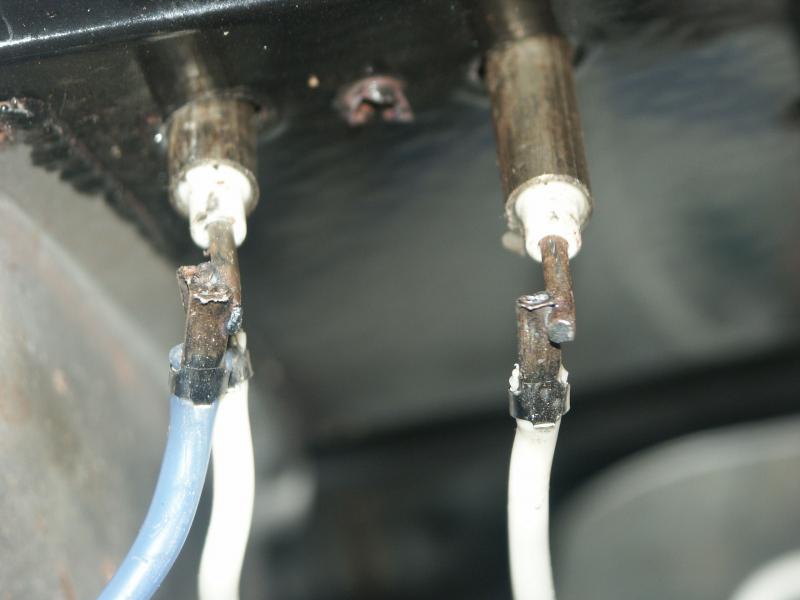

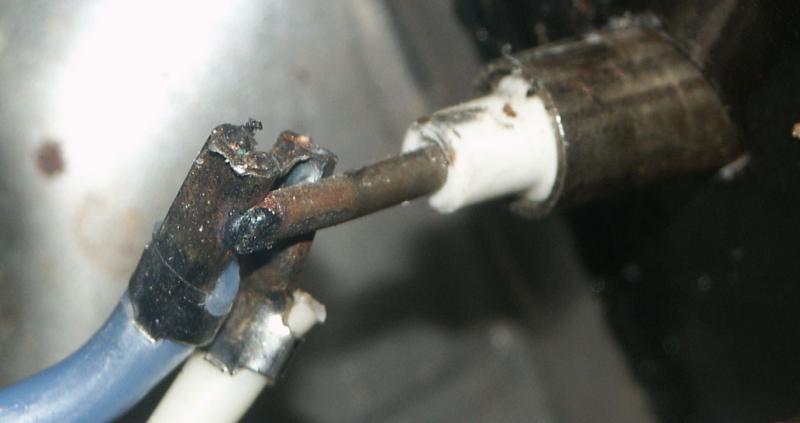

Is that element the original one, as supplied factory fitted? Highly unlikely that a production line would use a fixing method like that.
Do you actually have the new element yet?
If the new element really does just have those round pins then:
Soldering is no good, as it is likely to melt with the high temperatures.
Screw terminals could be used, but they will need to be ceramic to withstand the heat.
Or crimp some space connectors onto the element pins, and crimp the corresponding connectors onto the wire ends.
Do you actually have the new element yet?
If the new element really does just have those round pins then:
Soldering is no good, as it is likely to melt with the high temperatures.
Screw terminals could be used, but they will need to be ceramic to withstand the heat.
Or crimp some space connectors onto the element pins, and crimp the corresponding connectors onto the wire ends.
Thanks flameport
It is the original element, but I bought the item on ebay (new) so there's maybe a chance that it was refurbished (or dodgy).
The two pins on the lower element are fitted in exactly the same way.
I have the new element and a pizza ready to fit now.
I did suspect that solder might not be the best idea, although the plastic coating on the existing wires is very close to the element pin so it can't get massively hot in that area.
I'll see what crimp connectors I can use.
It is the original element, but I bought the item on ebay (new) so there's maybe a chance that it was refurbished (or dodgy).
The two pins on the lower element are fitted in exactly the same way.
I have the new element and a pizza ready to fit now.
I did suspect that solder might not be the best idea, although the plastic coating on the existing wires is very close to the element pin so it can't get massively hot in that area.
I'll see what crimp connectors I can use.
If you don't have suitable crimps, screw terminals would be these ones:
http://www.toolstation.com/shop/d190/sd2460/p49779
Probably need 2, only using one connector is each block.. (They are actually the ones used in storage heaters where the element pins are usually very close together)
http://www.toolstation.com/shop/d190/sd2460/p49779
Probably need 2, only using one connector is each block.. (They are actually the ones used in storage heaters where the element pins are usually very close together)
Ok that's great flameport, I was just looking for something similar to that in my electric bits drawer.
I was also thinking of another solution using nuts/bolts/washers etc.
It really just needs a solid connection that won't budge using materials that are not affected by high temps.
I will buy those if I can't find something similar that I can use.
I was also thinking of another solution using nuts/bolts/washers etc.
It really just needs a solid connection that won't budge using materials that are not affected by high temps.
I will buy those if I can't find something similar that I can use.

Spot welding of leads to elements during manufacture is not un-common in some makes of domestic equipment. It is the most reliable way to connect. Authorised service engineers would use a spot welder to connect a genuine replacement element. Or the genuine replacement would be distributed to service agents with the leads already welded.Highly unlikely that a production line would use a fixing method like that
Your best option fior a DIY fix is a ceramic terminal block the largest screw and mass of metal that can be fitted. It needs to disipate as much heat as possible to reduce the change of temperature and thus reduce the amount of expansion-contraction which will tend to loosen the screws over time.
I would try to find an electrical workshop who are prepared to spot weld the leads on to the element for you. Some vehicle maintainance workshops might have the equipment as might some of the better quality appliance repair agencies.
Thanks bernardgreen
Spot welding and expansion/loosening have both crossed my mind when pondering this fix.
I thought it looked more like spot welding than soldering.
I also wondered why the cables weren't already connected as you say, because the wires eventually terminate in push on connectors which would make the fix massively easier.
I'm fixing this myself because I'm skint (the element was £3), but I might be able to get the spot welding done cheap or free.
I'll add that option to my investigations tomorrow.
Spot welding and expansion/loosening have both crossed my mind when pondering this fix.
I thought it looked more like spot welding than soldering.
I also wondered why the cables weren't already connected as you say, because the wires eventually terminate in push on connectors which would make the fix massively easier.
I'm fixing this myself because I'm skint (the element was £3), but I might be able to get the spot welding done cheap or free.
I'll add that option to my investigations tomorrow.

I would have thought ceramic connectors would be fine. As someone else mentioned, virtually all storage heater elements are connected this way and I've rarely found a failed one.
If you can detatch the wires fromt he old element with the ferrules still crimper on the ends, this will make a good thing for the connector to screw down onto.
If you can detatch the wires fromt he old element with the ferrules still crimper on the ends, this will make a good thing for the connector to screw down onto.
thanks rf lighting
Believe it or not I had also thought of snipping the ends off the element pins with the connection intact as you suggested, as I was first intending trying to get the connection apart with my soldering iron.
But as bernardgreen mentioned, the connection is probably spot welded so my soldering iron probably won't work.
Probably.
Anyone want a slice of cold pizza?
Believe it or not I had also thought of snipping the ends off the element pins with the connection intact as you suggested, as I was first intending trying to get the connection apart with my soldering iron.
But as bernardgreen mentioned, the connection is probably spot welded so my soldering iron probably won't work.
Probably.
Anyone want a slice of cold pizza?
Just finished it using two 5amp porcelain blocks one for each connection.
It seems to be working fine, but I noticed the new element glows bright red and the original lower element glows about half as much.
Is it normal for elements to lose their glow over time?
It seems to be working fine, but I noticed the new element glows bright red and the original lower element glows about half as much.
Is it normal for elements to lose their glow over time?

Did the replacement part not come with any fitting instructions?
Is it brighter than the previous one ?It seems to be working fine, but I noticed the new element glows bright red
Bright red suggests it is running at a higher temperature than it should be. That could be a fire risk if the oven's casing above the element becomes too hot as a result.
An e-bay item even when packaged as a "genuine manufacturers item" could easily be a counterfeit and its makers will have no regard for the safety of those use the items they produce.
Some might but not to any great extent.Is it normal for elements to lose their glow over time?
I would take care when using the oven in case that element is over heating the casing.
Or it suggests that it's a grill.Bright red suggests it is running at a higher temperature than it should be.
Is it the correct voltage rating?Just finished it using two 5amp porcelain blocks one for each connection.
It seems to be working fine, but I noticed the new element glows bright red and the original lower element glows about half as much.
Is it normal for elements to lose their glow over time?

DIYnot Local
Staff member
If you need to find a tradesperson to get your job done, please try our local search below, or if you are doing it yourself you can find suppliers local to you.
Select the supplier or trade you require, enter your location to begin your search.
Please select a service and enter a location to continue...
Are you a trade or supplier? You can create your listing free at DIYnot Local
Similar threads
- Replies
- 6
- Views
- 6K
- Replies
- 2
- Views
- 2K
