- Joined
- 8 Nov 2024
- Messages
- 36
- Reaction score
- 2
- Country

Hi all, OK so i'm asking how but open to why as well.
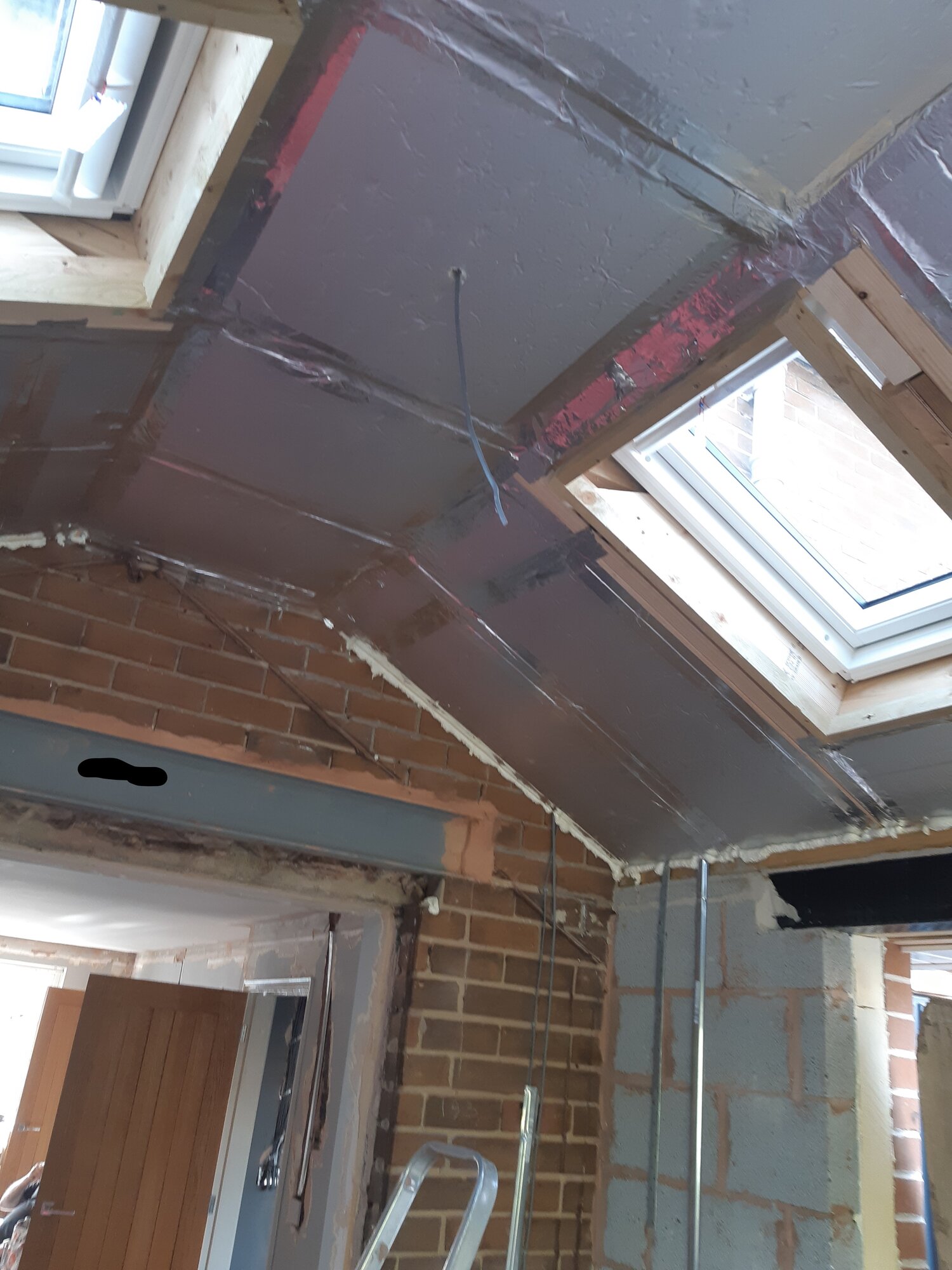
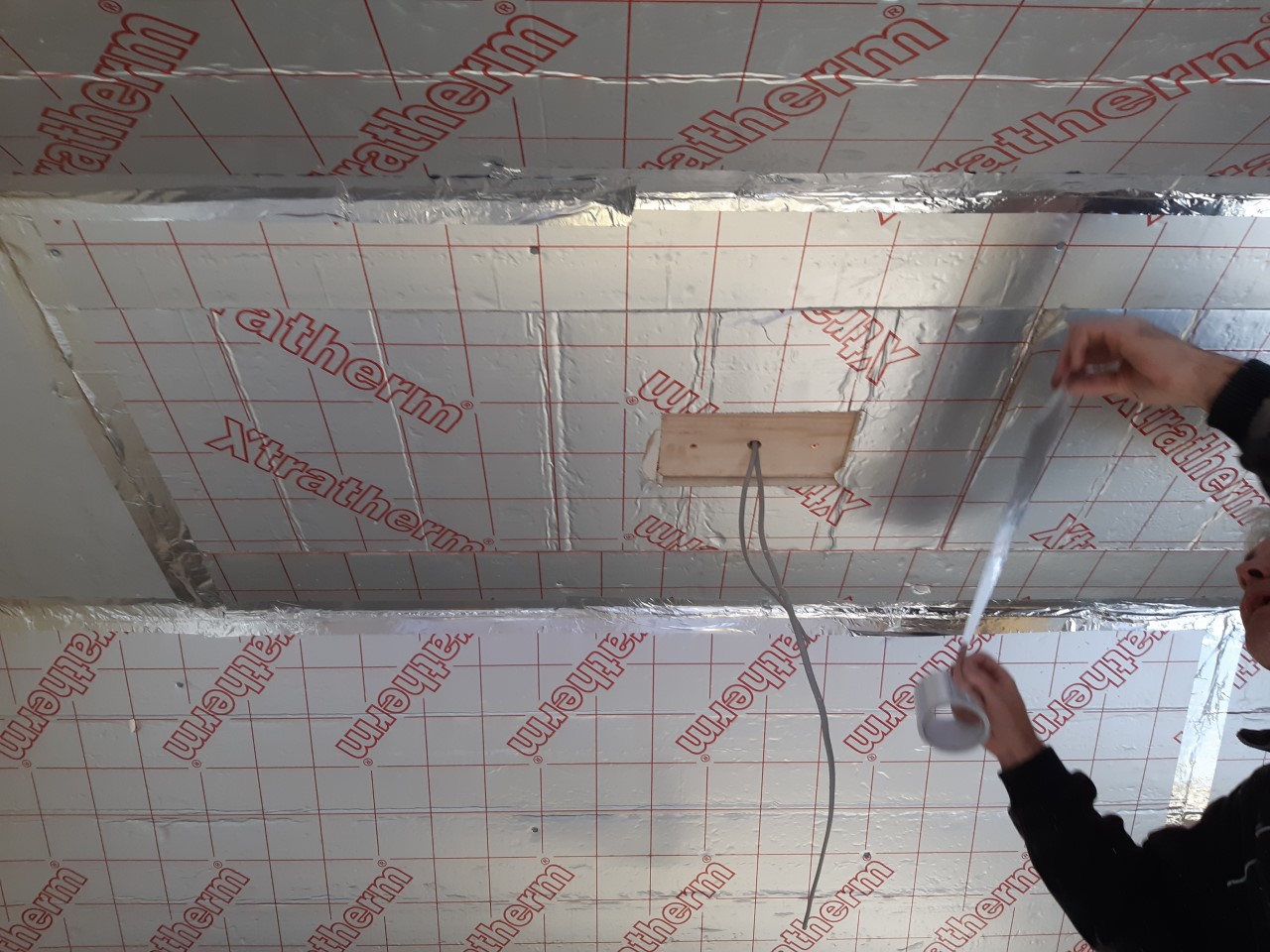
I'm re-insulating this existing loft room. There was about 50mm of mineral wool in the pitched roof and not much else. I'm set on most of the rest of this space, but stuck on this...
For this eaves space which sits above a bedroom I am wondering how on earth i'm going to thread the vcl around the floor and join it to the dwarf wall. the plan for the dwarf wall is PIR between the studs and then another layer across the studs from the cold side to prevent bridging without losing any more floor space. the floor joists and ceiling joists are odd and will need loose mineral wool build up.
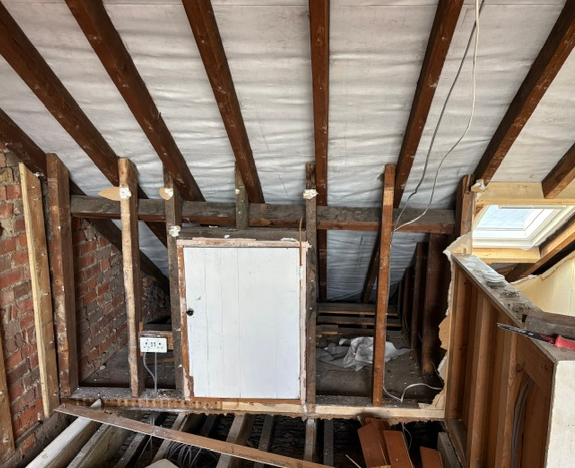
My understanding is that there should be a VCL below that which somehow mates up with a vcl running on the warm side of the dwarf wall. Obviously the joists run perpendicular to the plate for the studs. Apart from cutting lots of slits and then trying to tape them up i'm not really sure how this can be done neatly?
That eaves space should be fairly well ventilated - over fascia vents and breather membrane albeit with a close fitting artificial tile. So as much as i'm bought into a VCL being a good idea,... surely any vapour finding its way into this area isn't such a risk? Also even if I tied this all up nicely, wouldn't the hatch into this space negate the whole thing? There's no way you'd make that vapour tight!?
Grateful for any thoughts.
I'm re-insulating this existing loft room. There was about 50mm of mineral wool in the pitched roof and not much else. I'm set on most of the rest of this space, but stuck on this...
For this eaves space which sits above a bedroom I am wondering how on earth i'm going to thread the vcl around the floor and join it to the dwarf wall. the plan for the dwarf wall is PIR between the studs and then another layer across the studs from the cold side to prevent bridging without losing any more floor space. the floor joists and ceiling joists are odd and will need loose mineral wool build up.
My understanding is that there should be a VCL below that which somehow mates up with a vcl running on the warm side of the dwarf wall. Obviously the joists run perpendicular to the plate for the studs. Apart from cutting lots of slits and then trying to tape them up i'm not really sure how this can be done neatly?
That eaves space should be fairly well ventilated - over fascia vents and breather membrane albeit with a close fitting artificial tile. So as much as i'm bought into a VCL being a good idea,... surely any vapour finding its way into this area isn't such a risk? Also even if I tied this all up nicely, wouldn't the hatch into this space negate the whole thing? There's no way you'd make that vapour tight!?
Grateful for any thoughts.