Hi guys
I've just bought a house in Spain. It was partly renovated, including electrics. Some of the work done is decidedly a bit sketchy but the electrics seem mostly OK (I do need help with one problem that I'll post separately).
We've decided to have an induction hob fitted because I don't get on with radiant ring electric hobs and gas is not practical.
There is a dedicated oven circuit fitted with 20A breaker. Now, I don't know what the previous owner intended for the hob except the extractor fan wiring is located near the oven wiring.
The hob takes 7.4kW so there's no way it can run off the same circuit as the oven (correct me if I'm wrong).
I've called in a couple of electricians. The first said he could do the job - kind of "dig up the tiles, put cables in new conduit and connect to the junction box there, then replace tiles etc". His price seemed a bit high 1500 euro for lifting/replacing 7 (narrow tiles, we have spare) and making good.
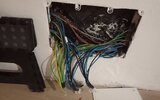
For the 2nd electrician, I took the cover off the junction box and as expected there was only wires for sockets 2.5mm2. He nodded, made a few noises etc. Then I asked if the hob would need a new circuit. He agreed. Eventually he said 6mm2 cable and 30A mcb. Then he said he wouldn't be able to get new 6mm2cable through the plastic conduit so he would use 3x2.5mm2 for each conductor instead. I thought that if he couldn't get 3x6mm2 through the conduit he won't get 9x2.5mm2 through it, but then I thought the thinner cable will be more flexible so maybe it will go through easier.
But then I realised he wasn't talking about getting 9 wires back to the consumer unit, he was simply taking them to the junction box and connecting to the existing wiring.
So, there may be some things lost in translation but is his initial specification of 3x6mm2 + 30A mcb OK? I think the mcb is a bit low (judging from my experience in the UK) and it should be C35.
He also claimed that a isolator switch eg 45A dp wasn't needed, anyone know this for sure?
Now, I'm assuming that even if the wires in the junction box could take the load, this hob NEEDS a completely independent circuit through to the consumer unit? His idea of piggybacking on the socket wires seems bonkers even if there is a dozen wires in there.
One more thing, I understand the house is TT earthing. I can't find anything near to the meter box that could house an earthing rod. Could it be under the pavement tiles?
I've just bought a house in Spain. It was partly renovated, including electrics. Some of the work done is decidedly a bit sketchy but the electrics seem mostly OK (I do need help with one problem that I'll post separately).
We've decided to have an induction hob fitted because I don't get on with radiant ring electric hobs and gas is not practical.
There is a dedicated oven circuit fitted with 20A breaker. Now, I don't know what the previous owner intended for the hob except the extractor fan wiring is located near the oven wiring.
The hob takes 7.4kW so there's no way it can run off the same circuit as the oven (correct me if I'm wrong).
I've called in a couple of electricians. The first said he could do the job - kind of "dig up the tiles, put cables in new conduit and connect to the junction box there, then replace tiles etc". His price seemed a bit high 1500 euro for lifting/replacing 7 (narrow tiles, we have spare) and making good.
For the 2nd electrician, I took the cover off the junction box and as expected there was only wires for sockets 2.5mm2. He nodded, made a few noises etc. Then I asked if the hob would need a new circuit. He agreed. Eventually he said 6mm2 cable and 30A mcb. Then he said he wouldn't be able to get new 6mm2cable through the plastic conduit so he would use 3x2.5mm2 for each conductor instead. I thought that if he couldn't get 3x6mm2 through the conduit he won't get 9x2.5mm2 through it, but then I thought the thinner cable will be more flexible so maybe it will go through easier.
But then I realised he wasn't talking about getting 9 wires back to the consumer unit, he was simply taking them to the junction box and connecting to the existing wiring.
So, there may be some things lost in translation but is his initial specification of 3x6mm2 + 30A mcb OK? I think the mcb is a bit low (judging from my experience in the UK) and it should be C35.
He also claimed that a isolator switch eg 45A dp wasn't needed, anyone know this for sure?
Now, I'm assuming that even if the wires in the junction box could take the load, this hob NEEDS a completely independent circuit through to the consumer unit? His idea of piggybacking on the socket wires seems bonkers even if there is a dozen wires in there.
One more thing, I understand the house is TT earthing. I can't find anything near to the meter box that could house an earthing rod. Could it be under the pavement tiles?
Last edited: