There’s plenty of nice stone outside, we’ll have to be content with that.Shame you can keep some of that old stone exposed, but I completely understand why you can’t.

You are using an out of date browser. It may not display this or other websites correctly.
You should upgrade or use an alternative browser.
You should upgrade or use an alternative browser.
Insulating my ancient living room
- Thread starter endecotp
- Start date
(3 months later…)
I have a load of plasterboard coming tomorrow, so I thought I’d better post some photos before this gets hidden forever.
 This is the same right-hand window as before, with insulated studwork in place. It doesn’t look as smart as my previous efforts, because I’m re-using the wonky old timber and because I’ve inserted the insulation from behind, which makes it look like it has gaps around the insulation - it really doesn’t, see previous photos.
The frames feel nice and solid since I have secured them to each other half way up. Without that support, the 50mm timber is quite bouncy.
The insulation narrows from 100mm to 50mm at the windows. Some years ago when I was feeling rich I bough a few sheets of aerogel fleece to try in places where there’s not much space available; I’ve used some of that here behind the 50mm wood fibre.
Below the window I’ve built new 100mm studwork, and I’ve used strips of aerogel glued to the back of the studs:

Should be less than 3 months before the next update! I still haven’t shown you the North wall, due to the piles of stuff that are hiding it!
I have a load of plasterboard coming tomorrow, so I thought I’d better post some photos before this gets hidden forever.
The frames feel nice and solid since I have secured them to each other half way up. Without that support, the 50mm timber is quite bouncy.
The insulation narrows from 100mm to 50mm at the windows. Some years ago when I was feeling rich I bough a few sheets of aerogel fleece to try in places where there’s not much space available; I’ve used some of that here behind the 50mm wood fibre.
Below the window I’ve built new 100mm studwork, and I’ve used strips of aerogel glued to the back of the studs:
Should be less than 3 months before the next update! I still haven’t shown you the North wall, due to the piles of stuff that are hiding it!
Time for another update on this glacially-slow project.

Plasterboard fitted, joints and screws filled, and mist-coated around this window.
I’ve only done the filling now to find out whether I can do a good-enough job, or whether I should get a pro to come and skim everything for me at the end of the project. Like most jobs, I eventually produce something that’s OK - but sooo slooowly.
Plasterboard fitted, joints and screws filled, and mist-coated around this window.
I’ve only done the filling now to find out whether I can do a good-enough job, or whether I should get a pro to come and skim everything for me at the end of the project. Like most jobs, I eventually produce something that’s OK - but sooo slooowly.

Good job!
- Joined
- 7 Sep 2022
- Messages
- 4,931
- Reaction score
- 1,438
- Country

You are indeed speeding upShould be less than 3 months before the next update!


- Joined
- 1 May 2018
- Messages
- 2,383
- Reaction score
- 821
- Country
Small area like that you can probably end up with a decent job if you skim it yourself. I do my own, and I'm getting better. However, there is some investment in tools (whisk, trowel, hawk), so unless you can see a future use it's prob better to get someone in.
Symbolic first bit of floor is down:

It’s 75mm PIR with OSB floating over it.
Quite a stressful morning - they are digging up the road and have temporary traffic lights, so I was running around trying to find a huge truck with the insulation somewhere in the traffic jam, and negotiating which cones I could move to make a parking space for it. But at least it was dry & sunny!
Edit: come on, someone fix this rotated imaged bug!
It’s 75mm PIR with OSB floating over it.
Quite a stressful morning - they are digging up the road and have temporary traffic lights, so I was running around trying to find a huge truck with the insulation somewhere in the traffic jam, and negotiating which cones I could move to make a parking space for it. But at least it was dry & sunny!
Edit: come on, someone fix this rotated imaged bug!
OK, I have a question for all you lovely people.
I am very clearly a long long way from doing any final decorating in this room - but there are some decisions about colours and finishes that I need to make sooner rather than later.
The plan is a wooden floor of some sort, probably engineered oak of some shade. Then there will be panelling on the bottom part of the wall - I lifted the old softwood floorboards in chunks that I believe I will be able to fix to the wall. Then the rest of the walls painted.
The decision that I need to make soon is how to finish the paneling. I have two thoughts:
1. Paint the panelling white. I'd then have a light/mid-shade wooden floor, white skirting and paneling, and paint the upper part of the wall in some grey / stone / beige colour, or something.
2. Stain the panelling to a mid/dark brown colour. I'd then have a darker-shade wooden floor, similar panelling, and probably white or a light shade for the upper part of the wall.
In any case the ceiling and the sides of the window reveals will be white.
Factors that I need to keep in mind are:
- It's not a very bright room, except for a few hours in the middle of the day, so I would prefer lighter colours.
- It's an old building, and giving a feeling of age would be appropriate. Actually, dark stained wood panelling is not an authentic look for this period, but it is what people expect.
- I do have some furniture in dark wood.
- If I chose to stain the wall panelling, it should probably try to match the floor. Except they won't match because the floor will be oak and the paneling pine.
I am tending towards having white paneling. I then have the choice of simply painting it with white satin paint, or using something like an Osmo Tints white stain oil. Any thoughts about that?
The reason I am thinking about this now is that I will need to fix paneling below the windows where the radiators will go reasonably soon. While repainting later would not be difficult, changing from paint to wood stain or vice-versa would be a pain.
Thanks for reading!
I am very clearly a long long way from doing any final decorating in this room - but there are some decisions about colours and finishes that I need to make sooner rather than later.
The plan is a wooden floor of some sort, probably engineered oak of some shade. Then there will be panelling on the bottom part of the wall - I lifted the old softwood floorboards in chunks that I believe I will be able to fix to the wall. Then the rest of the walls painted.
The decision that I need to make soon is how to finish the paneling. I have two thoughts:
1. Paint the panelling white. I'd then have a light/mid-shade wooden floor, white skirting and paneling, and paint the upper part of the wall in some grey / stone / beige colour, or something.
2. Stain the panelling to a mid/dark brown colour. I'd then have a darker-shade wooden floor, similar panelling, and probably white or a light shade for the upper part of the wall.
In any case the ceiling and the sides of the window reveals will be white.
Factors that I need to keep in mind are:
- It's not a very bright room, except for a few hours in the middle of the day, so I would prefer lighter colours.
- It's an old building, and giving a feeling of age would be appropriate. Actually, dark stained wood panelling is not an authentic look for this period, but it is what people expect.
- I do have some furniture in dark wood.
- If I chose to stain the wall panelling, it should probably try to match the floor. Except they won't match because the floor will be oak and the paneling pine.
I am tending towards having white paneling. I then have the choice of simply painting it with white satin paint, or using something like an Osmo Tints white stain oil. Any thoughts about that?
The reason I am thinking about this now is that I will need to fix paneling below the windows where the radiators will go reasonably soon. While repainting later would not be difficult, changing from paint to wood stain or vice-versa would be a pain.
Thanks for reading!
I have experimented with white wood panelling:

That is the old pine floorboards, coated with Manns Classic Pine Stain (white) X2 and Osmo Polyx Oil Tints (satin white) X2.
This is based on some advice from https://www.wood-finishes-direct.co...ior-white-wood-finishes-for-dreamy-interiors/
I was attempting to create something with a bit more character than just uniform white paint. I'm not sure what I think. Points to note:
- I covered the screws and filled some of the gaps with Ronseal multipurpose wood filler (natural) (not the 2-pack) which has done a pretty good job of absorbing the colours. (I haven't filled all of the gaps on this test, as you can see!)
- The Wood Finishes Direct blog linked above suggests "Manns Trade Light Fast Wood Stain" which is solvent-based - but only available in 5l bottles. So I bought 1l of the "classic pine stain" instead, which is water-based and raises the grain quite significantly. Now maybe that could be a good thing if the aim is to draw attention to the fact that it's real wood... but it raises both the large-scale (annual growth) grain and the fine grain, making it rough to the touch. I didn't sand afterwards on the assumption that that would remove much of the colour.
- I don't believe that the photos in that blog are actually showing any of the products listed in use. I think they are stock photos. They are all much more white than would be achieved using these products.
- It looks quite yellow; not yellow in a varnish way, but yellow in a 'natural colour of the pine showing through' way. The photo above perhaps slightly exaggerates that, but not dramatically.
- I got the satin Osmo oil. I should probably have got the gloss. Combined with the slightly roughened result of the grain-raising, it does not really look or feel as if it has been oiled/waxed at all.
This is all looking somewhat "shabby chic", which is not the effect I was looking for.
I have also experimented with dark colours. In this photo, the left sample is black wood dye and danish oil, and the right sample is Osmo Polyx Oil Tints (Satin Terra). In both cases the harder part of the pine has absorbed very much less dye, giving a very stripy effect. Having that over a large expanse would be ... eye-catching (zebra!), to say the least.

I am coming to the conclusion that I should probably just paint it white. Hmm.
That is the old pine floorboards, coated with Manns Classic Pine Stain (white) X2 and Osmo Polyx Oil Tints (satin white) X2.
This is based on some advice from https://www.wood-finishes-direct.co...ior-white-wood-finishes-for-dreamy-interiors/
I was attempting to create something with a bit more character than just uniform white paint. I'm not sure what I think. Points to note:
- I covered the screws and filled some of the gaps with Ronseal multipurpose wood filler (natural) (not the 2-pack) which has done a pretty good job of absorbing the colours. (I haven't filled all of the gaps on this test, as you can see!)
- The Wood Finishes Direct blog linked above suggests "Manns Trade Light Fast Wood Stain" which is solvent-based - but only available in 5l bottles. So I bought 1l of the "classic pine stain" instead, which is water-based and raises the grain quite significantly. Now maybe that could be a good thing if the aim is to draw attention to the fact that it's real wood... but it raises both the large-scale (annual growth) grain and the fine grain, making it rough to the touch. I didn't sand afterwards on the assumption that that would remove much of the colour.
- I don't believe that the photos in that blog are actually showing any of the products listed in use. I think they are stock photos. They are all much more white than would be achieved using these products.
- It looks quite yellow; not yellow in a varnish way, but yellow in a 'natural colour of the pine showing through' way. The photo above perhaps slightly exaggerates that, but not dramatically.
- I got the satin Osmo oil. I should probably have got the gloss. Combined with the slightly roughened result of the grain-raising, it does not really look or feel as if it has been oiled/waxed at all.
This is all looking somewhat "shabby chic", which is not the effect I was looking for.
I have also experimented with dark colours. In this photo, the left sample is black wood dye and danish oil, and the right sample is Osmo Polyx Oil Tints (Satin Terra). In both cases the harder part of the pine has absorbed very much less dye, giving a very stripy effect. Having that over a large expanse would be ... eye-catching (zebra!), to say the least.
I am coming to the conclusion that I should probably just paint it white. Hmm.
Radiator and window ledge fitted:

The window ledge is half of a table top that I found dumped in the street. I'll sand off the current finish and re-do it in ... whatever finish I eventually decide on.
Wanting to fit the radiator was the reason for the debate about the white wood finish above. Most of that is now hidden behind the radiator. The pipes are in the gap between the plasterboard and the wood, using 3-axis / double-angle valves. I got a cheap job-lot of these valves from ebay a few years ago; one thing to be aware of is that unlike regular valves you cannot swap left and right. My mixed box had a few of each.
Based on a recent thread here I have fitted the flow to the top of the radiator, to hopefully get the promised 5% increase in output. As you can see it has a electric thermal actuator, so that I can have per-room heating zones. I spent more time than I should choosing how to get the flex out of the wall. An architrave-sized flex outlet is ideal, but no-one seems to make them in regular ranges. It is almost possible using minigrid, which is what I have done here, though I had to break off the face plate earth terminal to fit the flex outlet module.
The window ledge is half of a table top that I found dumped in the street. I'll sand off the current finish and re-do it in ... whatever finish I eventually decide on.
Wanting to fit the radiator was the reason for the debate about the white wood finish above. Most of that is now hidden behind the radiator. The pipes are in the gap between the plasterboard and the wood, using 3-axis / double-angle valves. I got a cheap job-lot of these valves from ebay a few years ago; one thing to be aware of is that unlike regular valves you cannot swap left and right. My mixed box had a few of each.
Based on a recent thread here I have fitted the flow to the top of the radiator, to hopefully get the promised 5% increase in output. As you can see it has a electric thermal actuator, so that I can have per-room heating zones. I spent more time than I should choosing how to get the flex out of the wall. An architrave-sized flex outlet is ideal, but no-one seems to make them in regular ranges. It is almost possible using minigrid, which is what I have done here, though I had to break off the face plate earth terminal to fit the flex outlet module.
Here's some of the under-floor plumbing that that radiator is connected to:

The PIR is 75mm thick, except where I've made channels for pipes by reducing it to 20 or 30mm. The joints will get foamed eventually. Unfortunately that's not quite enough depth for the crossings, where I'll need to put something thinner between the pipes and the subfloor.
The old plumbing was functional but awful to look at as it had mostly been fitted "keyhole-surgery-style" by lifting individual floorboards. I couldn't leave it as it was!
The PIR is 75mm thick, except where I've made channels for pipes by reducing it to 20 or 30mm. The joints will get foamed eventually. Unfortunately that's not quite enough depth for the crossings, where I'll need to put something thinner between the pipes and the subfloor.
The old plumbing was functional but awful to look at as it had mostly been fitted "keyhole-surgery-style" by lifting individual floorboards. I couldn't leave it as it was!
Looking really tidy - love the repurposed tabletop
3 months later....
Much of the slowness has been due to waiting for tradesmen. Last summer I decided that I'd get the cracked windowsill on the east window replaced. I got three quotes ranging from about £1500 to about £3000. I offered the work to the cheapest guy - and he disappeared. I didn't want to do it in the middle of the winter, so in February - around the time of the last posts above - I offered it to the middle-priced company (a bit less than £2k inc. VAT). He said 6-8 weeks mainly due to a waiting list at the stone supplier, and it finally got done yesterday, about 10 weeks after the stone was ordered.
Here are the before, during and after pictures. The old sill was cracked right through in two places at the left side and one place on the right, with water able to run through to the inside.
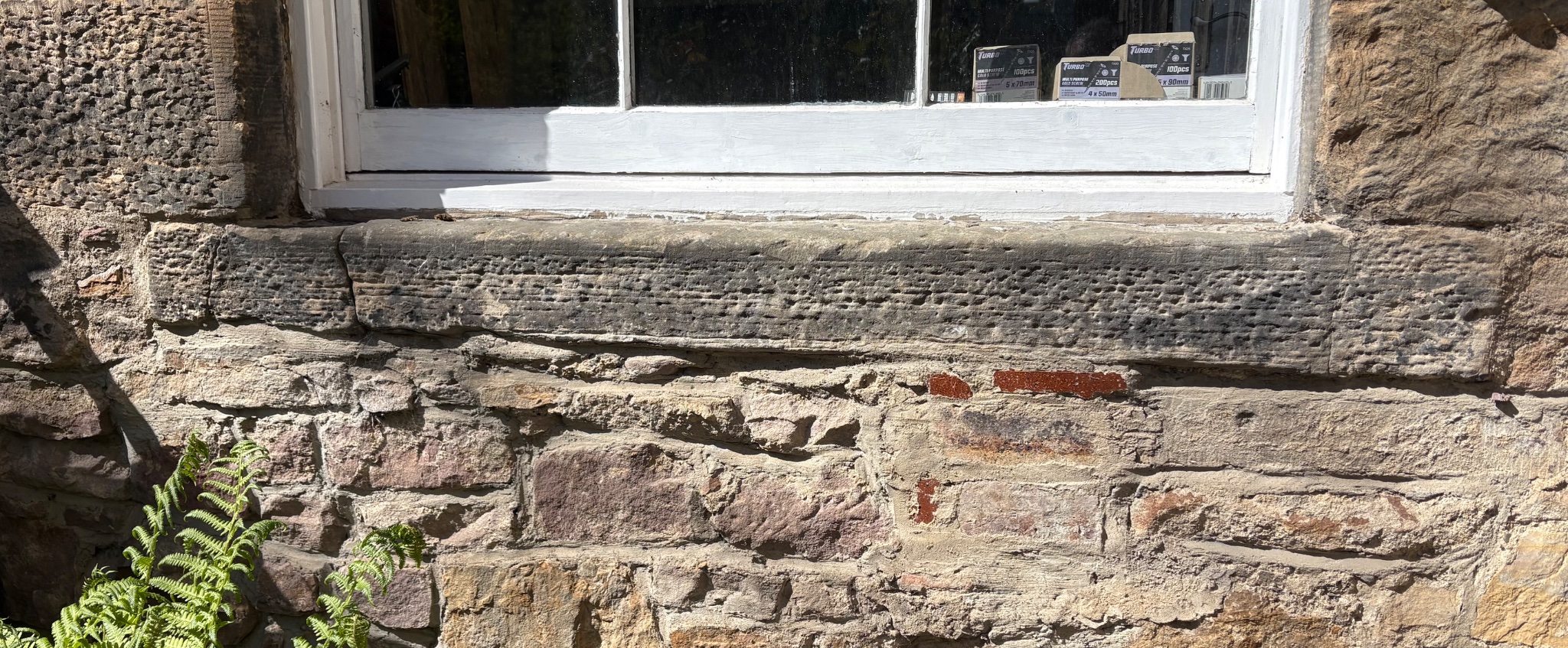
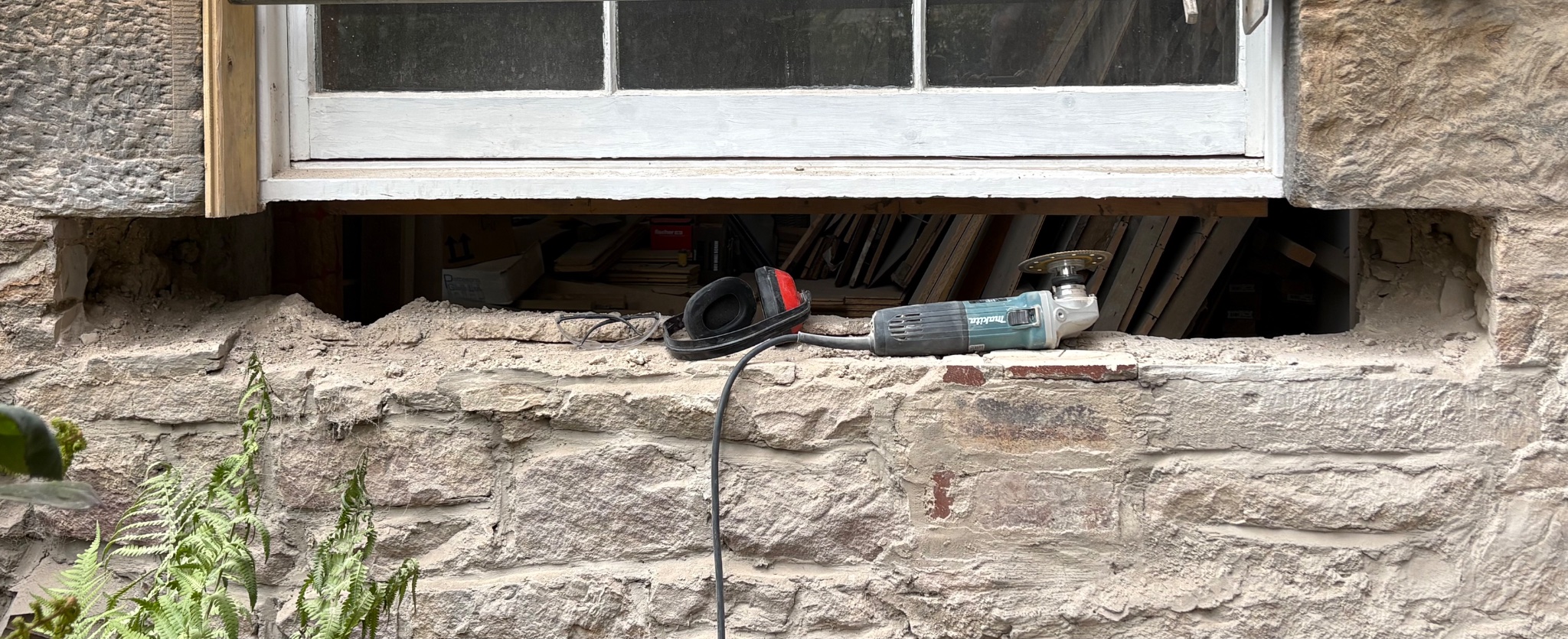
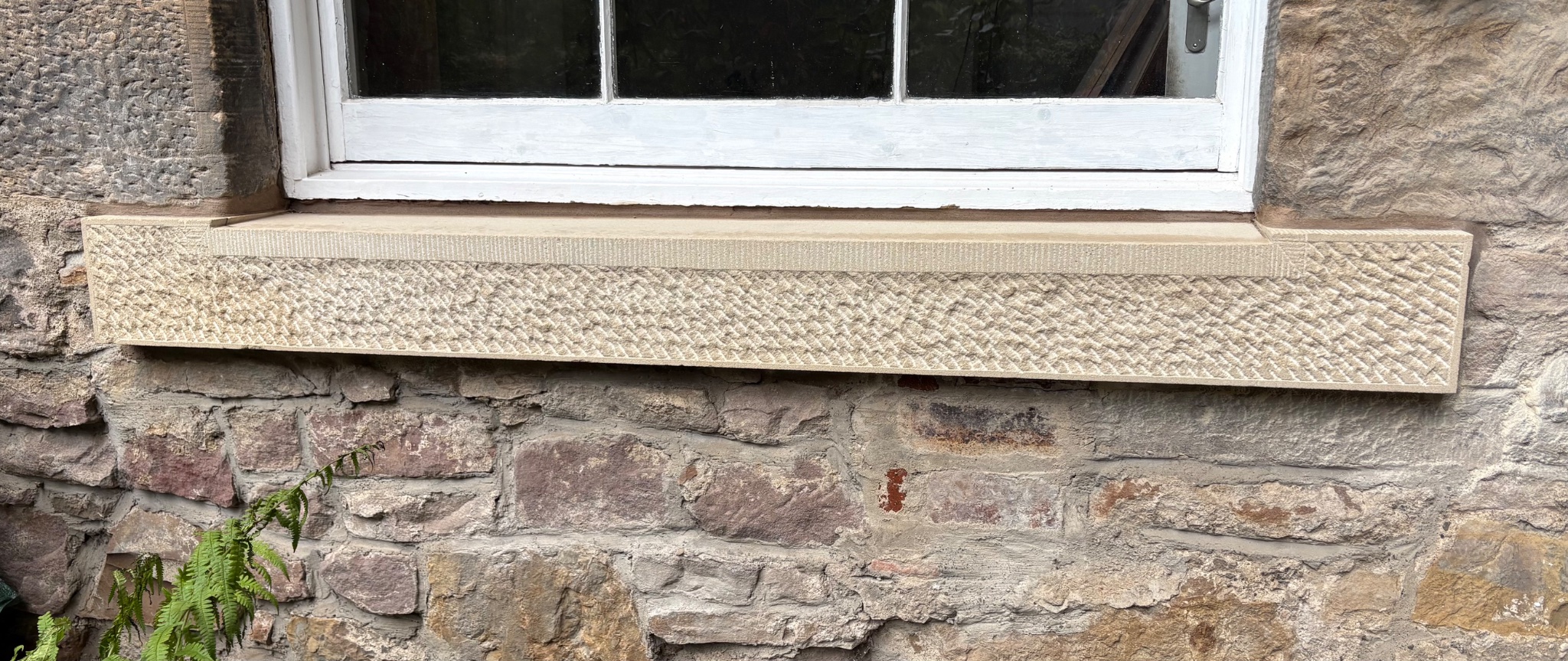
I'm basically happy with the job. They created an immense amount of dust which has reached every corner of the flat, but they managed to not destroy the plants in the garden (which is a rare skill). The new sill is about 10mm lower on the left than the right, and they've chosen to set it about 40mm proud of the wall - which matches most of the other windows on the building, but not the adjacent window nor is it how the old sill was positioned. But I bet no-one else will ever notice that.
So now I can get on with the next jobs on the list!
(I've kept the main part of the old stone. I might turn it into a garden bench, or shelf for pot-plants. Or maybe my own Stone of Destiny?)
Much of the slowness has been due to waiting for tradesmen. Last summer I decided that I'd get the cracked windowsill on the east window replaced. I got three quotes ranging from about £1500 to about £3000. I offered the work to the cheapest guy - and he disappeared. I didn't want to do it in the middle of the winter, so in February - around the time of the last posts above - I offered it to the middle-priced company (a bit less than £2k inc. VAT). He said 6-8 weeks mainly due to a waiting list at the stone supplier, and it finally got done yesterday, about 10 weeks after the stone was ordered.
Here are the before, during and after pictures. The old sill was cracked right through in two places at the left side and one place on the right, with water able to run through to the inside.
I'm basically happy with the job. They created an immense amount of dust which has reached every corner of the flat, but they managed to not destroy the plants in the garden (which is a rare skill). The new sill is about 10mm lower on the left than the right, and they've chosen to set it about 40mm proud of the wall - which matches most of the other windows on the building, but not the adjacent window nor is it how the old sill was positioned. But I bet no-one else will ever notice that.
So now I can get on with the next jobs on the list!
(I've kept the main part of the old stone. I might turn it into a garden bench, or shelf for pot-plants. Or maybe my own Stone of Destiny?)

DIYnot Local
Staff member
If you need to find a tradesperson to get your job done, please try our local search below, or if you are doing it yourself you can find suppliers local to you.
Select the supplier or trade you require, enter your location to begin your search.
Please select a service and enter a location to continue...
Are you a trade or supplier? You can create your listing free at DIYnot Local