
• Looking for a smarter way to manage your heating this winter? We’ve been testing the new Aqara Radiator Thermostat W600 to see how quiet, accurate and easy it is to use around the home. Click here read our review.

Meross MTS200 Install

Existing setup appears to be zonal heating and existing thermostats are stating 230vac
Remember, only going back to post #25, before that it was a different person's system, yes if there is a motorised valve it is likely 230 volt AC, there were some 24 volts, but rather special, so unlikely using them. But all I see is a three core and earth cable, nothing to show what connected to.

We can consider the most likely, but 24 volt stuff does not like 230 volts AC, and likely no second chance, so we know brown and black go to 3 and 5, but we have no idea what the bare copper and grey wires are connected to, or which of the brown and black wires are feed or return.

I have not tested a Meross thermostat, so I have no idea what voltage supply is required to light up the display, since lit likely it is a 230 volt supply, I assume you are looking at the statement "I have got dual thermostats - does that make a difference? They were wired both the same" I also have duel thermostats, and they are wired the same, they are simply wired in parallel, they both control the same zone, it is simply the house varies in temperature due to sun on windows, so no one location can ensure the boiler fires when required.

It is too easy to assume, my light switch by front door a four gang switch, has three independent supplies to it, two from different RCBO's and one is from a smart relay and is extra low voltage, lumping all switches together from one supply would likely damage relay and would also trip the RCBO's.

So question has to be what test equipment is available. There is no point talking about loop impedance etc, if he has not got anything to measure it with.

The problem is one, is it 230 volts AC, and two is the grey a neutral wire, could also ask if the bare wire is earth, yes since 1966 earth wires must be run to installed equipment, but sometimes boilers are wired by plumbers who seem to think the regulations book is for holding a door open. Clearly not all, but I have seen some horrors wired by plumbers.
 
Remember, only going back to post #25, before that it was a different person's system
Yes and post #27 both show photos of the existing thermostat which clearly state 230vac. No neutral required as battery powered
so we know brown and black go to 3 and 5, but we have no idea what the bare copper and grey wires are connected to,
Correct
or which of the brown and black wires are feed or return.
We can presume Com is feed in and NO is return (switched live)
I have not tested a Meross thermostat, so I have no idea what voltage supply is required to light up the display, since lit likely it is a 230 volt supply
Photo states L and N required plus switching
I assume you are looking at the statement "I have got dual thermostats - does that make a difference? They were wired both the same" I also have duel thermostats, and they are wired the same, they are simply wired in parallel, they both control the same zone, it is simply the house varies in temperature due to sun on windows, so no one location can ensure the boiler fires when required.
Yes looking at that plus the photos provided
So question has to be what test equipment is available. There is no point talking about loop impedance etc, if he has not got anything to measure it with.
Agreed
and two is the grey a neutral wire, could also ask if the bare wire is earth, yes since 1966 earth wires must be run to installed equipment, but sometimes boilers are wired by plumbers who seem to think the regulations book is for holding a door open. Clearly not all, but I have seen some horrors wired by plumbers.
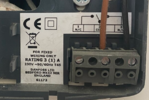
Correct
 
Yes and post #27 both show photos of the existing thermostat which clearly state 230vac. No neutral required as battery powered
Sorry no 1755001704053.png rated for 230 VAC, but battery powered, that does not show the voltage it works on.
We can presume Com is feed in and NO is return (switched live)
We both know it does not matter which is feed and which is return, it will work either way.
Photo states L and N required plus switching
Sorry, that is correct, but I was pointing out just because the display lit up, does not mean we have 230 volts.

Personally, I want all the heating to be on the same circuit, or battery powered. The main reason for that, is supply to central heating, is battery backed with a 6.4 kWh battery. There is a problem with unskilled people that if multi supplies are used, one may get a borrowed neutral which is rather dangerous, however as long as one knows what one is doing, with volt free contacts there is really no reason not to use an alternative supply, that is what is done with Nest and USB, fact that the USB power supply is not built into the thermostat really makes no difference.

I assume the reason to change is geo-fencing or other system to turn heating off/on when away from home. Both my Nest and Wiser thermostats allow this, plus half the TRV heads. However, I have found it is better using simple time, it does seem it will work with voice commands, but the Merose comes in three versions, and the 16 amps version for electric under floor heating is about the cheapest around, and I can see why so many fit it.

However, for standard gas, and oil fired central heating, the key component is the TRV head, this is why Nest is useless, one can of course put both a TRV and wall thermostat in every room, and that way it would work, but it will not improve the central heating, it just means you don't need to leave the chair to adjust heating.
 

If you need to find a tradesperson to get your job done, please try our local search below, or if you are doing it yourself you can find suppliers local to you.

Select the supplier or trade you require, enter your location to begin your search.


Are you a trade or supplier? You can create your listing free at DIYnot Local

 
Back
Top