
- Joined
- 2 Feb 2023
- Messages
- 6
- Reaction score
- 0
- Country

Hi All,
Just spoken to my insurer after noticing some fairly significant cracks in the exterior of my property. They did not seem concerned, despite descriptions and measurements, and advised I 'got someone I know' to look at it. I don't know anyone, so wondering if anyone here has any insights.
House is built in 2005, in Swindon, Wiltshire. Soil is clay, and in the summer the soil in the garden cracks notably, big enough cracks in the soil that you could fit your hand in. There are a few small deciduous trees in the garden, maybe 15ft tall, closest is perhaps 5m away from the wall.
I noticed a few hairline cracks appear in the masonry last year with the dry summer, starting from above the window lintel. These were hairline, I have a micrometer and couldn't really measure them. I've just noticed there are now what appear to be significant cracks in the front, rear and side of the house closest to trees. The other wall (away from the garden) has no visible cracks.
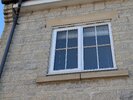
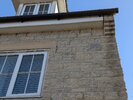
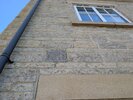
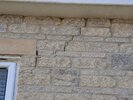
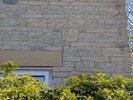
I've measured and the largest crack is ~4mm, I'm aware of the BRE guidance that says cracks up to 5mm are 'aesthetic' but the number of these cracks is concerning to me, as the appear on both sides of the house (i.e. as you're looking at the front of the house, there are cracks from the left hand bedroom going stepwise up to the top left of the house, and from the right hand side to the top right). Cracks start at the top of the window on both the ground and second floor on the front of the house. Rear seems less significant but has similar cracking from ground floor windows terminating at second floor. The wall closest to the trees has no windows/entries but does have a crack that rises from the ground and terminates about 15ft up (about 2mm wide). The house is three storeys in total although one of these is in the roof. The exterior wall cracks are new, and have got worse after the wet winter.
There is no obviously parallel cracking in plasterboard inside, although in both corners of the top floor bedroom (i.e. within the roof from front facing photos) there are ~3mm cracks running the height of the room in one corner - this wouldn't necessarily correspond to the exterior cracks and there's no cracking at the 3rd floor level on the garden facing wall.
House is built in 2005, Persimmon/one of the other big builders. We've lived here since 2020 and not noticed any issues before. No building work, extensions or any other work done to the house since 2020 at least.
Any thoughts much appreciated. Obviously quite worried and expected insurance to be too, but they weren't....Happy to provide more photos/videos if they help, I've shown what I think to be the most concerning bit!
Edit: Neighbours have house built in same style, clearly on the same type of soil and no one seems to have cracking like this, although we are probably unique in our trees.
Just spoken to my insurer after noticing some fairly significant cracks in the exterior of my property. They did not seem concerned, despite descriptions and measurements, and advised I 'got someone I know' to look at it. I don't know anyone, so wondering if anyone here has any insights.
House is built in 2005, in Swindon, Wiltshire. Soil is clay, and in the summer the soil in the garden cracks notably, big enough cracks in the soil that you could fit your hand in. There are a few small deciduous trees in the garden, maybe 15ft tall, closest is perhaps 5m away from the wall.
I noticed a few hairline cracks appear in the masonry last year with the dry summer, starting from above the window lintel. These were hairline, I have a micrometer and couldn't really measure them. I've just noticed there are now what appear to be significant cracks in the front, rear and side of the house closest to trees. The other wall (away from the garden) has no visible cracks.
I've measured and the largest crack is ~4mm, I'm aware of the BRE guidance that says cracks up to 5mm are 'aesthetic' but the number of these cracks is concerning to me, as the appear on both sides of the house (i.e. as you're looking at the front of the house, there are cracks from the left hand bedroom going stepwise up to the top left of the house, and from the right hand side to the top right). Cracks start at the top of the window on both the ground and second floor on the front of the house. Rear seems less significant but has similar cracking from ground floor windows terminating at second floor. The wall closest to the trees has no windows/entries but does have a crack that rises from the ground and terminates about 15ft up (about 2mm wide). The house is three storeys in total although one of these is in the roof. The exterior wall cracks are new, and have got worse after the wet winter.
There is no obviously parallel cracking in plasterboard inside, although in both corners of the top floor bedroom (i.e. within the roof from front facing photos) there are ~3mm cracks running the height of the room in one corner - this wouldn't necessarily correspond to the exterior cracks and there's no cracking at the 3rd floor level on the garden facing wall.
House is built in 2005, Persimmon/one of the other big builders. We've lived here since 2020 and not noticed any issues before. No building work, extensions or any other work done to the house since 2020 at least.
Any thoughts much appreciated. Obviously quite worried and expected insurance to be too, but they weren't....Happy to provide more photos/videos if they help, I've shown what I think to be the most concerning bit!
Edit: Neighbours have house built in same style, clearly on the same type of soil and no one seems to have cracking like this, although we are probably unique in our trees.
Attachments
-
 PXL_20260302_143900190.RAW-01.COVER.jpg657.1 KB · Views: 108
 -
 PXL_20260302_143744503.RAW-01.COVER.jpg571.9 KB · Views: 108
 -
 PXL_20260302_143919426.RAW-01.COVER.jpg777.2 KB · Views: 106
 -
 PXL_20260302_143753810.RAW-01.COVER.jpg831.3 KB · Views: 112
 -
 PXL_20260302_143807761.RAW-01.COVER.jpg912.3 KB · Views: 128
Last edited:


