Perimeter noggins - Same size as joists?

Joined
26 Sep 2025
Messages
24
Reaction score
3
Country
United Kingdom
Hi everyone,

I am current insulating the eaves of joists and need to add perimeter noggins. The joists are 8inch/ 200mm (plus furring on top) - do I need to add 8inch/ 200mm here or can it be (for example) a 4inch/ 100m noggins here? My understanding is that it's just for additional support for plasterboards?

FYI - There are 8inch noggin in the centre of joists already and the longest joist length is 4.5m

joists end.jpeg
 
The noggins are to stiffen up the floor and stop the joists twisting.

Twisting will start at the ends if they are not restrained. The noggins should be at least 3/4 the joist depth.

Remember to set them in to allow for the thickness of wall plaster, not flush against the wall.
 
The noggins are to stiffen up the floor and stop the joists twisting.

Twisting will start at the ends if they are not restrained. The noggins should be at least 3/4 the joist depth.

Remember to set them in to allow for the thickness of wall plaster, not flush against the wall.
Given there are 8" noggin in the centre of joists, do I still need 3/4 sized at the ends?

As for setting them in, the insulation is flush with the inner block, will be expansion foamed and then noggin set about 1-2" in front. Is that the right way to do it?
 
Given there are 8" noggin in the centre of joists, do I still need 3/4 sized at the ends?

As for setting them in, the insulation is flush with the inner block, will be expansion foamed and then noggin set about 1-2" in front. Is that the right way to do it?
Smaller is fine at the perimeter, one for the ceiling below and one to support the floor. 3/4 isn't required and won't work anyway, it needs to be flush top and bottom, for floor and ceiling.
 
Smaller is fine at the perimeter, one for the ceiling below and one to support the floor. 3/4 isn't required and won't work anyway, it needs to be flush top and bottom, for floor and ceiling.
It's a single story extension so when you say "one for the ceiling below and one to support the floor" do you mean like this?

joists end2.jpg
 
If you do 2x smaller noggins as AFT4B suggests then you are much more easily able to route plumbing between them all.
 
If you do 2x smaller noggins as AFT4B suggests then you are much more easily able to route plumbing between them all.
I have 2x4" already so thinking about using that with a 2" gap from the wall to allow services to go through the roof and behind the perimeter noggin.

I'm undecide on whether I want to go for dot & dab plasterboard or for it to be bonded & plastered. The 2" allows for plenty of space for services and dot & dab + plasterboard...?
 
I'm undecide on whether I want to go for dot & dab plasterboard or for it to be bonded & plastered
D&D every time. It usually ends up being about 25-30mm thick when skimmed. The thickness obviously increases if you have chunky cable or pipe runs, occupying the wall surface.
 
D&D every time. It usually ends up being about 25-30mm thick when skimmed. The thickness obviously increases if you have chunky cable or pipe runs, occupying the wall surface.
Would you not chase the cables/ pipes into the thermalite blocks to reduce the wall build up? Also a little worried about drilling into pipes and cables so want to use conduit.

Part of the new building is the kitchen - so I have to consider getting a solid base to fix units, etc. That said, it's ultimately the thermalite blocks behind which will do the "holding" so probably doesn't make much difference whether D&D or Bonding?
 
Last edited:
Would you not chase the cables/ pipes into the thermalite blocks to reduce the wall build up?
As long as it is done thoughtfully - yes.
Part of the new building is the kitchen - so I have to consider getting a solid basis to fix units, etc. That said, it's ultimately the thermalite blocks behind which will do the "holding" so probably doesn't make much difference whether D&D or Bonding?
Not really no. Just longer screws and decent predcitable dabs....


We do add more dabs if extra support is needed.
 
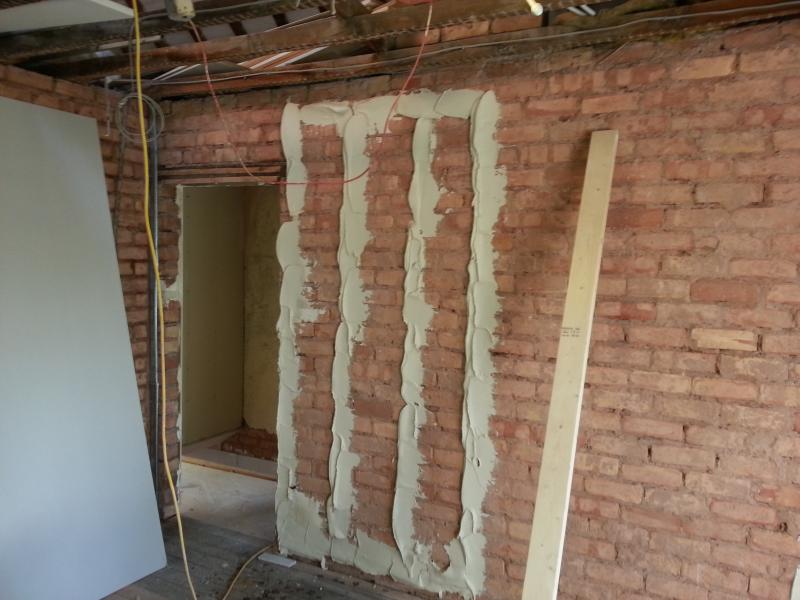
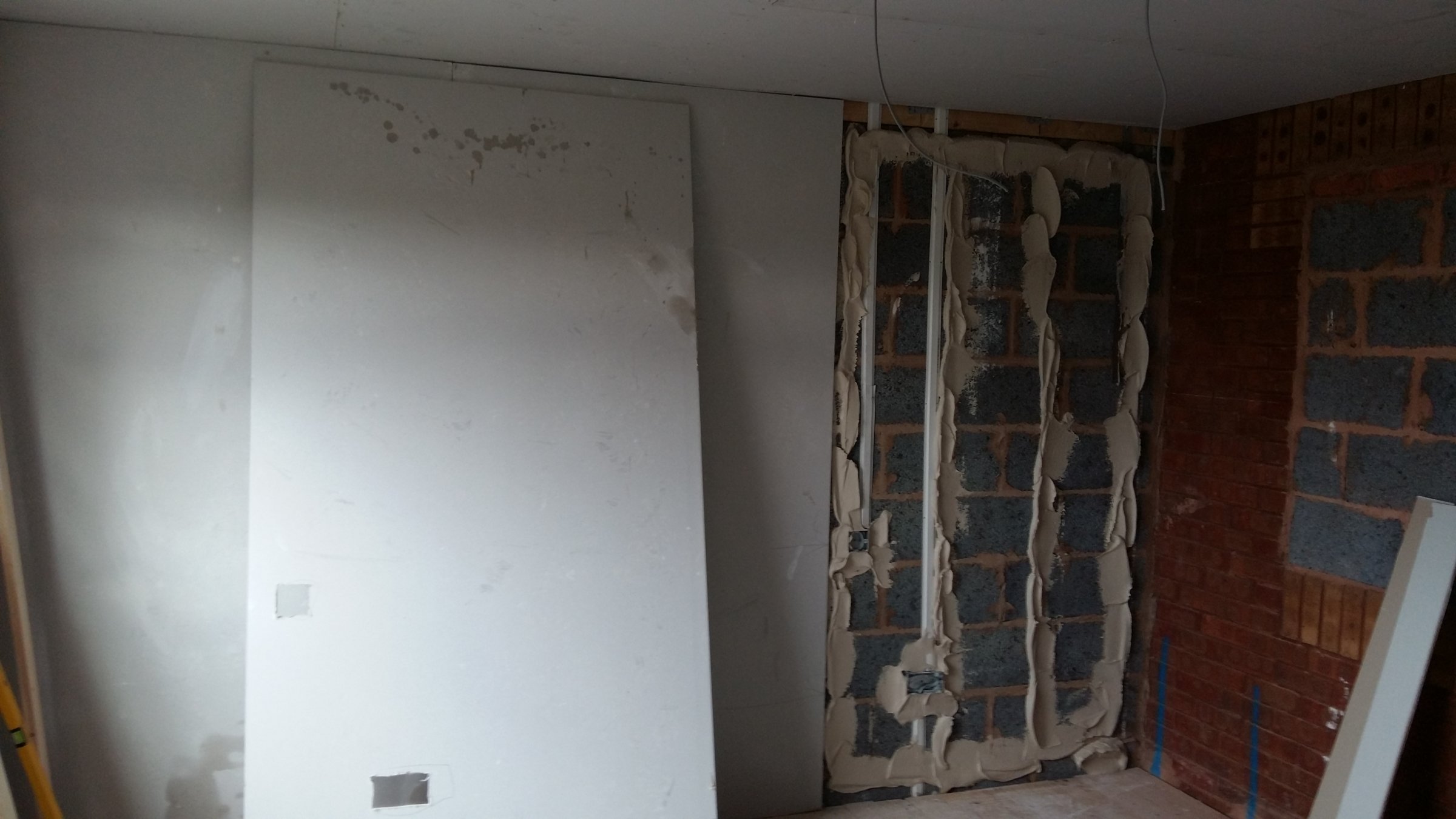
Thanks! That looks like a good way to D&D (as oppose to random spaced out dots) - when you say predictable dabs - do you mean so ideally you can screw into them?

I'm now thinking cables in steel channels and pipes slightly chased in if required.

BTW - why use PVC channels over steel? Surely the idea is to less easily drill into wires?
 

If you need to find a tradesperson to get your job done, please try our local search below, or if you are doing it yourself you can find suppliers local to you.

Select the supplier or trade you require, enter your location to begin your search.


Are you a trade or supplier? You can create your listing free at DIYnot Local

 
Back
Top