Phone Cable Question

Joined
8 Mar 2026
Messages
13
Reaction score
0
Country
United Kingdom
Hello,

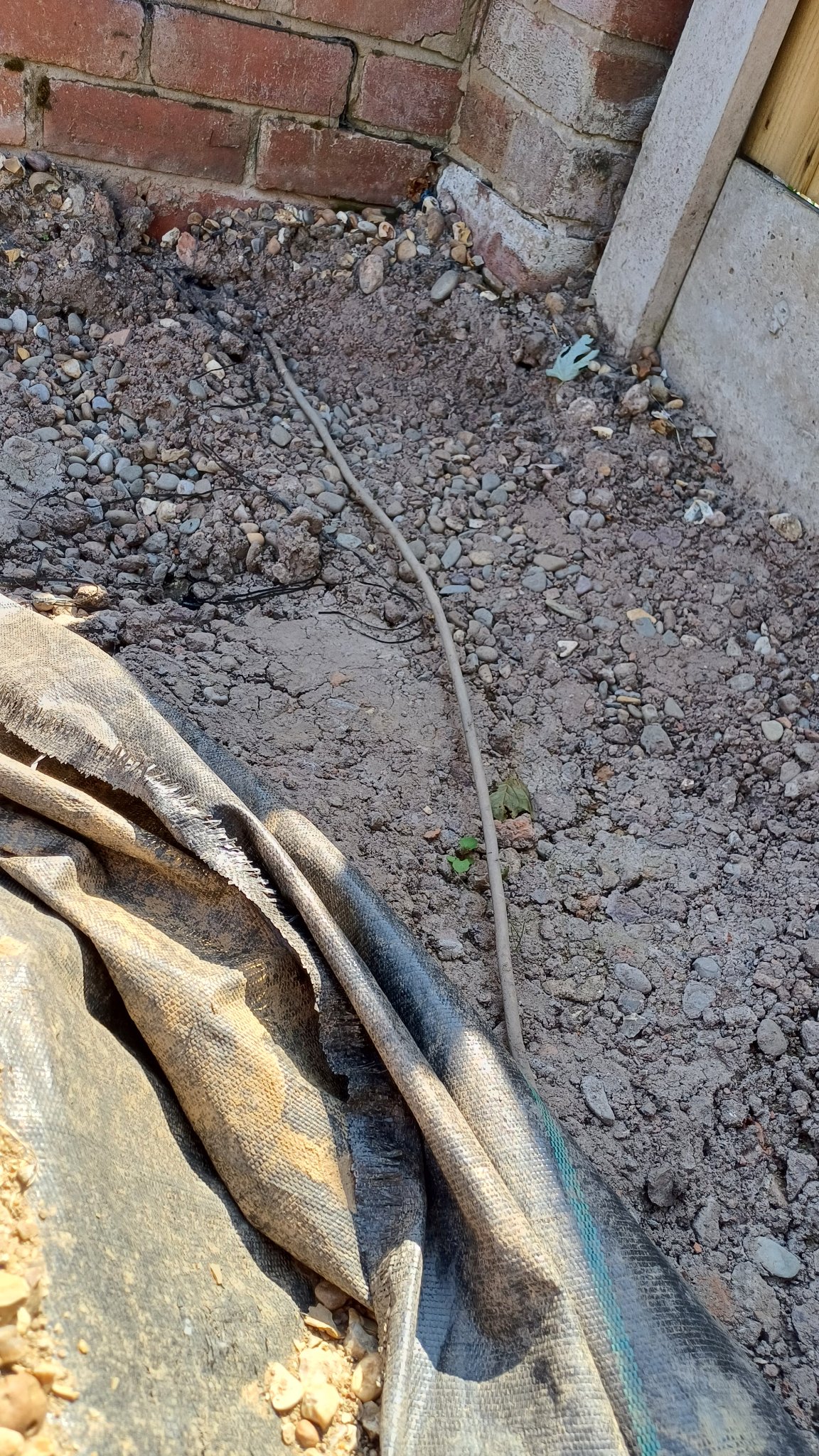
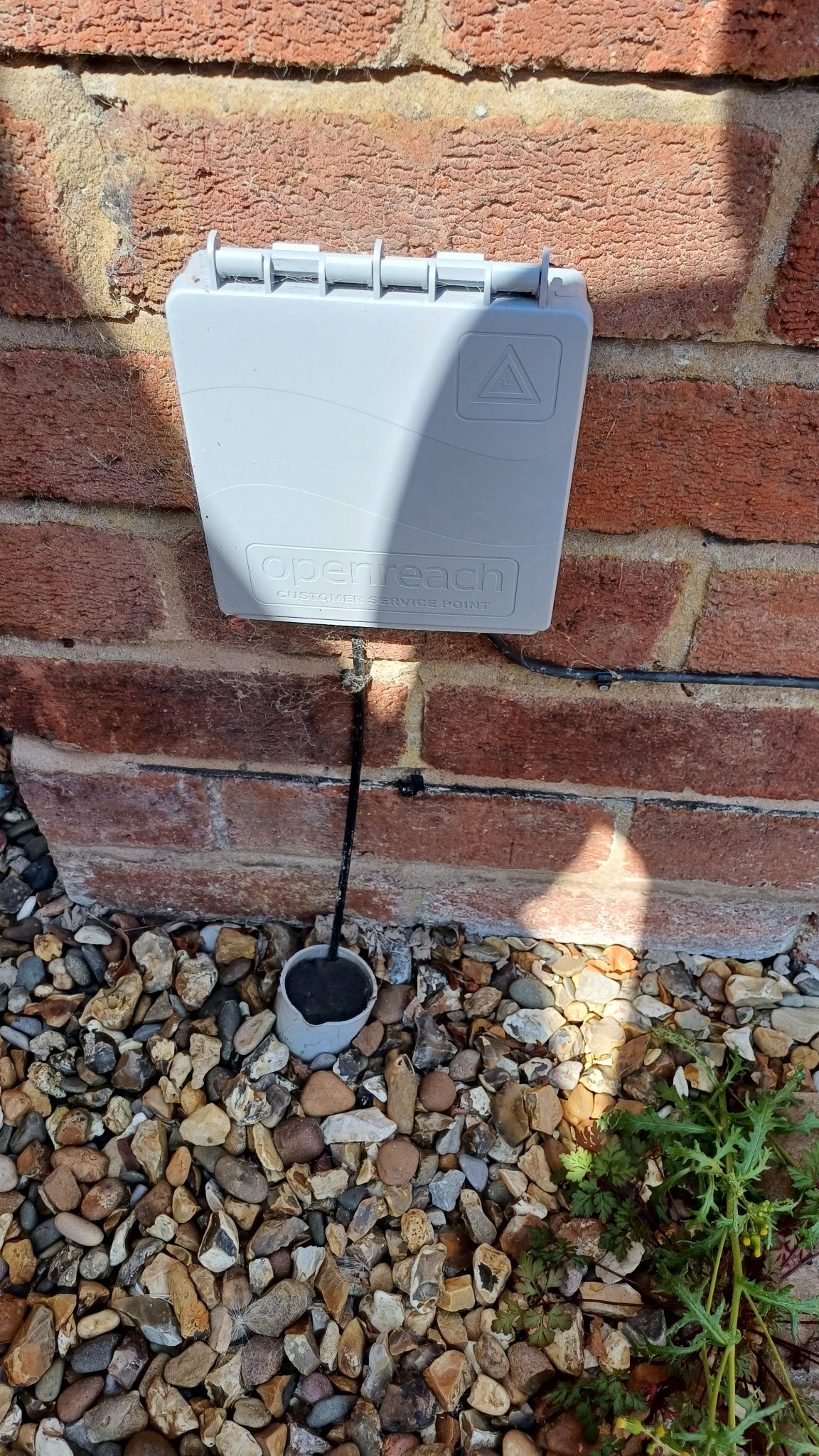
Not sure where is best to post this. I have fibre optic Internet by Open Reach. The cable comes up through a grey plastic conduit and into the box on my house. At the front of the garden, next to the highway, a cable comes in under the garden wall (the old BT metal grid is on the footpath on the other side of the wall)...

Is the cable I have unearthed the fibre optic or the old analogue cable? It is a metallic, twisted material inside a clear plastic exterior (like a bicycle cable lock).

Thanks
20260715_110943.jpg
20260715_111035.jpg
 
Fibre optic cable needs some device somewhere to turn it into electrical signals, this needs power, so will be plugged in, and we would hope you can still use the phone when there is a power cut so also some battery to back it up.

I know my friend had it installed, and used the inverter supply from the solar panels so with a DNO supply failure the phone would still work, but it seems the OpenReach cabinet did not have a battery, so with a power cut the phone stops working, and his mobile also will not work.

Not talked to him to find out what OpenReach have done to allow him to even report when he has a power failure.
 
Not talked to him to find out what OpenReach have done to allow him to even report when he has a power failure.
I can answer that one for you...


Naff all, they are not interested.

Apparently the cabinet doesn't require power to distribute FTTH. For us we don't have full fibre so the cabinet does require power. When I walked past the open cab - which is supplied from a different sub - I mentioned the lack of service during a power cut to the engineer and he quite happily showed the empty spaces where the batteries could go but explained they only fit them if any customer requires service, such as pull cord/pendant assistance etc.
 
Apparently the cabinet doesn't require power to distribute FTTH.
Eh -how does that work? If light goes into the box and electrical signals come out of it, there surely has to be some electronics which require some source.

Are you perhaps merely saying that FTTH does not require mains power, because it has internal batteries that can do the 'powering'?
[ that would be a bit like saying that a cordless drill/vacuum cleaner/telephone/whatever "doesn't require power" :-) ]
 
Eh -how does that work? If light goes into the box and electrical signals come out of it, there surely has to be some electronics which require some source.

Are you perhaps merely saying that FTTH does not require mains power, because it has internal batteries that can do the 'powering'?
[ that would be a bit like saying that a cordless drill/vacuum cleaner/telephone/whatever "doesn't require power" :-) ]
What electrical signals?
 
The ones that go to/from your computer and other devices - which I presume don't understand 'light'?
Could be wrong but doesn't the box in your house convert signals from the router (electrical ) to light for the fibre tansmission. So as it has to be independantly powered you supply the electricity.
 
Unless someone explains otherwise I see it as a serious single point of failure scenario.
In the days of old when Post Office Telephones ran the service (then later BT) yes some of the engineers could be a bit pedantic and had the mindset to insist they were the only ones who could and should install the service and largely did do admittedly a decent job with thought and due diligence.

In the main they put the wires high up out of normal reach to most miscreants to reduce risk of that single point of failure, not foolproof but helpful though.
They clipped them neat and professional and most connections were again a bit out of normal reach.

Roll forwards to todays standards - they put cables/fibre optics low down with a flimsy plastic junction box within reach of all even on thoroughfare for the school run or the trip between pubs whereby all and sundry can accidentally catch/damage them or deliberately.
Too few clips on horizontal runs and the clips are bloody well "upside down" prone to failure via a simple accidental/deliberate pull whilst passing.

If you have a power cut and lose internet you have no landline (unless you are on a few limited conditions).
The lads that do this clipping/installing may be well intentioned but have little if any proper formal training like the ones of old.
Like most industry/commerce/retail/banks/public bodies etc etc its a race to the bottom on price and terrible on service, try getting hold of a person to actually speak to these days.
You used to be able to do so a few years back but nowadays no chance until you had ages on hold.
And if you old enough not to be completely IT savvy you have no chance.

We used to be accused of over engineering things and making them too expensive - nowadays we are a third rate third world country!
 
With ftth the light in the fibre is converted to electrical signals via the box in your house, the ONT optical network termination. Which is powered from your electricity.
The green cabinets require power if they are converting the signal and therefore you have fttc ( fibre to the cabinet).
The grey box outside your house where the underground fibre goes to is the CSP (customer splice point) where the fibre is connected to the fibre that runs into your house to the ONT. the ONT is then connected to your router
 
Last edited:
The cabinet, can both distribute and boost the signal, and often it needs power to boost the signal even when it both arrives and leaves as fibre.

So my friend like myself, has batteries for his solar array, and can have part of his house on an EPS supply, so it made sense for power to the phone to come from the EPS specially as he had frequent power cuts, and no mobile phone signal.

First outage, went to report it, and phone did not work.

So he can't have a smart meter, as no mobile signal, so it does not auto report any power outage. It seems we are going backwards.
 
Eh -how does that work? If light goes into the box and electrical signals come out of it, there surely has to be some electronics which require some source.

Are you perhaps merely saying that FTTH does not require mains power, because it has internal batteries that can do the 'powering'?
[ that would be a bit like saying that a cordless drill/vacuum cleaner/telephone/whatever "doesn't require power" :-) ]
Passive optical splitters. It's very clever technology.
 

If you need to find a tradesperson to get your job done, please try our local search below, or if you are doing it yourself you can find suppliers local to you.

Select the supplier or trade you require, enter your location to begin your search.


Are you a trade or supplier? You can create your listing free at DIYnot Local

 
Back
Top