Plug in solar, RCD, RCCB etc

Joined
22 Dec 2012
Messages
1,546
Reaction score
384
Location
Ross-shire
Country
United Kingdom
Hi everyone, excuse my electrical ignorance.

I'm looking at adding a little plug in solar system, two panels and a 800w microinverter.

Doing some reading online, I've seen mention of needing bidirectional RCBO, and others saying it's not needed.

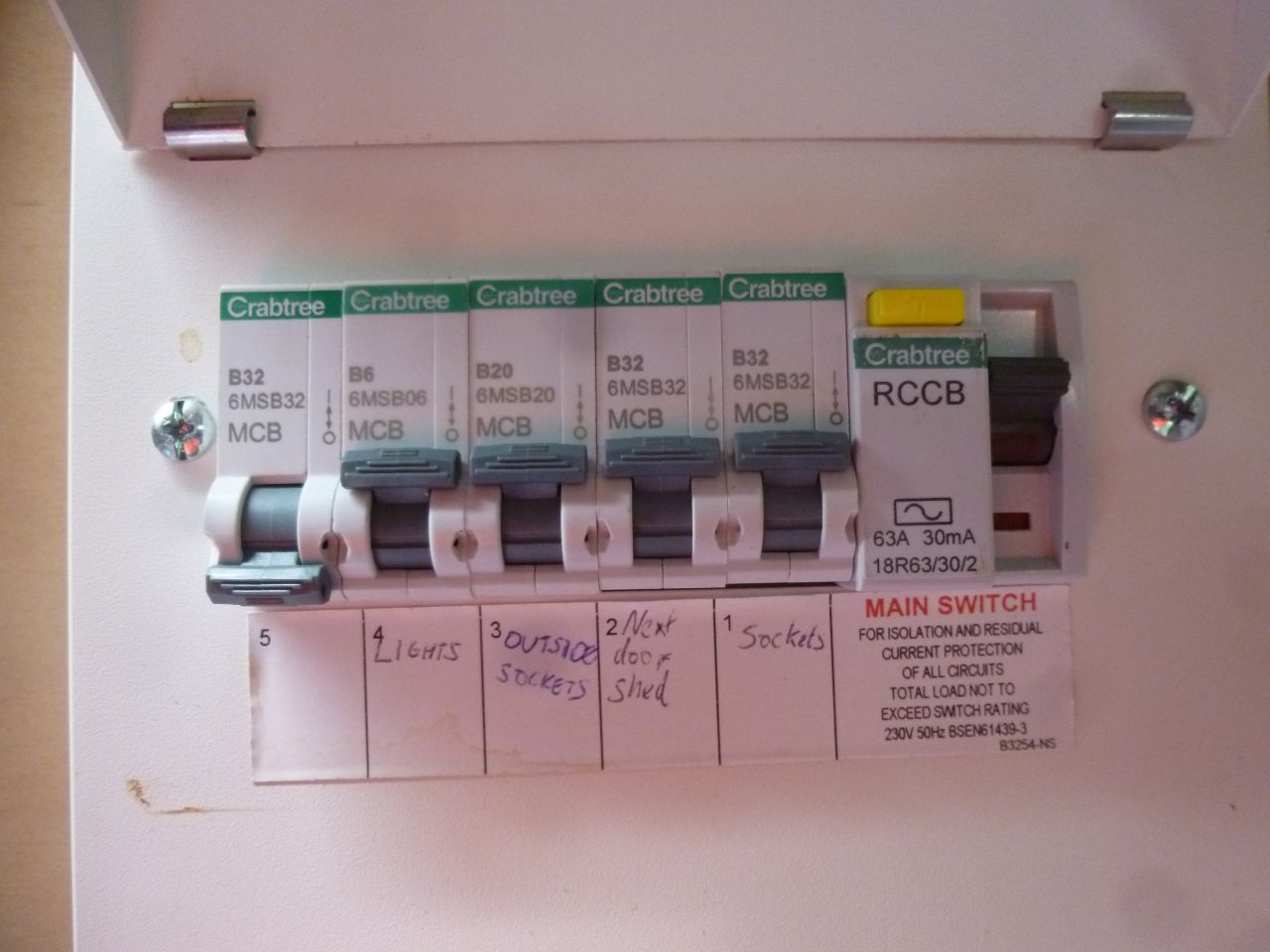
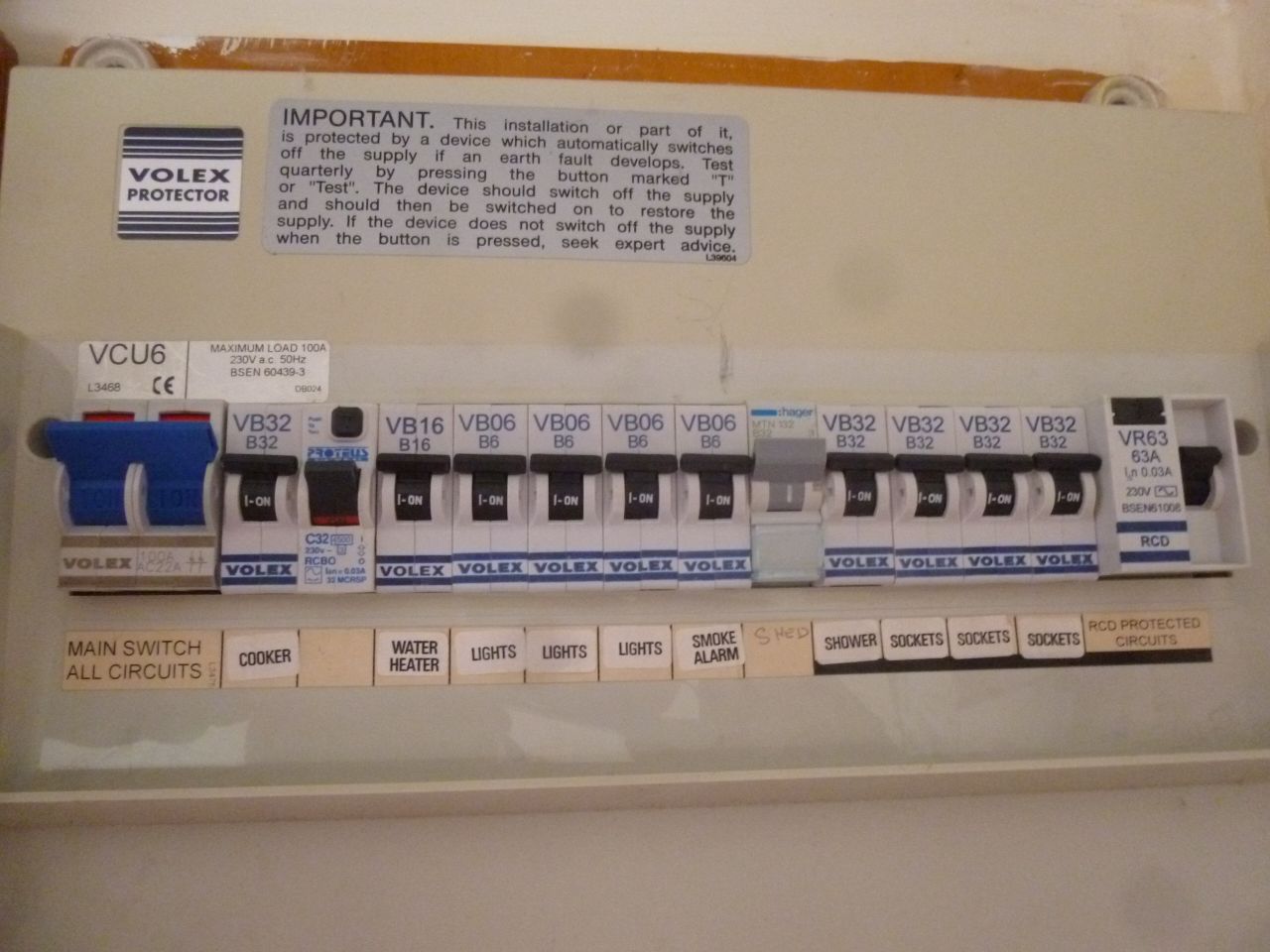
My current setup is in the photos, the older consumer unit in the house, and the newer 5-way one in the shed which was put in about 2018.


There's a few potential locations for the panels, either adding an outside socket to one of the house circuits, or plugging straight in to the existing outside socket on the shed.

Is anything needing changed?


P1090860x.jpg


In the shed:

P1090865x.jpg
 
And since we're at it, does anyone on here have a city plumbing trade account, and know if is there any discount on solar?
 
Three two are apparent, one three B32 MCBs in a consumer unit supplied by a B32 MCB is pointless, the B32 and the RCBO in the main consumer unit is the wrong make.

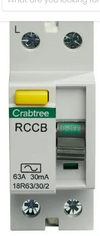
So assuming the supply to shed is not RCD protected and the picture of the RCD 1790782990834.pngshows no in or out, so OK type AC where we would like type A, but it appears to be OK with Bidirectional supply. The other RCD would technically 0.5 amp under the limit with a 60 amp DNO fuse, as 800 watt is 3.5 amps, and so 60 + 3.5 is over the limit, but it is so close I would not worry, you can't have an 80 or 100 amp DNO fuse as the MCBs total over the 63 amp rating of the RCD.

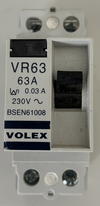
Personally, I would not have put all sockets on one RCD, clearly you can't have one on cooker circuit as not RCD protected on that side. But as far as plug in solar goes, there does not seem to be a problem, again I see no feed, in, or out markings on the RCD 1790783848822.png so that also seems OK for plug in solar.

The RCBO I can't read the writing to find a picture where the termials are not hidden, but it should not be there in the first place.

So all in all, can't see a problem with plug in solar, but can see a few other departures from what should be done.
 
Hi everyone, excuse my electrical ignorance.

I'm looking at adding a little plug in solar system, two panels and a 800w microinverter.

Doing some reading online, I've seen mention of needing bidirectional RCBO, and others saying it's not needed.

My current setup is in the photos, the older consumer unit in the house, and the newer 5-way one in the shed which was put in about 2018.


There's a few potential locations for the panels, either adding an outside socket to one of the house circuits, or plugging straight in to the existing outside socket on the shed.

Is anything needing changed?


View attachment 423292


In the shed:

View attachment 423291
Fine as far as plug in goes, just work through the installation instructions.
 
Doing some reading online, I've seen mention of needing bidirectional RCBO, and others saying it's not needed.
The proper choice for solar is a dedicated bidirectional RCBO that is connected only to the inverter.
For 100% of installs that means adding such a thing.

However the plug in affairs will just be purchased, plugged in to whatever is there and that is the end of the story.
Any notion about people checking things first or completing the notification documents is fiction.
 
However the plug in affairs will just be purchased, plugged in to whatever is there and that is the end of the story.
Any notion about people checking things first or completing the notification documents is fiction.
I'm sure your comments were taken on board during the consultation.
 
I have heard that Octopus are doing some deal where you can be paid for export, but you need to pay for the privilege.

So there is a lot of debate as to what is the best method to install solar, I honestly don't know the best method.

I read with interest the laws to allow plug-in solar, the lack of batteries, raises the question as to if grid-tie is the way to go, or if a battery pack is better, and not be grid tied.

But the detail should be in the instructions supplied with the kits, and as, yet I have not read a copy, clearly it will need to be bilingual, or they could not expect the Welsh to read them. Or put it this way, if instructions are not in Welsh, then they are not legally binding in Wales.

And as far as I am aware, they are not in Welsh, so @flameport makes a good point, most will simply buy, plug and play, and only read instructions if it does not work.

When bored I have been known to read instructions. I read the instructions for an Erbauer battery drill, mainly to see if spares were available, and the instructions say you should watch the battery when on charge, as if anyone would do that, you use the drill, and then put the battery on charge and walk away.

So what I am pointing out, clearly people take very little attention to manufacturers instructions, when one picks up the instructions for a battery-powered drill, which comes without battery and charger, and it tells one how to fit a plug, it is clear the instructions are generic and not really for the model of drill one has bought, so we get into the mindset of only read instructions when all else fails.
 
Last edited:

If you need to find a tradesperson to get your job done, please try our local search below, or if you are doing it yourself you can find suppliers local to you.

Select the supplier or trade you require, enter your location to begin your search.


Are you a trade or supplier? You can create your listing free at DIYnot Local

 
Back
Top