

Hi,
We’re replacing our living room radiator with a vertical one and our plumber has sent a few options.
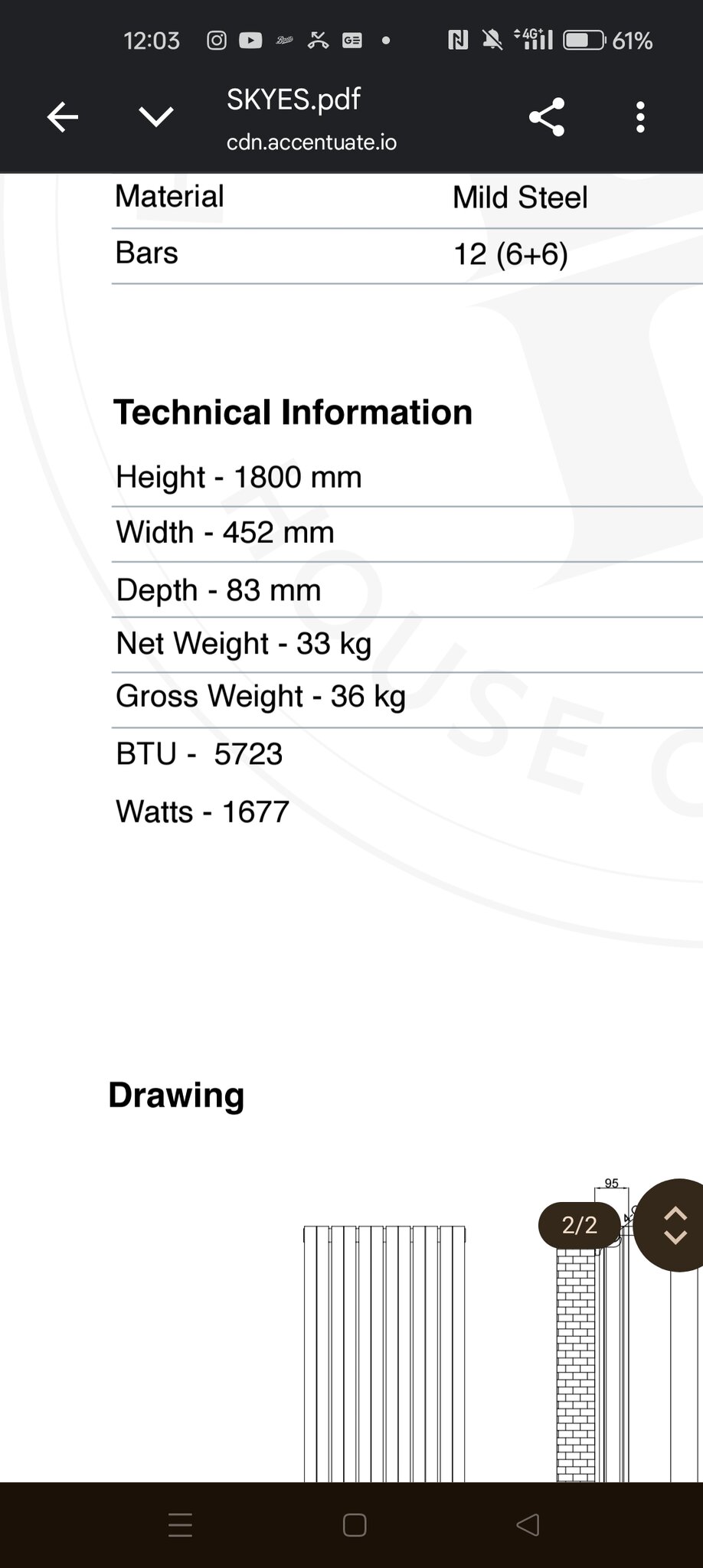
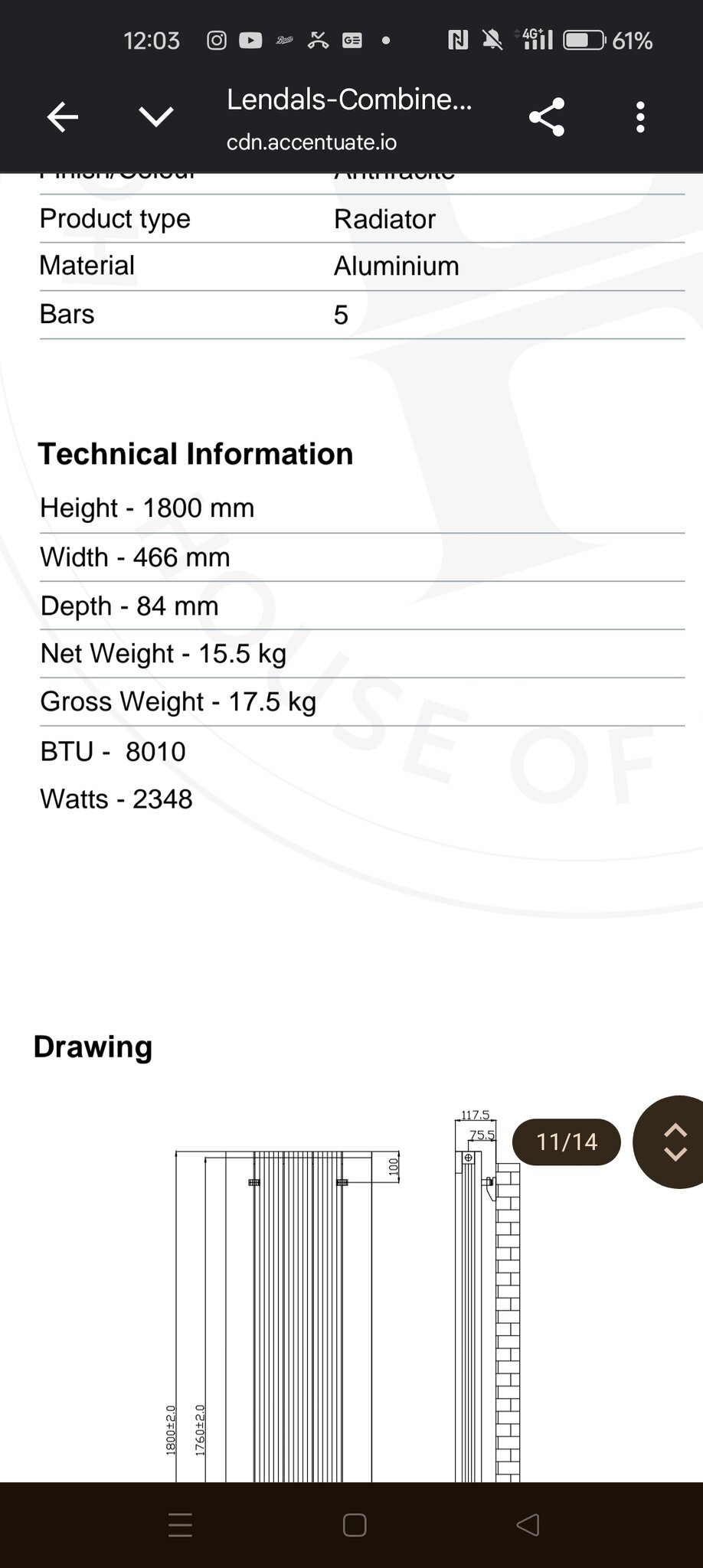
One is a steel radiator (~5700 BTU) and another is aluminium (~8000 BTU). Our room only needs around 5600–5700 BTU, so both would technically be enough.
The rest of the radiators in the house are original steel ones (house built in 1996, standard boiler setup).
We quite like the look of the aluminium one and the price is pretty similar, but I’m wondering if there are any real benefits beyond aesthetics.
I’ve read that aluminium heats up faster but also cools down quicker, so wondering if steel radiators would actually be a better option in that regard?
Is aluminium actually better, or does it not really matter as long as the BTU output is right?
Also, is it okay to mix aluminium and steel radiators in the same system?
I’ve seen a few mentions of potential corrosion issues when mixing metals, but the plumber said that using an inhibitor prevents this issue.
We’re replacing our living room radiator with a vertical one and our plumber has sent a few options.
One is a steel radiator (~5700 BTU) and another is aluminium (~8000 BTU). Our room only needs around 5600–5700 BTU, so both would technically be enough.
The rest of the radiators in the house are original steel ones (house built in 1996, standard boiler setup).
We quite like the look of the aluminium one and the price is pretty similar, but I’m wondering if there are any real benefits beyond aesthetics.
I’ve read that aluminium heats up faster but also cools down quicker, so wondering if steel radiators would actually be a better option in that regard?
Is aluminium actually better, or does it not really matter as long as the BTU output is right?
Also, is it okay to mix aluminium and steel radiators in the same system?
I’ve seen a few mentions of potential corrosion issues when mixing metals, but the plumber said that using an inhibitor prevents this issue.
Last edited:


