
- Joined
- 18 Apr 2022
- Messages
- 7,402
- Reaction score
- 1,132
- Country

* It can't detect earth/neutral reversal.
They could detect a reversal at a socket on an RCD protected circuit.

* It can't detect earth/neutral reversal.
Not if they have been powered continuosly for weeks/months.
That design gets rather hot in operation, which is ideal for ensuring it has as short a life as possible.

worse than not using one at all ?easy to mislead as to actually worse than than using one at all.
Hah - I did wonder which one of you would spot that one !*** PEDANT ALERT *** PEDANT ALERT ***
worse than not using one at all ?
Not necessarily a circuit, just needs a CU updateGet a new circuit in that is rcd protected or bring your installation wiring up to date.
Voltsticks are great at what they doWell we get to the point of any equipment of any size and any price might have its merits to some degree but each man should know his limitations as Clint might say.
Each man should know his equipment limitations too.
Proper test gear used in a properly trained way is a good (the best) way to do.
Using something that only gives limited info can actually be dangerous to rely on, that is the problem,
using a voltstick or a plug in tester has serious limitations and so easy to mislead as to actually worse than than using one at all.
and the infamous "Mains Tester Screwdriver" well that is not really recommended even though it might have been all the rage in the 60s and onwards too.
and yet there are Electricians today who place too much actual reliance on proper testgear too.
such as an all singing all dancing multitester for example.
The most obvious problem is over reliance of the true readings - a loop tester or a voltage tester for example giving a resolution of 0.001 is often mistakenly thought of as an indication of its accuracy .
Never confuse resolution with accuracy - a resolution of 0.001 with an accuracy of +/- 10% is not an indication of accuracy.
Knowing what the readings could actually mean in all circumstances is paramount in all circumstances, with all methods of all of those test meters/plug ins etc etc - throwing a big golden spanner across some mains voltage terminals and wathing the sparks fly and listening to the bang can have some uses but I hope none of us would be daft enough to do that or to ever rely on the outcome.

Saved me when it turned out the socket was connected to next doors supply, I had turned off whole fuse box, and did not expect the socket could possibly be live. Young then, now always test.and the infamous "Mains Tester Screwdriver" well that is not really recommended even though it might have been all the rage in the 60s and onwards too.
OK, fair enough, I know my clamp-on is not very good with DC, and I would not trust it to show less than 6 mA with a type A RCD, but still better than nothing.Never confuse resolution with accuracy - a resolution of 0.001 with an accuracy of +/- 10% is not an indication of accuracy.
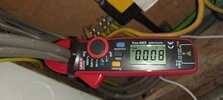 Here measuring earth leakage, essential with RCBOs as when measured
 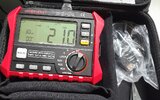 one needs to add the back-ground leakage to the reading to be sure they will trip at 30 mA, experience very early when the RCD came out, showed how a strain on the terminals can cause a malfunction, so all tests need doing after it has been terminated, so one can't disconnect the circuit to test.
 in the caravan when touring abroad, mainly to check polarity, when sites had stupid German sockets. But for DIY £50 is reasonable, and we may get people to buy and use one, at £100 no chance.
If you need to find a tradesperson to get your job done, please try our local search below, or if you are doing it yourself you can find suppliers local to you.
Select the supplier or trade you require, enter your location to begin your search.
Are you a trade or supplier? You can create your listing free at DIYnot Local


