• Looking for a smarter way to manage your heating this winter? We’ve been testing the new Aqara Radiator Thermostat W600 to see how quiet, accurate and easy it is to use around the home. Click here read our review.

Removing ground floor chimney breast - ventilation required or not?

Joined
4 Jan 2011
Messages
24
Reaction score
0
Country
United Kingdom
Some posts have been removed.
I’ve got builders about to commence with removing the ground floor chimney breast from our 1890 semi-detached house. It’s on an external wall rather than party wall. We are retaining the chimney breast in first floor and above (though it won’t be used).

The steel and associated structural work has all been specced by a structural engineer as part of larger works.

I gather that it is generally recommended that disused chimneys be capped in such a way as to maintain ventilation to avoid damp, ie with some sort of air vent in the unused fireplace(s) and some sort of cap at the top that allows some ventilation.

In a situation like I’ll have, ie with the chimney only from first floor up, does it change the fundamental need for ventilation?

I’m hoping to reduce drafts and heat loss, but also keen to get a sense of what would be regarded as best practice in terms of sealing off (or not) at the bottom and the top?

Thanks!
 
You still need the ventilation.
Otherwise you'll suffer from condensation within the chimney which will allow the absorption of sooty deposits, which could eventually seep through to the internal room surfaces.
 
If it's got a top then it needs ventilation. Wind-driven rain can get past flashings and through brickwork, it needs to be able to evaporate and go away.

I'd need an exceptionally good reason to keep only the top half of a chimney. It's a bit of a botch to bolt it to the wall, however good the brackets and design are. You've still got several tons of wasted space and potential future leaking flashings and damp hanging about up there, for absolutely no benefit to you.

Unless there's some fundamental reason to keep it, get rid from the top downwards. The only real reason is if it adjoins next door's, and they want to keep it, but you've already said it's all yours.

I just got rid of two very prominent 3m high chimneys from our bungalow. I was worried I'd be removing character. It definitely looks very different, but in a good way. It doesn't look like something's missing. About 10 years ago they were sticking fake chimneys on newbuild houses, as they thought it was what people wanted. These days they don't bother, look at any newbuild estate and there isn't a fake or real chimney in sight. They just look like houses, nobody asks where all the chimneys are.
 
(Edited)
I've tiled over where two of my chimneys were. No lead flashings, no dodgy pointing or spalled bricks. Just tiles.

We had chimneys at the bottom of a pitch, so water was running into the back of them. All flashings in perfect condition, usually working fine. But you get that freak heavy shower and a bit of wind and it can get overwhelmed. I'm guessing it doesn't normally go over the flashing but sideways when there's nowhere else to go. The stains on the ceilings below are definitely there!
 
Last edited by a moderator:
(Edited)
The flashings were in perfect condition, all installed correctly. I think they'd been renewed at some point, there was a label that looked reasonably recent. In almost all weather all was well.

But, back in the real world, they can get overwhelmed if there's an unusually heavy downpour, especially if wind-driven. It goes sideways under the tiles and inevitably ends up dripping off the edges of the flashing beneath the tiles.

This won't normally happen with a typical chimney. The problem ones are like ours were, where it's got a pitched roof running into the back of it. Physics does its thing, if there's enough water tipping into the back of the chimney it can't go sideways around the chimney fast enough so will build up deep enough to find its way into where it doesn't belong.

Trust me, I have the stained ceiling and wall top in the room below!
 
Last edited by a moderator:
I’ve got builders about to commence with removing the ground floor chimney breast from our 1890 semi-detached house. It’s on an external wall rather than party wall. We are retaining the chimney breast in first floor and above (though it won’t be used).

The steel and associated structural work has all been specced by a structural engineer as part of larger works.

I gather that it is generally recommended that disused chimneys be capped in such a way as to maintain ventilation to avoid damp, ie with some sort of air vent in the unused fireplace(s) and some sort of cap at the top that allows some ventilation.

In a situation like I’ll have, ie with the chimney only from first floor up, does it change the fundamental need for ventilation?

I’m hoping to reduce drafts and heat loss, but also keen to get a sense of what would be regarded as best practice in terms of sealing off (or not) at the bottom and the top?

Thanks!
As your flue is built into an outside wall, cut an airbrick from the outside to penetrate the lowest existing part of the chimney and thus provide through ventilation from the bottom to the top. The top can be fitted with a pot fitting vent to complete the job.
 
The remaining chimney breast contains (at least) two flues - one redundant flue from the ground floor, and another flue from the first floor fireplace.
If the FF fireplace is active or becomes active then cold air introduced into the redundant flue could penetrate the feather & cool the fumes from the heat source.
In my experience: Introducing cold air into a chimney breast is bad practice.

The "flueinstallation.co.uk" pic you refer to shows a number of faults not least the air bricks immediately below the chimney pots.
 
Last edited by a moderator:
There are lots of chimneys at the base of roof pitches. But I reckon most of them leak now and then, my two definitely did, it seems like a bloody silly place to put one to me. I had absolutely no use for them, as we don't set fire to stuff like cavemen. Just switch the heat pump on. So no value in repairing them, they have as much purpose as having a mangle in the back yard for doing the laundry.
 
Last edited by a moderator:
Meanwhile, back in the real world. A chimney used or unused which is open to a warm room and rises up to an area where the chimney temperature is lower than the dew point of the room air (i.e. in the loft or the bit sticking up outside) WILL experience some condensation. The warm fairly humid room air rises up the chimney and condenses on the cool surfaces. Dew point of ambient room air is about 12 degrees.

If you don't want this to happen, don't ventilate the bottom of an unused chimney in to a warm room. Either don't ventilate it, or ventilate it to outside.

In a used chimney, condensation is of course a non-issue and not a nuisance because as soon as the fire is lit it is removed.
 
Thanks all - helpful responses.

If it's got a top then it needs ventilation. Wind-driven rain can get past flashings and through brickwork, it needs to be able to evaporate and go away.

I'd need an exceptionally good reason to keep only the top half of a chimney. It's a bit of a botch to bolt it to the wall, however good the brackets and design are. You've still got several tons of wasted space and potential future leaking flashings and damp hanging about up there, for absolutely no benefit to you.

Unless there's some fundamental reason to keep it, get rid from the top downwards. The only real reason is if it adjoins next door's, and they want to keep it, but you've already said it's all yours.

I just got rid of two very prominent 3m high chimneys from our bungalow. I was worried I'd be removing character. It definitely looks very different, but in a good way. It doesn't look like something's missing. About 10 years ago they were sticking fake chimneys on newbuild houses, as they thought it was what people wanted. These days they don't bother, look at any newbuild estate and there isn't a fake or real chimney in sight. They just look like houses, nobody asks where all the chimneys are.
It won’t be a botch - we’ve got a steel going in rather than brackets bolted to the wall. We want to retain it in the first floor bedroom as it has a striking period fire place and generous room proportions work well with a chimney breast. We also can’t remove it from the roofline without planning permission, which we wanted to avoid for various reasons.

Meanwhile, back in the real world. A chimney used or unused which is open to a warm room and rises up to an area where the chimney temperature is lower than the dew point of the room air (i.e. in the loft or the bit sticking up outside) WILL experience some condensation. The warm fairly humid room air rises up the chimney and condenses on the cool surfaces. Dew point of ambient room air is about 12 degrees.

If you don't want this to happen, don't ventilate the bottom of an unused chimney in to a warm room. Either don't ventilate it, or ventilate it to outside.

In a used chimney, condensation is of course a non-issue and not a nuisance because as soon as the fire is lit it is removed.
First floor chimney is unused and won’t become active.
When you say “either don’t ventilate or ventilate it to outside”, is it sufficient that I’ve retained a capping cowl with ventilation gap? Or are you suggesting additional ventilation besides?
 
is it sufficient that I’ve retained a capping cowl with ventilation
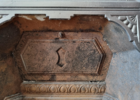
That would be what I would do. Unused chimneys don't need to be ventilated in to the room. In fact, even when they were installed in victorian/edwardian times seldom used chimneys were fitted with a closure flap to completely seal off the chimney from the room, like this one in the bedroom of our house.
 

Attachments

  • Screenshot 2025-05-14 103938.png
    Screenshot 2025-05-14 103938.png
    3.2 MB · Views: 30
That was intended to be closed between uses of the fire. If it got condensation or the odd splash of wind-blown rain then it would sit inside the chimney until the next time you lit it, at which point it would be dried out and vented out of the top.

I'm pretty sure you need some sort of through-flow if it's going to be permanently disused. As it's on the external wall, could you ventilate through the outside of the wall to the outside?

This will result in a slightly colder internal chimney breast. But it's always going to be cold anyway, as there's a blooming great hole in the top of it.
 

If you need to find a tradesperson to get your job done, please try our local search below, or if you are doing it yourself you can find suppliers local to you.

Select the supplier or trade you require, enter your location to begin your search.


Are you a trade or supplier? You can create your listing free at DIYnot Local

 
Back
Top