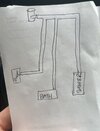
The ideal would be that each outlet has it's own run to the stack, this eliminates any traps being pulled when another outlet is discharging. Where that's not possible then where it tees to a downstream outlet - increase the pipe size to the next size up to the max of 50mm. It is a standard practice to ensure it minimises syphoning effects on all the traps on the run. Try and run each outlet on it's own waste pipe as far as possible to the stack before it tee's into the shared run and make sure any swept tee is fitted in the right direction. I know it sounds obvious but you;d be surprised how may are fitted the wrong wayI won't be emptying the bath, draining the sink and having a shower at the same time so thought I'd just do 40 the whole way.
Also use an anti vac trap on the bath and basin - ensures the run in well ventilated and reduces the risk of the bath water pulling on the shower/basin trap.
Essential to get at least the min fall of 25mm/m on the shower waste, if not there can be issues with correct drainage as the head of water is low.
That shower waste does look like it has a water seal/dip tube setup, if so then no need for a downstream trap