- Joined
- 19 Feb 2025
- Messages
- 7
- Reaction score
- 0
- Country

Hi all, I'm a long time lurker, first time poster....
I'm in the process of finally putting some plumbing back in my house after surviving with just a woodburner for some time!
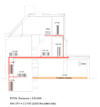
I'm fairly confident the central heating layout would work but would welcome input from anyone who can see any issues with this setup...
A bit of background info if it helps:
- it's a 3 bedroom house, with a basement and a loft conversion so it's over four floors.
- I have a vaillant ecotec plus 832 combi boiler which is 32kw and has a 15.2l/min flow rate
- the lead pipe mains has been replaced and i've got 32mm mdpe piped all the way up from the road to the boiler cupboard.
- Mains pressure is 6.5/7 bar but i've got it set to 3.5 Bar with a PRV
- With wet UFH and a woodburner, I don't imagine the downstairs radiators will be turned up much but ultimately I need to design the system to be able to cope without the fire being on, for those odd cold snaps in spring/ autumn when fire isn't lit or UFH isn't in full swing.
- basement is infrequently used but a tickle of background heat would be welcome (it needs very little to stay warm as it's buried in the ground!)
- Planning for copper throughout and diagram shows 22mm, going down to 15mm
- I'd like the ground floor and basement radiators are on drops from the ceiling, so I don't have to bury plastic pipes below/ within the UFH area (it's already getting quite busy in there with various pipes for UFH, basement ventilation and soil pipes.)
I’ve performed some online heat loss calculators using this tool here: https://ukradiators.com/pages/btu-calculator, inputting window sizes, building fabric, adjacent rooms etc to get an idea of what’s required. The KW required for each radiator has been calculated using a Delta T of 40c
I’ve added a diagram to show the KW per radiator, total radiators are 5.81 kw, UFH is 2.2kw, given that it’s a 32kw boiler, this all seems in order?
I'm hopeful that given the external walls are internally insulated, new windows throughout and the loft conversion is stuffed to the gunnels with insulation, it should be a fairly warm home. It’s not going to be a totally accurate calculation using the online tools as they don't have options for outside walls that match the makeup of my house (18” thick stone wall, with 2” insulating plaster internally) so i’ve just done it based on a 9” uninsulated brick wall as that’s the closest option.
Funds are tight due to a young baby and having depleted all my savings so i'd like to tackle this myself so we can move in as a family ASAP. If any kind person out there has input/ comments on the system above then i'd be very grateful.
Many thanks
Josh
I'm in the process of finally putting some plumbing back in my house after surviving with just a woodburner for some time!
I'm fairly confident the central heating layout would work but would welcome input from anyone who can see any issues with this setup...
A bit of background info if it helps:
- it's a 3 bedroom house, with a basement and a loft conversion so it's over four floors.
- I have a vaillant ecotec plus 832 combi boiler which is 32kw and has a 15.2l/min flow rate
- the lead pipe mains has been replaced and i've got 32mm mdpe piped all the way up from the road to the boiler cupboard.
- Mains pressure is 6.5/7 bar but i've got it set to 3.5 Bar with a PRV
- With wet UFH and a woodburner, I don't imagine the downstairs radiators will be turned up much but ultimately I need to design the system to be able to cope without the fire being on, for those odd cold snaps in spring/ autumn when fire isn't lit or UFH isn't in full swing.
- basement is infrequently used but a tickle of background heat would be welcome (it needs very little to stay warm as it's buried in the ground!)
- Planning for copper throughout and diagram shows 22mm, going down to 15mm
- I'd like the ground floor and basement radiators are on drops from the ceiling, so I don't have to bury plastic pipes below/ within the UFH area (it's already getting quite busy in there with various pipes for UFH, basement ventilation and soil pipes.)
I’ve performed some online heat loss calculators using this tool here: https://ukradiators.com/pages/btu-calculator, inputting window sizes, building fabric, adjacent rooms etc to get an idea of what’s required. The KW required for each radiator has been calculated using a Delta T of 40c
I’ve added a diagram to show the KW per radiator, total radiators are 5.81 kw, UFH is 2.2kw, given that it’s a 32kw boiler, this all seems in order?
I'm hopeful that given the external walls are internally insulated, new windows throughout and the loft conversion is stuffed to the gunnels with insulation, it should be a fairly warm home. It’s not going to be a totally accurate calculation using the online tools as they don't have options for outside walls that match the makeup of my house (18” thick stone wall, with 2” insulating plaster internally) so i’ve just done it based on a 9” uninsulated brick wall as that’s the closest option.
Funds are tight due to a young baby and having depleted all my savings so i'd like to tackle this myself so we can move in as a family ASAP. If any kind person out there has input/ comments on the system above then i'd be very grateful.
Many thanks
Josh