Sleeved earthwire... again

The requirement in BS7671 applies to "points and acessories", the definition of accessory explicitly excludes current using equipment.

So we come down to the definition of "point". IIRC a point is defined as something like "a termination of the fixed-wiring intended for connecting equipment" or some such.

If a device is connected directly to fixed wiring, then the input connections of that device clearly form a "point". If the device comes with a non-replacable cord that is terminated in an outlet box then the outlet box is clearly the "point".

The slightly fuzzier question is if the current using equipment is connected to an outlet box by a field-fitted cord. I would argue that if the cord is short and not fixed to the building (other than by being clamped where it enters the equipment and the outlet boxx) then the "point" is still the outlet box, but others may argue the opposite.
I'm with you on all of that but the definitions are by default open to interpretation.
 
So we come down to the definition of "point". IIRC a point is defined as something like "a termination of the fixed-wiring intended for connecting equipment" or some such.
If a device is connected directly to fixed wiring, then the input connections of that device clearly form a "point". If the device comes with a non-replacable cord that is terminated in an outlet box then the outlet box is clearly the "point".
The slightly fuzzier question is if the current using equipment is connected to an outlet box by a field-fitted cord. I would argue that if the cord is short and not fixed to the building (other than by being clamped where it enters the equipment and the outlet boxx) then the "point" is still the outlet box, but others may argue the opposite.
Yes, I agree with all that - and the conclusion you would presumably come to as a result of that reasoning would presumably correspond with the 'common sense' which I suggested should be applied?
 
Yes, I agree with all that - and the conclusion you would presumably come to as a result of that reasoning would presumably correspond with the 'common sense' which I suggested should be applied?
I'd like to think so
 
I've been asked to go look at another property in that estate with the same report, I just hope the T-stats line up the same.
 
Last edited:
On the initial property there are 2 wall stats back to back on the same wall but offset by about the width of the backbox, with the 4 core flex appearing to be buried from the ceiling down. I didn't look to see what the satisfied (normally open) contact and 4th wire was being used for in the lounge stat.

I was able to drill through the breezeblock wall through rear knockouts at an angle and run a piece of 2 core flex to pick up the neutral for the hysteresis heater and re-arrange the conductors to make the earth wire the earth.

The stats control 2 zone valves for heating and a third stat & valve for the HW cylinder.

The second property the stats were offset further so drilling through at an angle was a little more tricky and would have been through a side knockout with the additional risk of damaging the plaster. Having removed the knockout, the owner (leaseholder) brought a cup of tea and asked how easy it would be to replace the timer switch as it didn't work then explained the priority of the 2 zones and described how the lounge stat (without satisfied contact)/zone covers lounge and one bedroom, the bedroom stat(using the satisfied contact/zone covers that room and the rest of the property. In that explaination was how they have to turn the bedroom stat down low, otherwise they had to wait for the bedroom to be hot before the lounge zone worked since the timer had a failed.

Confused, oh yes Sunray was confused until they pointed to the 'timer' on the passage wall which is a pneumatic button which bypasses the bed stat and the time clock for the lounge for a few minutes and they spent all their time pressing the button until it stopped working, now they adjusted the bed stat.

It turned out the 2nd zone ran on the 1st zone satisfied contact.

Excuse the scribble:
1772030653571.png

Oh was I pleased how much easier it was to move a wire from one terminal to another in the wiring centre and do away with the button cable, I've left the button in place which he says he'll replace with a blank.

They have obviously understood the functions of the problem for a while as straight after making the change the couple were watching the zone valves moving as the other altered stats.

I get the impression the freeholder/agent etc are doing the EICRs as a lease requirement, a neighbour has paid £300 for trunking to be run around the wall and across the passage ceiling.
 
Last edited:
In the 2008 versions there was a full stop, which some people selected to ignore, but reading it correctly over sleeving was not permitted even back then. Also, there is a requirement to take an earth and terminate it at all but a pendent light bulb, which seems to have been ignored with many a down light system, mainly as no terminal provided on the lamp, clearly not designed for British market.

The Y Plan central heating where an N/C terminal is used on the DHW thermostat, was also one place to regularly find short of a core, also two-way lighting, and some wall thermostats, when swapped from battery powered to mains powered.

So we are often left with a shortage of cores, and it is tempting to use the earth core when using class II equipment, even if against the rules. In the main caused when some homeowner buys a thermostat, or lights, which is not suitable.

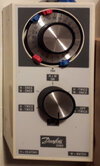
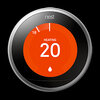
When I moved in here, I found this Danfoss3060programmer.jpg central heating controller, one testing the wires, I found the three core and earth to the boiler changed core colours from red, yellow blue to brown, black grey and one core open circuit, and no sign of a junction box, so I used Nest Gen 3 Hot water boost.jpg as runs on 12 volts, and only needs two wires to work CH and DHW and keep the internal battery charged. Hindsight Nest was a useless thermostat, but did not know that when fitting it, since then moved to wireless option, which needs batteries, but both running in parallel so if batteries fail, can still run central heating.
But my point is I selected a control which would work safely with what I had, I was not trying to adapt some unsuitable system to make it work when I was down a core on the cable.

The hot water cylinder was also a problem, with no cables down to boiler, the wireless thermostat I have used in the past seems to have gone, and no longer on the market, so I tried with just time, then realised cheaper to use an immersion heater anyway, so don't need a cable to boiler, the immersion heater uses a wireless link to tell it when and how much energy to put into the water.

I am not happy at the number of wireless devices I am using, but no real option. AA and AAA batteries seem to power so much, 10 thermostats mainly TRV types, sensors on the export of electric, in light switches, etc, the list goes on. My worry is batteries leaking, and destroying expensive equipment. But that is cheaper than pulling down a ceiling to thread new wires.
 

If you need to find a tradesperson to get your job done, please try our local search below, or if you are doing it yourself you can find suppliers local to you.

Select the supplier or trade you require, enter your location to begin your search.


Are you a trade or supplier? You can create your listing free at DIYnot Local

 
Back
Top
