
I didn't say there were than five EFL, just that one is held in by the screw holding the back box in on the right above the live brown cables - which isn't normal.OP did say there were 5 earth wires in the socket.
There are only 5 in the picture - one connected to back box bottom left.

You are using an out of date browser. It may not display this or other websites correctly.
You should upgrade or use an alternative browser.
You should upgrade or use an alternative browser.
Socket fault
- Thread starter Mars0
- Start date

I'm wondering how old that original sparks was. I can remember way back before sockets had earth bars that ran to the securing screw holes. An earth wire was run from the socket earthing lug to the box back to ensure the box too was earthed.I didn't say there were than five EFL, just that one is held in by the screw holding the back box in on the right above the live brown cables - which isn't normal.

But Mars0 said there were five connected to socket; there are only five - counting the one that looks like it is on the back box screw.I didn't say there were than five EFL, just that one is held in by the screw holding the back box in on the right above the live brown cables - which isn't normal.

- Joined
- 27 Jan 2008
- Messages
- 29,545
- Reaction score
- 3,636
- Location
- Llanfair Caereinion, Nr Welshpool
- Country

We are only permitted one spur from a ring final at any single point, so two wires = ring final, and three wires = ring final with a spur, and four wires = something wrong.
Basic putting three wires into a terminal we are likely to have a good contact on all three, once we exceed three, then one wire may not be gripped well enough. I say "may" as it also may be gripped enough, as an apprentice in an industrial setting, I was taught one terminal has one wire, when I moved for a time to domestic, it went against the grain to put two wires into the same terminal, but it seems to cause no problems, looking at the rule book, replacing a double socket with two grid switch single sockets in a double socket box, one can take two spurs without breaking the rules, so what is the difference to using connector blocks? It seems non.
But when we add sockets, we also test,
 and so we should see if there is a problem, be it the RCD tripping current and time, or the loop impedance, these tests should alert us if there is a problem, but the cheap meter shown costs around £80, and most DIY people simply trust to the lord.
Basic putting three wires into a terminal we are likely to have a good contact on all three, once we exceed three, then one wire may not be gripped well enough. I say "may" as it also may be gripped enough, as an apprentice in an industrial setting, I was taught one terminal has one wire, when I moved for a time to domestic, it went against the grain to put two wires into the same terminal, but it seems to cause no problems, looking at the rule book, replacing a double socket with two grid switch single sockets in a double socket box, one can take two spurs without breaking the rules, so what is the difference to using connector blocks? It seems non.
But when we add sockets, we also test,
and so we should see if there is a problem, be it the RCD tripping current and time, or the loop impedance, these tests should alert us if there is a problem, but the cheap meter shown costs around £80, and most DIY people simply trust to the lord.
NO we are not - stop it.We are only permitted one spur from a ring final at any single point,
...and don't you dare say the spurs can only be 3m long.

- Joined
- 18 Apr 2022
- Messages
- 7,434
- Reaction score
- 1,134
- Country
To be more precise, as ideal might be an odd word to use, what is wrong with four wires in the socket terminals?
A recent thread more or less said it was not possible so if it is why did the manufacturer make the terminals so big?
To be fair, the box does look a bit shallow to have that many cables in.
What might genuinely be less than ideal is the earth for one of the circuit cables going to the back box? That's might only earth that circuit via the socket screws/metal bar across the back.
It may work, but is it the ideal way to do it?
If you say so.To be fair, the box does look a bit shallow to have that many cables in.
I repeat.What might genuinely be less than ideal is the earth for one of the circuit cables going to the back box? That's might only earth that circuit via the socket screws/metal bar across the back.
OP did say there were 5 earth wires in the socket.
There are only 5 in the picture - one connected to back box bottom left.
Rather than using 'ideal' which I don't see too often in the regulations, shall we ask "Is it safe and compliant?"It may work, but is it the ideal way to do it?
Last edited:
- Joined
- 18 Apr 2022
- Messages
- 7,434
- Reaction score
- 1,134
- Country
If you say so.
I would say that a lot of people might IDEALLY* want a deeper box.
Rather than using 'ideal' which I don't see too often in the regulations, shall we ask "Is it safe and compliant?"
Or shall we ask about good workmanship, and what is IDEAL*, rather than caring for NOTHING other than to-the-letter-of-the-regulations?
I wonder why you should have such a problem with considerations of what is an IDEAL* way to do something even if it exceeds the minimum required by regulations.
* I may have asked you this before:
Is English your first language?
Last edited:
Hardly worth altering just for the sake of it.I would say that a lot of people might IDEALLY* want a deeper box.
It is just your opinion and so might not be definitive - nor the only ideal solution.Or shall we ask about good workmanship, and what is IDEAL*, rather than caring for NOTHING other than to-the-letter-of-the-regulations?
I merely noted that the regulations do not mention 'ideal' so it is hardly relevant.
The (apparent) two spurs in the OP's picture might have been the ideal solution for the circumstances and what was required at the time. They even chose a socket with terminals that were big enough.
You see - you are confusing things again.I wonder why you should have such a problem with considerations of what is an IDEAL* way to do something even if it exceeds the minimum required by regulations.
What is the regulations' minimum in this respect?
The regulations do not mention such things - let alone whether they are ideal or not.
Their only concern is safety.
You have - and yes it is. How could you have forgotten?
Where the country is concerned you typically, in the pursuit of awkwardness, seem to have missed a salient point:
or did you think Retired to was a Portuguese village?
However it is you who seems to have trouble discussing subjects logically and your user name seems far from English.
Is it your opinion that all native English speakers are experts on the language?

So if it’s not ideal. What can you do to make it better?
It's just poor planning, or someone adding circuits. You would need to work out where those four cables go, and revise it.
- Joined
- 27 Jan 2008
- Messages
- 29,545
- Reaction score
- 3,636
- Location
- Llanfair Caereinion, Nr Welshpool
- Country
With one, two, or three wires in a terminal, it is likely all wires are gripped, but increase to four and one can be loose. 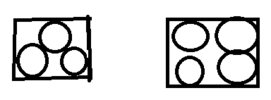 to be gripped, it needs all wires to be the same size, and laid so they fit the terminal. There can be a problem with three of course
  but, less likely, we come into the age-old argument twist or not to twist wires, when not twisted it makes testing easier, but twisted means less chance of one not gripped, we have
 ferrules designed to take two wires, and these basic do the same as twisting the wires together. The only way to test is to cut them off.
 I am not sure as to the best options, I was taught one wire per terminal if you wanted more, you added more terminals
 the way domestic homes are wired, means that is not really an option, although there is a move in that direction
 note three connections, as it is not expected to need more.
 The diagram on how a ring final is installed also shows no more than three connections, however, since not in the UK, it is anyone's guess what is considered as appropriate in other countries.
to be gripped, it needs all wires to be the same size, and laid so they fit the terminal. There can be a problem with three of course but, less likely, we come into the age-old argument twist or not to twist wires, when not twisted it makes testing easier, but twisted means less chance of one not gripped, we have
Which devices have terminals shaped like that?There can be a problem with three of course View attachment 388875but, less likely, we come into the age-old argument twist or not to twist wires, when not twisted it makes testing easier, but twisted
Nor does it show four on the radial circuit diagram.View attachment 388880 The diagram on how a ring final might be installed also shows no more than three connections, however,
That does not mean it is not allowed nor perfectly acceptable.
Looks pretty tight to me -
- Joined
- 18 Apr 2022
- Messages
- 7,434
- Reaction score
- 1,134
- Country
Hardly worth altering just for the sake of it.
No.
But I am able, and happy, to consider whether something is, or is not, or to what extent is, or is not, "ideal", without assuming that a verdict of anything "less than ideal" means it should be altered for the sake of it.
It seems you are not, and I cannot for the life of me understand why, unless it's because you are in pursuit of awkwardness.
It is just your opinion and so might not be definitive - nor the only ideal solution.
I merely noted that the regulations do not mention 'ideal' so it is hardly relevant.
It is relevant, of course it is.
Or at least it is to people who know what the word "ideal" means, who don't want to see the word made inadmissible in discussions, and who aren't being deliberately obtuse about its meaning and usage in pursuit of awkwardness.
The (apparent) two spurs in the OP's picture might have been the ideal solution for the circumstances and what was required at the time. They even chose a socket with terminals that were big enough.
That would be something for you to discuss with Murdochcat - he was the one who wrote this:
not me.4 cables into a socket isn’t ideal
I observed that some people might think that ideally a deeper box should have been used. You don't want to see such observations here because the regulations don't require a deeper box, and all you really want to do is to pursue awkwardness.
I also questioned whether ideally all the earths should have gone directly to the socket rather than one going via the back box, (and attached to it, note, by a method not provided by the maker). You don't want to see such questions here because the regulations don't require direct connections, or the use of "proper" earth terminals, and all you really want to do is to pursue awkwardness.
You see - you are confusing things again.
What is the regulations' minimum in this respect?
The regulations do not mention such things - let alone whether they are ideal or not.
Their only concern is safety.
I do but I realise I may be on shaky ground if there is no actual definition of good workmanship and others have differing views.
However, doing what seems just wrong cannot be good workmanship to me, can it?
You are remarkably intolerant of differing views though, aren't you.
- Joined
- 18 Apr 2022
- Messages
- 7,434
- Reaction score
- 1,134
- Country
You would need to work out where those four cables go, and revise it.
Not just for the sake of it, I hope.

DIYnot Local
Staff member
If you need to find a tradesperson to get your job done, please try our local search below, or if you are doing it yourself you can find suppliers local to you.
Select the supplier or trade you require, enter your location to begin your search.
Please select a service and enter a location to continue...
Are you a trade or supplier? You can create your listing free at DIYnot Local
Similar threads
- Replies
- 22
- Views
- 28K


