• Looking for a smarter way to manage your heating this winter? We’ve been testing the new Aqara Radiator Thermostat W600 to see how quiet, accurate and easy it is to use around the home. Click here read our review.

Tile to worktop join

Joined
14 Sep 2025
Messages
4
Reaction score
0
Country
United Kingdom
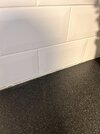
Hello, so around 6 months ago I re-tiled our kitchen. The tiles go down to just above the existing worktop as they had done before, so there was a gap to fill which varies from about 2mm to 4mm at the most. I looked online for ideas and decided on using standard white kitchen sealant to do the job. It looked great at first and for a while, but has now started to "pull apart". This is along most of the length now, apart from a couple of areas which are still OK. I'm going to remove it all soon as it looks very unsightly but I don't know what to replace it with. Should I try sealant again but using a much larger bead, or something else like small plastic trim? I'm not really sure why this has happened as I don't think the worktop has moved (and certainly not the tiles :LOL:) Any ideas welcomed. Thank you
 

Attachments

  • IMG_5503.JPEG
    IMG_5503.JPEG
    313 KB · Views: 45
You have to make sure the surfaces are really clean before applying. Get rid of any grease/dirt etc....plenty of good vids on youtube about that.
 
Use silicone again, but use a much bigger bead to allow it to adhere better to the tiles and the worktop. The bead you used looks too small.

Use a profile tool to get a nice finish.

What's the difference between kitchen sealant and bathroom sealant? I'm not sure, but you want a high flexibility one so it doesn't end up looking like your first effort.
 
As above, you need a bigger bead, and a shaped tool ! When shaping your profile, with those bevelled ' metro' type tiles you have to take care to make sure you get more of it on the tile than than the worktop.
And it's not ' difference between kitchen sealant and bathroom sealant' you need to know - it's the difference between ' sealant' and ' silicone' :- two entirely different things. Make sure it's Silicone you use; it's softer and more flexible than most sealants.
 
Yes, it doesn't look like he's used silicone first time around. If the existing sealant is stable it could be argued that it's doing a good job filling the void and it will be easier just to leave it there. The size of bead you want will be enough to cover at least 5mm above the bottom of the tiles, so it will be quite a large bead.

When you're running the profile tool along, watch out for the gaps between the tiles and try to move smoothly past them, otherwise you will get indentations in your silicone.
 
Thank you all for the advice, much appreciated! I’m going to try again using the silicone and the techniques above

Cheers
Russ
 
Just wanted to pass on, don't have a photo to hand, but I replaced the join as advised then tidied up with a sharp blade and it looks amazing :-D No sign of any movement either. Thanks everyone
 

If you need to find a tradesperson to get your job done, please try our local search below, or if you are doing it yourself you can find suppliers local to you.

Select the supplier or trade you require, enter your location to begin your search.


Are you a trade or supplier? You can create your listing free at DIYnot Local

 
Back
Top