
You are using an out of date browser. It may not display this or other websites correctly.
You should upgrade or use an alternative browser.
You should upgrade or use an alternative browser.
What is an AA cell capacity?
- Thread starter ericmark
- Start date


- Joined
- 27 Jan 2008
- Messages
- 29,749
- Reaction score
- 3,688
- Location
- Llanfair Caereinion, Nr Welshpool
- Country

My wife got a tester 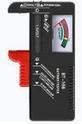 which is likely better than my meter, as I think it puts on some load. But the more I read about AA and AAA cells, the less I seem to know, it says alkaline but it seems they are all alkaline, and some are better for long life, and some better for high power, and I am non the wiser which are which.
- Joined
- 18 Apr 2022
- Messages
- 7,548
- Reaction score
- 1,163
- Country
I mistakenly believed you were referring to all lithium ion based products.
Last edited:
- Joined
- 18 Apr 2022
- Messages
- 7,548
- Reaction score
- 1,163
- Country
I just want to know why lithium-iron cells are only available as AAA & AA - why not C, D, & PP3 as well?

Which are a subset (hopefully a suitable word to use) of the lithium ion family. Assuming of course you are referring to lithium iron phosphate technology.

I wonder if Di-Lithuim batteries will become a game changer when we start to Trek The Stars then?
Intetesting talk about the older zinc carbon batteries here -
- Joined
- 27 Jan 2008
- Messages
- 29,749
- Reaction score
- 3,688
- Location
- Llanfair Caereinion, Nr Welshpool
- Country
Yes, I have watched his video before, and it does show how important the discharge rate is, but what is the discharge rate?
Be it a cat flap, or a TRV head, they sit there using a very low current for most of the time, and then use a higher current to release the flap, or adjust the valve, the power use is not static.
For high power devices, or devices where you want to rely on them working for a long time, we have been using secondary cells, I know my torch is fully charged when I go out, same applies to my e-bike, and once we start looking at batteries, rather than cells, for a 6 volt battery we can fit an extra cell, so we use 5 secondary cells or 4 primary cells.
But items like my TRV heads and cat flap, have warning not to use secondary cells, in the main because of lower voltage, but there are exceptions like cheap flash guns, where the extra current would burn them out, but we have in real terms no option but use primary cells.
In the main primary cells are used where we want it to run for a long time without changing the cells, the CR3032 battery found in computers and the like, can run for many years, although they are 3 volt, but the twin AA cells in a TRV, typically last a year, and the secondary cells even with no drain, in the early days would not last that long.
So we want a long lasting cell, but the rabbit toy used to show how long cells last, is using high output rather than long life. So the "Longevity performance in Digital Camera" the secondary cell battery today has no problem with that. So we simply don't need AA cells which can give a high output or longevity any more. But the device manufacturers have locked us into using primary cells due to the voltage, if it stops working at 1 volt, then OK, but if it stops at 1.15 volts, the item stops working well before the cell is depleted with a secondary cell, and to be fair even with a primary cell, there is a lot left.
I know these should be replaced
 the cells in my TRV head, at 1.26 volt each, getting low, but still green so still working. If I used secondary cells they would be nearly fully charged, they must now be getting on for 2 years old, and in my hall, I do not consider the radiator as critical.
The cheaper eQ-3 TRV head does not connect to the phone unless very close, and the low battery does not show on the phone it says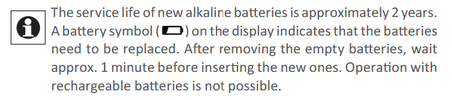 so I need to see the TRV head its self, so it is easy for the battery to fail and not realise, but at least it fails open. These
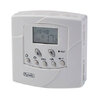 I found out the hard way, do not show the depleted battery symbol until after they have stopped working, I had a very cold narrow boat trip as a result.
Be it a cat flap, or a TRV head, they sit there using a very low current for most of the time, and then use a higher current to release the flap, or adjust the valve, the power use is not static.
For high power devices, or devices where you want to rely on them working for a long time, we have been using secondary cells, I know my torch is fully charged when I go out, same applies to my e-bike, and once we start looking at batteries, rather than cells, for a 6 volt battery we can fit an extra cell, so we use 5 secondary cells or 4 primary cells.
But items like my TRV heads and cat flap, have warning not to use secondary cells, in the main because of lower voltage, but there are exceptions like cheap flash guns, where the extra current would burn them out, but we have in real terms no option but use primary cells.
In the main primary cells are used where we want it to run for a long time without changing the cells, the CR3032 battery found in computers and the like, can run for many years, although they are 3 volt, but the twin AA cells in a TRV, typically last a year, and the secondary cells even with no drain, in the early days would not last that long.
So we want a long lasting cell, but the rabbit toy used to show how long cells last, is using high output rather than long life. So the "Longevity performance in Digital Camera" the secondary cell battery today has no problem with that. So we simply don't need AA cells which can give a high output or longevity any more. But the device manufacturers have locked us into using primary cells due to the voltage, if it stops working at 1 volt, then OK, but if it stops at 1.15 volts, the item stops working well before the cell is depleted with a secondary cell, and to be fair even with a primary cell, there is a lot left.
I know these should be replaced
The cheaper eQ-3 TRV head does not connect to the phone unless very close, and the low battery does not show on the phone it says
so I need to see the TRV head its self, so it is easy for the battery to fail and not realise, but at least it fails open. These I found out the hard way, do not show the depleted battery symbol until after they have stopped working, I had a very cold narrow boat trip as a result.Yes I have too and sent links to it a couple of times.Yes, I have watched his video before, and it does show how important the discharge rate is, but what is the discharge rate?
As said before I do prefer zinc based batteries for things like clocks and multimeters.
- Joined
- 18 Apr 2022
- Messages
- 7,548
- Reaction score
- 1,163
- Country
Which are a subset (hopefully a suitable word to use) of the lithium ion family. Assuming of course you are referring to lithium iron phosphate technology.
No - I'm referring to Li-FeS2, which are primary cells, 1.5v and so a direct drop-in replacement for alkaline ones. Or at least they are in AAA and AA sizes, and thus via adapters for C & D as well.

Lithium metal battery - Wikipedia
Li-FePO4 are 3.2v secondary cells


DIYnot Local
Staff member
If you need to find a tradesperson to get your job done, please try our local search below, or if you are doing it yourself you can find suppliers local to you.
Select the supplier or trade you require, enter your location to begin your search.
Please select a service and enter a location to continue...
Are you a trade or supplier? You can create your listing free at DIYnot Local
Similar threads

- Replies
- 5
- Views
- 872

- Replies
- 19
- Views
- 2K

