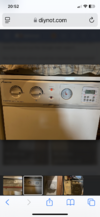
Latter model to mine, but yes can fit better controls, mine does not modulate, so no real problem simply turning on/off.
But how is a little more complex. We have in general the Honeywell Plans, The C, Y, and S are most popular, and there are three versions of the C Plan.
The C and Y plan default to DHW, so the boiler can cool by heating DHW, but these plans we designed years ago, and some control systems can't work with C Plan. Hive has a software option so will work with C Plan, and where one has access to the Com terminal of the relay it can be wired to C Plan so Nest Gen 3 will work, and I also think Tado will work. Wiser I see no easy way to make it work.
But I have found no real need to control DHW, I can't turn it off, so in winter it heats up when central heating runs, and in summer we use the immersion heater, which for us works out cheaper.
So start point is to work out what you have. In the main, S Plan has two x two port valves, Y Plan has one x three port valve, and C plan often no motorised valves. The C Plan, common with oil, comes in three stages, the first pump runs for central heating, and does not run for DHW only, there is no tank thermostat. The lack of tank thermostat means the boiler is controlled by time only in the summer, so adding a tank thermostat only does anything in the summer, but means the boiler turns off when the tank is warm enough. Adding a motorised valve and tank thermostat allows you to have DHW cooler than the central heating water.
However, I found my boiler in summer uses around 40 kWh, and the immersion heater around 15 kWh, so although oil is cheaper, per kWh, likely better to use the immersion heater in summer.
I have a 20 kW version, with 5-bedroom house, so assume you have a really large house? I don't want to heat all rooms, so 4 rooms are controlled as a block with a motorised valve, and the other 14 all have programmable TRV heads. Of the 14 TRV heads, only one is linked to the boiler, not sure if that was the right way to go, as the radiator is on an outside wall so tends to fire the boiler too early.
Of the 14 TRV heads, 5 are eQ-3 were very cheap at £15 each, batteries last just over a year, bluetooth only, 3 are energenie batteries last nearly two years, but no option to manually set, so hub bumps up the price, hub plugs into router so can control from anywhere. 1 is Kasa the batteries hardly last the year, can manually set, does use a hub which doubles as a door bell, wireless connects to router, and last is a Wiser, although zigbee, will not connect to standard zigbee hub, needs its own Wiser hub, and is a bit too far away, so also a Wiser socket adaptor which acts as a signal booster, the hub connects to boiler so will fire up the boiler.
The 4 rooms on a motorised valve use a very basic thermostat, no programming, as those 4 rooms rarely used in winter, the rest of the house has two thermostats in parallel, one connected to the wiser hub, the other also allows DHW to be programmed, and is a Nest Gen 3.
Hind sight is easy, and the Nest Gen 3 was really a waste of money, it did not connect to the Energene TRV heads as advertised, but it does allow me to turn on the DHW from main house hall. But I no longer do that, as the immersion for me is cheaper, as have off-peak supply.
But the programmable TRV heads work well, I only heat a room when it is going to be used.
The linked TRV head, not so sure, the radiator is on an outside wall, so tends to turn on boiler when not really required, so I just set it low until into Winter proper.