Repointing advice

Status
Not open for further replies.
Joined
1 Dec 2017
Messages
42
Reaction score
7
Country
United Kingdom
Hi

I bought the house I've been renting for years towards the end of last year. The entire house needs a repoint but I'm keen on doing it myself in sections.

I believe I would just need a 4:1 mix, do I need to add anything else?

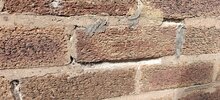
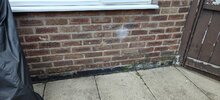
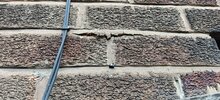
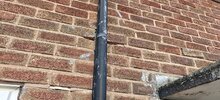
Below the dpc are a few joints that have gone completely through to the cavity and I think the dpc may need pointing too. I've read that it's important to leave the pointing back a bit to avoid bridging the dpc. At some point the house has had the cream injected, do I need to worry about the state of the dpc if this has been done?

IMG20250427104344.jpg

Would the best approach be to use one of those mortar rakes in a grinder, grind out several courses, repoint and move onto the next section?

IMG20250427104418.jpg

I've googled to death but you end up with mixed bits of info so thought I'd post up here.

Thanks
 

Attachments

  • IMG20250427104348.jpg
    IMG20250427104348.jpg
    428.8 KB · Views: 64
  • IMG20250427104402.jpg
    IMG20250427104402.jpg
    482.5 KB · Views: 61
  • IMG20250427104422.jpg
    IMG20250427104422.jpg
    521.9 KB · Views: 62
OP,
Well done for buying the house.
Use a 115mm angle grinder with a masonry wheel to cut through the beds & perps - & then use a mortar rake to clean them out to a 25mm depth.
Use a 3:1 or 4:1 sand and NH lime mix for mortar.
Below the DPC some use a sand & cement mix.
Ignore the cream injections.
Practice in an inconspicuous part of your property.
Use a tower to work at FF height and above. Dont work high unless someone else is present.
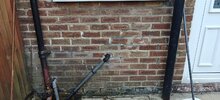
Posting Pics showing a much wider context from ground level up would help?
 
Thanks for the advice much appreciated, so you think I will need lime in my mortar? I wasn't sure if I would or not.

How come no like below the dpc? Is that for extra strength?

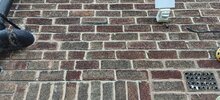
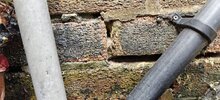
Here are a few more pics of various cracks or joints which are falling apart
 

Attachments

  • IMG20250427190226.jpg
    IMG20250427190226.jpg
    357.4 KB · Views: 73
  • IMG20250427190233.jpg
    IMG20250427190233.jpg
    352.3 KB · Views: 75
  • IMG20250427190240.jpg
    IMG20250427190240.jpg
    509.3 KB · Views: 63
  • IMG20250427190253.jpg
    IMG20250427190253.jpg
    501.5 KB · Views: 67
  • IMG20250427190319.jpg
    IMG20250427190319.jpg
    512.9 KB · Views: 73
  • IMG20250427190335.jpg
    IMG20250427190335.jpg
    545.7 KB · Views: 79
Last edited:
Thanks for the advice much appreciated, so you think I will need lime in my mortar? I wasn't sure if I would or not.
Ive had the same dilemma and started some repointing with sand:cement but wasn't happy with it so am now planning to switch to an NHL 3.5 lime mix.

However my house is solid wall 1930s and yours looks to be cavity wall possibly 1950's at a guess? So you would probably be fine with sand:cement but lime might look nicer.

I'd also strongly consider the finish you want. I used buckethandle but it doesn't suit the house, so when I do it next (with lime) I'm going to flush finish with a brush. Also consider the colour you want, might need to test your local sand to see what colour it comes out at. My local sand mixed with cement came out very dull browny grey which looks kak.
 
OP,
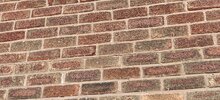
Some parts of the obviously failing pointing seem to have been previously re-pointed twice.
Even where the pointing appears to be in good condition I would still rake it out & re-point.
"some use" cement in the mix - its given as a choice for you to make.
The last pic shows a horizontal crack this can sometimes be an indication of rusting & swelling metal wall ties
or it could be something else but the pic shows only a limited context.
 
All mortar is porous, no matter if its cement or lime based.

The point of pointing/jointing is to form a weathering face to cast water off the brick arris - and not keep the brick dry. Or prevent gaps between the brick and the joint which could be instrumental to frost action or spalling.

The dissimilar properties of lime and cement can create a high risk of either lime bloom or efflorescence, particularly where there are cracks in the bulk of the cement mortar causing localised excess water and this is pointed with lime mortar.

I also see that poster #5 mentions adding cement to the mix [of his previously recommended lime mortar], but then it is no longer a lime mortar! It's not the same as adding lime to a cement mortar, which is different lime added for a different reason - for workability or to lighten the shade.
We had an entire house repointed a few years back. The build was soft red, but it had previously been repointed using sand and cement. Obviously this had caused widespread spalling, which had put off other buyers. Our guy spent 3 months grinding, raking out and repointing with hydraulic lime and sand. An entire pallet of new heritage reds was used to replace the worst of the bricks. This was different to the OP's case as there was lime mortar hidden behind the cement of course.
 
Thanks for all for all of the feedback, it seems I have stumbled onto a brick laying mine field?! I'm none the wiser .

The house has clearly been somewhat repointed in the past but it doesn't look like they went very deep, when I look over the joints there is a distinct difference between what they've repointed Vs what was in there originally.

I have read that you should use something similar to what was used originally is that correct? Should I use a mix containing lime?

With regards to the wall ties I'm a bit worried now, done a bit of research and found a decent video showing how to identify if they are at fault and seems it's not too bad of a job to insert new ties if need be. Fingers crossed it's just ****ty pointing falling out but that cracking is worrying from what I've read now.
 
Things have moved on a bit since my last post, I've confirmed lime mortar was used and it's been repointed with cement at some point along with every other house in the street. After a bit of reading up on wall ties I hired a metal detector and found several, ground out the joint and found a badly rusted knackered wall tie.

Checked a few more as per the guidance I found online and they were also rusted quite badly so looks like I do indeed need the ties doing.

Ordered a kit containing helical ties, spent a few hours working out the correct placement, I needed 100 ties to do the front of the house and have 14 left to go but my drill bit snapped.

During all of this I spotted a blown joint to the side of a window opening and the lintel is all rusted too! Now I need to replace that before I even get to repointing!
 
OP,
Thanks for coming back, & telling us how things are going. Well done for alertly tackling the issues.
If you need more help, esp with the lintel, then come back here?

(Some posts have been edited or removed)
 
Your advice is very much appreciated, really glad I posted on here now as I think this has been caught before things got a lot worse!

I do need some help with the lintel if you don't mind. Ive watched quite a few videos where a angle iron type lintel was used for the replacement with a cavity tray but then I'm also cross referencing with the likes of chatgpt and copilot which suggest that since it's a cavity wall I should be replacing with something insulated that supports both the inner and outer leaf but that seems a much bigger job and I've seen no evidence of anyone else doing this online.

How can I tell what type I need?

For the repoint I e decided to go with a pre mixed lime mortar, I can get a tonne bag for about £450 which should be enough to do the front and possibly part of the back of the house, I'm not sure what colour to go with yet though. Also began collecting tools so got a grinder, some raking discs and going to pick up one of those mortar rake bits.

Cheers
 

If you need to find a tradesperson to get your job done, please try our local search below, or if you are doing it yourself you can find suppliers local to you.

Select the supplier or trade you require, enter your location to begin your search.


Are you a trade or supplier? You can create your listing free at DIYnot Local

 
Status
Not open for further replies.
Back
Top