• Looking for a smarter way to manage your heating this winter? We’ve been testing the new Aqara Radiator Thermostat W600 to see how quiet, accurate and easy it is to use around the home. Click here read our review.

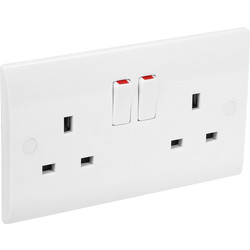
Can you buy thin 2 switch sockets

a photo or 2 would be handy
It's round my daughter's , didn't want to take the socket out just yet as the wiring's old and didn't want it possibly falling apart especially if they've left too much wire and squashed it in. Just thought there may be socket boxes will a slimmer inside profile. I'll have to sort it next time I'm round there. Previously it was half hanging out because one of the screws had the thread stripped presumably because they'd bodged the wiring in the box, they even built it out with plaster :censored:
 
Just thought there may be socket boxes will a slimmer inside profile.
The socket box is the part in the wall.


There are many different types of socket. Some need deeper boxes in the wall. The standard white plastic ones tend to need less depth. The very thin fancy metal ones need more space.
You have 4 optiins
1 investigate why the rocket won’t go in the box. The wiring may just need neatening up.
2. Install dome foacers like we started this topic with done weeks ago.
3 get a socket that’s not so deep
4 dig the back box out of the wall and git a deeper one*

*this is most work. And messy. But you’d best bet if the screws on the box lugs are knackered.
 
CED offer their Axiom range which are of a reduced profile and can be bought in packs of 5
 
CED offer their Axiom range which are of a reduced profile and can be bought in packs of 5
Yes, but as I mentioned, “low profile” means thin at the front. That means there is a lot more switchery to go into the back box.
Low profile is the worse choice if box occupancy is the issue.
 
There is a limit to how thin a socket can be because of the length of the plug's earth pin; looking at one of mine at random, there can only be a milimeter or so of plastic over it at the back.
 
IMO some installations have been made tight by unnecessarily using/chopping in back boxes that give very little clearance for cables.
A few years back I had a stand-up row with someone who I had previously thought was a decent sparkie. It was for a property I had just obtained and was looking for a full rewire from scratch and one I did not want to see to myself. He wanted to use 25mm boxes due to less chopping in and also due to the "excessive" number of outlets I had required in each room. "No need for 35mm boxes and far too many sockets for a rental mate" That was enuf for me and obviously he was shown the door. I know first-hand how much easier connecting with a 35mm box is, so as I am red hot on safety for all of my properties and tenants, another sparkie (a good energetic youngster) fulfilled my requirements and has been my go-to ever since and I've become a good friend of his father too(y).
 
Yes. A few years ago I reluctantly did several jobs for a polish builder. His lads had chopped all the back boxes in. They were 25mm. They were pretty good builders and the wally only needed a couple of mil of plaster. That would have been ok, until the client turned up with a large bag of thin profile accessories to be installed that he'd bought from Rexel in the city of london. Did any of them fit the boxes? No.

Although the rooms had been plastered, they had to swop all the back boxes for 35mm. The client had loadsa money and I guess the polish guy added themoney for effort to his long list of extras.
 
When instaling sockets there is also an art to getting the right amount of conductor in the boxes. Too long obviously takes up too much space, but too short can often lead to wiring that is very rigid and hard to push back into the box.
 
When instaling sockets there is also an art to getting the right amount of conductor in the boxes. Too long obviously takes up too much space, but too short can often lead to wiring that is very rigid and hard to push back into the box.
You have just described the professional art of initial wiring to a socket etc from the back box. Getting that cable length just right before cutting and terminating is what the customer expects and pays for(y):D
 
Customers also expect and pay for boxes to be deep enough so that if they decide to swap to flat-pate accessories they can. Or if it's a light switch to be able to install some sort of wi-fi/automation doo-dah.

They expect to be paying for a professional who knows that those are the sorts of things that people do.
 
You have just described the professional art of initial wiring to a socket etc from the back box. Getting that cable length just right before cutting and terminating is what the customer expects and pays for(y):D
Yeah, easy once you know how but it's not something I've ever seen written down anywhere. My rule of thumb now is slightly beyond the furthest corner of the box.
 
Interesting, it's hard to explain how long the socket wires should be it's just something you do without really thinking about it.

Now I have id say if top entry to the bottom of the box then half again....I think :unsure:
 

If you need to find a tradesperson to get your job done, please try our local search below, or if you are doing it yourself you can find suppliers local to you.

Select the supplier or trade you require, enter your location to begin your search.


Are you a trade or supplier? You can create your listing free at DIYnot Local

 
Back
Top