
I know what a decimal fraction is, but sadly far too many don't and I was trying to establish if it's a trick question, with a trick question, and at what stage of corruption the trick is.As he wrote, a "decimal fraction". Are you not familiar with that term?

You are using an out of date browser. It may not display this or other websites correctly.
You should upgrade or use an alternative browser.
You should upgrade or use an alternative browser.
Which of these sockets are in the right place? (If any)
- Thread starter Tingly
- Start date

- Joined
- 18 Apr 2022
- Messages
- 7,168
- Reaction score
- 1,071
- Country

You seem to have forgotten that there is aPlease explain what I have forgotten.
very significant difference between square inches and inches squared
Despite agreeing with everything I wrote about the 2 x 2 example, you seem to think that because all the evaluations, no matter what the order of the words, are the same when the values are 1, they are the same when the values are not 1.
And that isn't true, because there is a
very significant difference between square inches and inches squared
4² cm is 16cm. It is a linear measurement.This shape is 4 squared, cm. OR 4² cm.
No, 4² cm is 16cm, not 16 cm squared.which is also 16, cm squared.
No.OR 16 cm². Also known as 16, square cm.
"16 cm squared" could be a linear measurement of 256cm. e.g. "How long is that line?" "It's 16 cm squared"
Or it could be an area of 256 square centimeters (which is written 256cm²). e.g. "What's the area of that piece of wood?" "It's 16 cm squared".
But it could never be 16 square centimeters.
- Joined
- 18 Apr 2022
- Messages
- 7,168
- Reaction score
- 1,071
- Country
I want a decimal fraction. As opposed to a vulgar one.Are you looking for a decimal or a fraction?

- Joined
- 18 Apr 2022
- Messages
- 7,168
- Reaction score
- 1,071
- Country
And what of (which would have been next)I was taught never to use expressions like that since (as I presume is the reason for you posting it), it is so easily misinterpreted, since "a hundred thousandths" and "a hundred thousandth" are so similar.
"two hundred thousandths"
?
- Joined
- 18 Apr 2022
- Messages
- 7,168
- Reaction score
- 1,071
- Country
Of course I do.Don't understand English either thenView attachment 385913
And the fact that one can say "three squared" does not mean that
there is such a term as "a squared centimeter".
That's not my intention.However I don't understand why you are making this even more confused.
What I'm trying to do is to get you to dissociate the name for a particular geometric shape, the way that the length/width of a particular geometric shape can be specified, the mathematical process used to arrive at the area of that shape, and the units of measure used for area.
Why when I have an excellent understanding of areas and the vagueries (or vagaries depending on ones eduacatio) of the terminologies in place.What I'm trying to do is to get you to dissociate the name for a particular geometric shape, the way that the length/width of a particular geometric shape can be specified, the mathematical process used to arrive at the area of that shape, and the units of measure used for area.
Last edited:
Oh boy! here comes a plethora of different definitions from don't exist to anything you care to describe.I can't be arsed to read the whole thread, but what is a decimal fraction?
And I say this as someone who studied partial derivatives whilst at uni.
- Joined
- 18 Apr 2022
- Messages
- 7,168
- Reaction score
- 1,071
- Country
I can't be arsed to read the whole thread, but what is a decimal fraction?
Decimal: 0.25, vulgar ¼
0.5 ½
0.75 ¾
You get the idea...
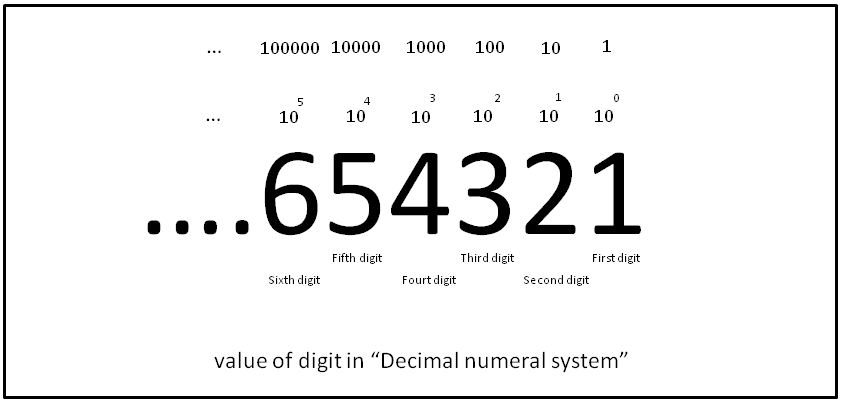
Decimal - Wikipedia
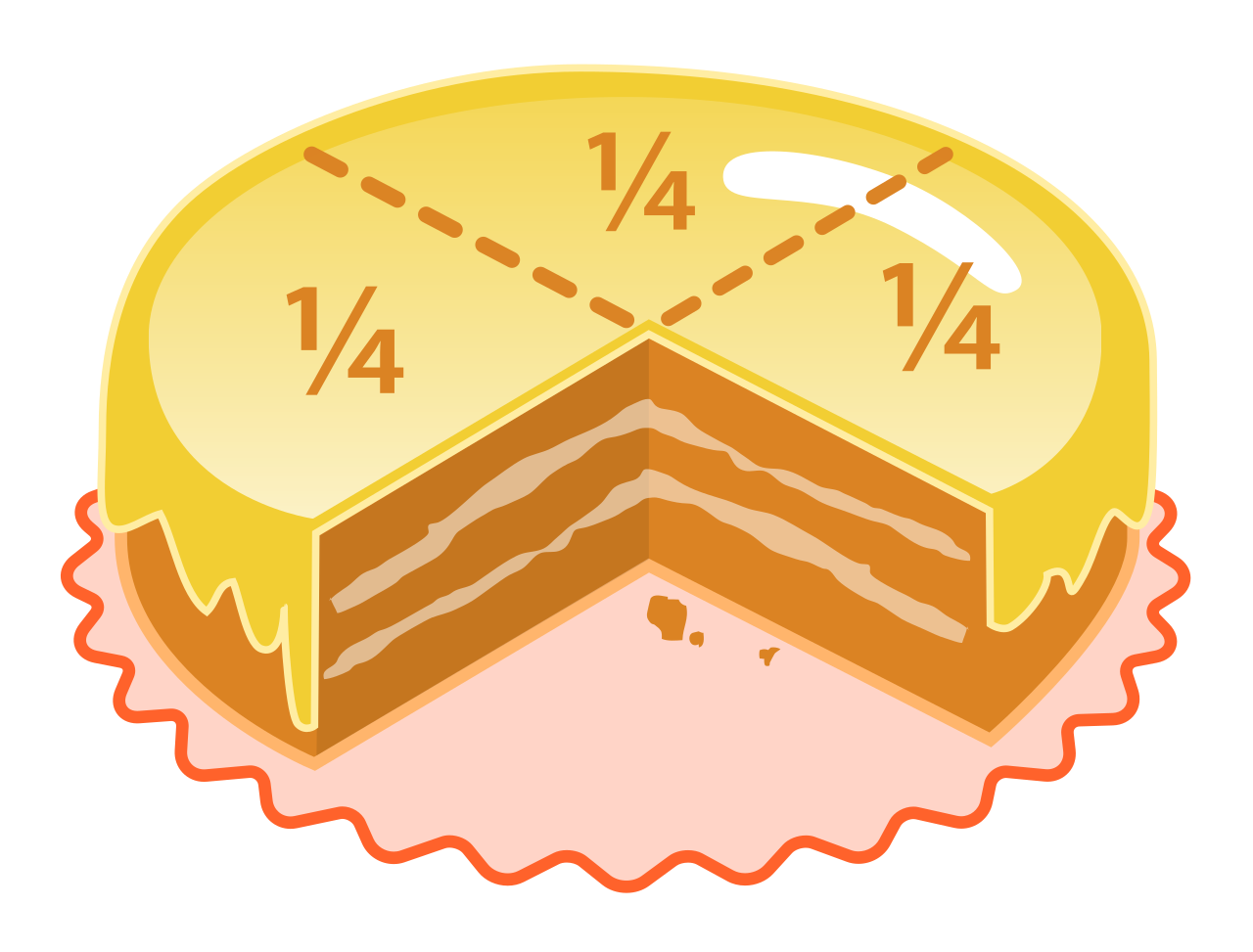
Fraction - Wikipedia
So did I - but what you didn't seem to learn at uni was that "fraction" merely means "non-integer" and, as morqthana and myself have said, such a value can be expressed as either a "decimal fraction" or a "vulgar fraction" (sometimes called a 'simple fraction'), the latter being one integer 'over' anotherI can't be arsed to read the whole thread, but what is a decimal fraction? ... And I say this as someone who studied partial derivatives whilst at uni.
- Joined
- 18 Apr 2022
- Messages
- 7,168
- Reaction score
- 1,071
- Country
What sort of education teaches you that there is a word "vaguary"?Why when I have an excellent understanding of areas and the vaguaries (or vagaries depending on ones eduacatio) of the terminologies in place.
And I'm not sure that the "terminologies in place" are subject to whims, or unpredictability.
But as for why - because you don't seem able to separate "square/squared" when it's used to describe a shape:
"The rug is 5' square"
and when it's used as a unit of area:
"A football pitch is typically 6,500 - 7,000 square metres"
and when it's a mathematical operation
x²=y²+z²

To be fair, when it`s written it is easier to see the difference, cancel the dozens out in each side and you are left to compare a half against 6, a factor of 12 magnitude.I think you need to seriously re-consider your arithmetic in relation to "6 dozen dozen"
Spoken only and the mind tells you a half a dozen is 6 and you compare that with the six and mistakenly remember two "dozen dozen" remaining when in reality only one of the dozens in one of the sides is remaining compared to the other still having both dozens.
Harry will not be the only one to fall for it written but a lot more fall for it if it is verbal only.
Yes, but one can't (shouldn't) do that, since the first "dozen" (in conjunction with what preceded it) has a different meaning in the two expressions - so that one cannot cancel both of the dozens in the two expressions. In the first case, the "6 dozen" equates to 72, whereas in the second case "half a dozen" equates to 6. The comparison of your two expressions is therefore between .,..To be fair, when it`s written it is easier to see the difference, cancel the dozens out in each side and you are left to compare a half against 6, a factor of 12 magnitude.
72 dozen
and
6 dozen
I'm not sure how Harry came to his conclusion, but he did not 'fall for it' in the sense you describe above, since he said that he thought that both your statements equated to the same number (72)Harry will not be the only one to fall for it written but a lot more fall for it if it is verbal only.
I hope we are agreed that the first of your two statements (6 dozen dozen) results in the (much) greater answer. However, whilst you say that a lot of people "get that wrong" I struggle to see how any interpretation, or any way of thinking (including the 'erroneous approach' you mention above) could result in someone concluding that "half a dozen" was the greater. What am I missing?"Which is greater, six dozen dozen or half a dozen dozen?" and a lot of people got it wrong.
Apologies for the typo, correctedWhat sort of education teaches you that there is a word "vaguary"?
Isn't that what much of this is about? Why else has there been dispute?And I'm not sure that the "terminologies in place" are subject to whims, or unpredictability.
I thought this was more about describing area than shape. I have no difficulty in understanding squared as the past tense of square, why do you?But as for why - because you don't seem able to separate "square/squared" when it's used to describe a shape:
Sorry but I'm not quite sure you meant to write: second(s) The rug is 5minutes square second(s)"The rug is 5' square"
What was it you were saying about: And I'm not sure that the "terminologies in place" are subject to whims, or unpredictability.
I'll assume (despite the common phrase: To assume makes an ass of u and me) that your intention is:
The rug is 5 feet square which works out as 25 square feet (also 25 squared feet) abreviated as 25ft²
A bit small but yes I agree 70,000 metres squared or 70,000m² is sufficient. However 70,000 metres square would be rather excessiveand when it's used as a unit of area:
"A football pitch is typically 6,500 - 7,000 square metres"
Ditto regarding: And I'm not sure that the "terminologies in place" are subject to whims, or unpredictability.
No dispute from me that: x times x = y times y plus z times z which is the same as x squared = y squared plus z squared.and when it's a mathematical operation
x²=y²+z²
Last edited:
Eh?! Is this deliberate silliness intended to make some point?Sorry but I'm not quite sure you meant to write: second(s) The rug is 5minutes square second(s)
The 'double quote mark' (") which you appear to be interpreting as 'seconds' is one of a pair surrounding the entire text, and you also appear to be interpreting the single quote mark/apostrophe (') as 'minutes' - but you surely must indicate that (particularly in relation to shape/objects) the ' and " symbols are also very widely used (much more than for units of time) to indicate feet and inches?

DIYnot Local
Staff member
If you need to find a tradesperson to get your job done, please try our local search below, or if you are doing it yourself you can find suppliers local to you.
Select the supplier or trade you require, enter your location to begin your search.
Please select a service and enter a location to continue...
Are you a trade or supplier? You can create your listing free at DIYnot Local
Similar threads

- Replies
- 5
- Views
- 1K

