• Looking for a smarter way to manage your heating this winter? We’ve been testing the new Aqara Radiator Thermostat W600 to see how quiet, accurate and easy it is to use around the home. Click here read our review.

Which of these sockets are in the right place? (If any)

Eh?! Is this deliberate silliness intended to make some point?

The 'double quote mark' (") which you appear to be interpreting as 'seconds' is one of a pair surrounding the entire text, and you also appear to be interpreting the single quote mark/apostrophe (') as 'minutes' - but you surely must indicate that (particularly in relation to shape/objects) the ' and " symbols are also very widely used (much more than for units of time) to indicate feet and inches?
Yes I know and before editing my reply a repeated line about feet and inches was included.
Following from the discussion about vague and confused terms it is a simple demonstration that vagueries in terminology DO exist.
 
Yes I know and before editing my reply a repeated line about feet and inches was included. Following from the discussion about vague and confused terms it is a simple demonstration that vagueries in terminology DO exist.
Yes, that sometimes happens when words, symbols or abbreviations have multiple possible meanings, but application of common sense in relation to the context usually resolves such things, although they may confuse those who are not quite so good at thinking.

For example, if I refer to a 'socket' in this forum, it is usually not necessary to explain what sort of socket I'm tyalking about, even though, in other contexts, it could relate to a socket used with a ratchet handle, all sorts of other electrical/electronic things, the socket of a ball-and-socket joint (biological or manufactured), a tooth socket, the socket of an artificial limb, various plumbing things etc. etc. etc.
 
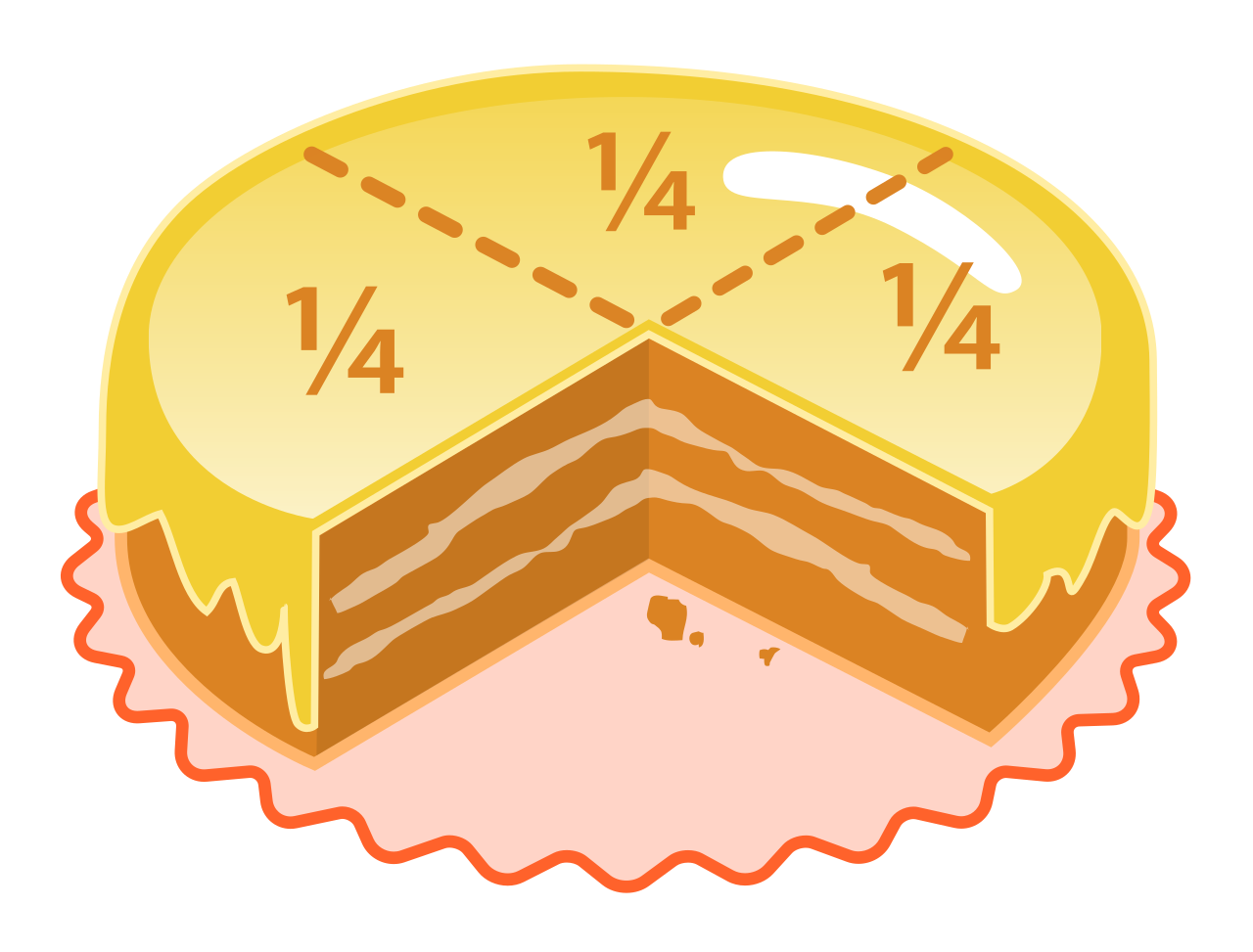
Decimal: 0.25, vulgar ¼

0.5 ½

0.75 ¾

You get the idea...


The only mention in this years GSCE tuition regarding decimal fractions, as I've seen it, has been solely regarding fractions containing powers of 10, IE: 1/10, 10/40 etc
When I was at school we were categorically told decimal fractions do not exist either decimals or fractions, I recall discussions regarding decimals within fractions which arose during calculations such as (ax+b)/(2π) (made up) and being told could only be integers, otherwise had to be a decimal result.
My granson and I did a fair bit of internet searching to attempt to clarify the homework and revision exercises.
So yes lots of confusion on this subject and a generation learning that decimal fractions are fractions containing powers of 10.
 
Last edited:
Yes, that sometimes happens when words, symbols or abbreviations have multiple possible meanings, but application of common sense in relation to the context usually resolves such things, although they may confuse those who are not quite so good at thinking.

For example, if I refer to a 'socket' in this forum, it is usually not necessary to explain what sort of socket I'm tyalking about, even though, in other contexts, it could relate to a socket used with a ratchet handle, all sorts of other electrical/electronic things, the socket of a ball-and-socket joint (biological or manufactured), a tooth socket, the socket of an artificial limb, various plumbing things etc. etc. etc.
I'd normally agree and make similar comments, however in the context of the discussions relating to confussion between square inches and inches square and other terms I was simply making the point that confussion creeps in in all sorts of places.
 
Last edited:
To be fair, when it`s written it is easier to see the difference, cancel the dozens out in each side and you are left to compare a half against 6, a factor of 12 magnitude.
Yes, but one can't (shouldn't) do that, since the first "dozen" (in conjunction with what preceded it) has a different meaning in the two expressions - so that one cannot cancel both of the dozens in the two expressions. In the first case, the "6 dozen" equates to 72, whereas in the second case "half a dozen" equates to 6. The comparison of your two expressions is therefore between .,..
72 dozen
and
6 dozen
And that comparison is a 12:1 one, just as ebee said.

And his analysis is just as accurate as yours (must be, as the answers are the same), and just as valid, because there are no brackets to make anything specific, and who's to say which assumptions are right?

ebee: "cancel the dozens out in each side". The question becomes

"Which is greater, six dozen dozen or half a dozen dozen?"

Using digits and brackets, these are the two expressions he is comparing

6 x (12 x 12) vs 0.5 x (12 x 12)

You're saying it's

(6 x 12) x 12 vs (0.5 x 12) x 12

Why are you right and he wrong?
 
Last edited:
So did I - but what you didn't seem to learn at uni was that "fraction" merely means "non-integer" and, as morqthana and myself have said, such a value can be expressed as either a "decimal fraction" or a "vulgar fraction" (sometimes called a 'simple fraction'), the latter being one integer 'over' another
And sometimes one is easier to work with than the other.

Using a decimal fraction in the volume of a sphere, for example, is more awkward than using a vulgar one. Including, of course, the value of π if you're using a calculator and it doesn't have a button for that - 22/7 is accurate to 3 places and 355/113 to 6.
 
ebee: "cancel the dozens out in each side". The question becomes
"Which is greater, six dozen dozen or half a dozen dozen?"
Using digits and brackets, these are the two expressions he is comparing
6 x (12 x 12) vs 0.5 x (12 x 12)
You're saying it's
(6 x 12) x 12 vs (0.5 x 12) x 12
Why are you right and he wrong?
You may need to revisit what you wrote. You ask why I think that I am right and he is wrong, yet the expressions you present are mathematically identical for the two of us - so we're presumably either both right or both wrong :-)
 
The only mention in this years GSCE tuition regarding decimal fractions, as I've seen it, has been solely regarding fractions containing powers of 10, IE: 1/10, 10/40 etc When I was at school we were categorically told decimal fractions do not exist either decimals or fractions,
I have gone through this at length with you in off-list communications. In essence ....

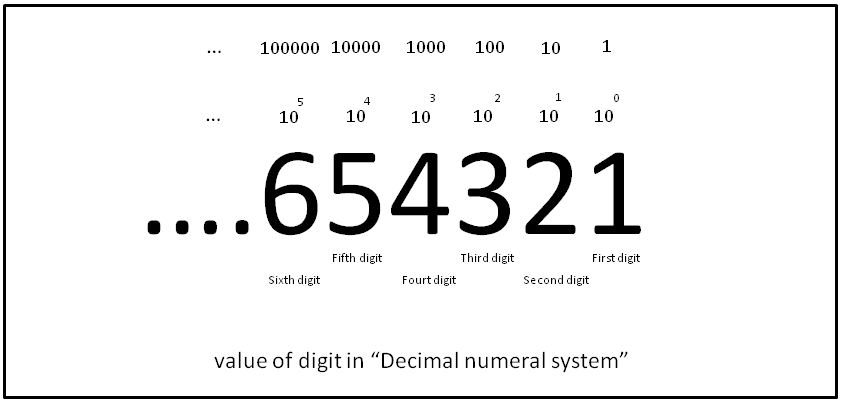
... you are merely talking about the nature of the decimal number system, in which the value of a digit in a particular position (before or after the decimal point) is that digit multiplied by a power of 10.
That means that when converting a decimal fraction (any decimal fraction) to a vulgar fraction, the first step will always result in a fraction whose denominator is a power of 10. However, it will often be possible to 'simplify' that fraction, by dividing both numerator and denominator by the same figure, and the result will be a fraction whose denominator is not a power of 10.
... and the converse is true when converting any vulgar fraction to a decimal one. One then has to multiply both numerator and denominator of the fraction by a number which results in a denominator which is a power of 10, and then divide the numerator by the denominator. It may be impossible to make an 'exact' conversion, if the division results in a 'recurring' decimal number
 
What sort of education teaches you that there is a word "vaguary"?
Apologies for the typo, corrected
We still have the problem that "vaguery" and "vagary" don't mean the same thing - they are not alternative spellings of the same word.

But we can't go there as well.

Isn't that what much of this is about? Why else has there been dispute?
The only dispute (or the vast majority of it), stems from your confusion.

I still don't think that you get the difference between "6 square yards", "6 yards square", and "6 squared yards".

I think you are so confused that you don't even see how there could be a difference even if you don't quite get it.

And I don't think your confusion can be rectified.
I thought this was more about describing area than shape.
The problem with the word "square" is that it can be put in front of a unit to indicate a unit of area ("a territory of 50 square miles") and after it to describe that a shape is square with sides of a particular length ("a piece of plywood 50cm square").

You use the word those ways yourself
4 inches square is a square of 16 square inches.

and then you'll turn round and write things which show that you don't get it

This shape is 4 squared, cm. OR 4² cm.
No - it is 4 cm square. And the only thing about it which is 16cm (that's what 4² cm evaluates to) is its circumference.

which is also 16, cm squared. OR 16 cm². Also known as 16, square cm.
No - nothing about it is 16cm squared. 16cm squared could be the calculation for the area of a 16x16 square -

"What's the area of that piece of silk?" "Well, it's a 16cm square, so the area would be 16cm squared, 256 square cm".

Or it could be a linear measurement -

"If I stack 16 of these 16cm cubes on top of each other, how high will they be?" "Oh, let's see... 16cm squared... that'll be 256cm high"


I have no difficulty in understanding squared as the past tense of square, why do you?
But it isn't.

If you write x²=y²+z², "squared" isn't the past tense of anything.


Sorry but I'm not quite sure you meant to write: second(s) The rug is 5minutes square second(s)
What was it you were saying about: And I'm not sure that the "terminologies in place" are subject to whims, or unpredictability.
"Vagaries" means "whims", or "unpredictability".


I'll assume (despite the common phrase: To assume makes an ass of u and me) that your intention is:
The rug is 5 feet square which works out as 25 square feet (also 25 squared feet) abreviated as 25ft²
No. There is no such thing as a "squared foot". A "square foot" (ft²) yes, which is a unit of area, but the phrase "25 squared feet" means a number of feet equal to 25 squared, i.e. 625'.

A bit small
Really?

6,500 - 7,000 square metres is not the area of a typical football pitch?

1751503235851.png


but yes I agree 70,000 metres squared or 70,000m² is sufficient.
If it's the calculation for an area, 70,000 metres squared would be 4,900,000,000 square metres, not 70,0000 square metres. Or 490,000ha/1,210,800acres/4,900km²/1,892 square miles/just under ¼ of a Wales.


However 70,000 metres square would be rather excessive
A football pitch 70,000 metres square would be a square one, 70,000m on a side, i.e. with an area as per above.

But if we kept the shape to be the same, roughly 3:2 rectangle as normal football pitches, it would be about 86km x 57km. Pitch invasions would be a thing of the past, wouldn't they.


No dispute from me that: x times x = y times y plus z times z which is the same as x squared = y squared plus z squared.
And "squared" is not:

Describing a shape.
Specifying the area of anything.
The past tense of "square".

 
I'd normally agree and make similar comments, however in the context of the discussions relating to confussion between square inches and inches square and other terms I was simply making the point that confussion creeps in in all sorts of places.
I guess we all have to accept that someone who looks at

"The rug is 5' square"

and is so confused by it that they think it says "The rug is 5minutes square second(s)" is going to be permanently confused about the difference between "square inches" and "inches squared".
 
You may need to revisit what you wrote.
I don't think so.


You ask why I think that I am right and he is wrong,

Yes, because of this:

Yes, but one can't (shouldn't) do that,

So just to clarify, when you tell someone they can't, or shouldn't do something, you don't think they are wrong to do it?


yet the expressions you present are mathematically identical for the two of us
They are identical - that's the point I made.


To be fair, when it`s written it is easier to see the difference, cancel the dozens out in each side and you are left to compare a half against 6, a factor of 12 magnitude.
Yes, but one can't (shouldn't) do that, since the first "dozen" (in conjunction with what preceded it) has a different meaning in the two expressions - so that one cannot cancel both of the dozens in the two expressions. In the first case, the "6 dozen" equates to 72, whereas in the second case "half a dozen" equates to 6. The comparison of your two expressions is therefore between .,..
72 dozen
and
6 dozen
So what you said was that he can't or shouldn't "compare a half against 6" because it should be between 6 dozen and 72 dozen (yours swapped round to keep the order consistent with ebee, although I accept he reversed them wrt the original question)


- so we're presumably either both right or both wrong :)
You are both right.

But you think he is wrong (subject to the clarification above), because when he said "cancel the dozens out in each side" you told him "one can't (shouldn't) do that, since the first "dozen" (in conjunction with what preceded it) has a different meaning in the two expressions - so that one cannot cancel both of the dozens in the two expressions."

In other words he was parsing the expressions as

6 x (12 x 12) vs 0.5 x (12 x 12)

and reducing to

6 x (12 x 12) vs 0.5 x (12 x 12)

6 vs 0.5

But you're saying no it's

(6 x 12) x 12 vs (0.5 x 12) x 12

(6 x 12) x 12 vs (0.5 x 12) x 12

72 vs 6.


Why do you think his 6 x (12 x 12) vs 0.5 x (12 x 12) is wrong?

And if you don't think it's wrong, why did you tell him he can't (shouldn't) do this:

6 x (12 x 12) vs 0.5 x (12 x 12)

?
 
I don't think so.
You're right. What I wrote was nonsense. I let myself be 'thrown' by misreading ebee's statement to be disagreeing with me - but, as you say, he was merely agreeing.

I'm still not sure why ebee suggested that most people 'get it [his original question] wrong' - since, as I said, I've yet to think of any interpretation or way of thinking that would make "half a dozen dozen" greater than "6 dozen dozen) - can you?
 
Well I am sorry if I have caused a load of confusion.
I was just trying to point out that many of us are capable of making an initial mistake when we make a quick comparison and I consider that once we see it written down in front of us we are somewhat less likely to make that error than if is merely spoken.
One old chestnut I struggled a while with at junior school initially was
"How many pennies in a dozen? how many ha`pennies in a dozen?"
I was indignant that the latter part was an answer of 24 because there were 24 half pennies in a dozen pennies (a shilling) and we always thought in pennies and shillings back then.
It was so ridiculous of me it took a while to see my error when the teacher asked "how many apples in a dozen, how many oranges in a dozen, how many elephants in a dozen, how many shoes in a dozen, etc etc etc there a dozen of anything at all is always 12 but I still had this strange fixation that half pennies in a dozen then the answer was 24.
It did eventually click and I saw the light and realised that I had been rather silly but it did take a while though.

so when 6 doz doz was compared to half doz doz caused quite a few folk to get the wrong answer if it was asked as a spoken question and a lot o those who got it wrong started to see their error once they saw it in text . Some still did not see it though.

These "devious" little trick questions were often asked at family gatherings such as visiting relatives at Christmas and birthdays etc.

Less devious, in our junior school, every week, the head would come into the class, the teacher would finishing speaking and the head would ask the class his "Ten Penny Shots" ten varied questions of gen knowledge whether mats, geography, history, science etc etc and we had to write down our answers, the we would compare all the class answers, not too difficult but some were amusing, I think the head tried to pick one random time one random day each week so we never knew when he would call in to ask us.
A nice exercise in sharpening young minds.

I did cause a stir at senior school one time.
We were constantly told, repeatedly, to only answer the question that was actually asked during a test/exam and not to answer something that had not been asked.
I suggested that I should receive a point for a question I answered rather than a zero score.
The question was along the lines of "Do you know XYZ?"
My answer was "no" and I pointed out that answer was correct (I did not know) but I got some chastisement for my answer and was marked incorrect.
 
You're right. What I wrote was nonsense. I let myself be 'thrown' by misreading ebee's statement to be disagreeing with me - but, as you say, he was merely agreeing.

I'm still not sure why ebee suggested that most people 'get it [his original question] wrong' - since, as I said, I've yet to think of any interpretation or way of thinking that would make "half a dozen dozen" greater than "6 dozen dozen) - can you?
Yes.

Remember it was originally a verbal question.

So people are asked "Which is greater, six dozen dozen or half a dozen dozen?"

They hear "dozen dozen" on both sides - so that's the same.

They hear "six" on one side and "half a dozen" on the other, so that's the same.

They don't realise that they've used one of the "dozen"s twice when they combine those and declare "six dozen dozen" and "half a dozen dozen" to be equal.

I can quite understand, when they hear the question once, and have to answer immediately, that some people get it wrong.

It's less easy to understand someone getting it wrong when they see it in writing and have all the time they need to analyse it
 
These "devious" little trick questions were often asked at family gatherings such as visiting relatives at Christmas and birthdays etc.
One which used to drive my F-I-L mad was the 3 men in a hotel missing £1 question.

And one guaranteed to drive everyone mad was the Monty Hall gameshow one.
 

If you need to find a tradesperson to get your job done, please try our local search below, or if you are doing it yourself you can find suppliers local to you.

Select the supplier or trade you require, enter your location to begin your search.


Are you a trade or supplier? You can create your listing free at DIYnot Local

 
Back
Top