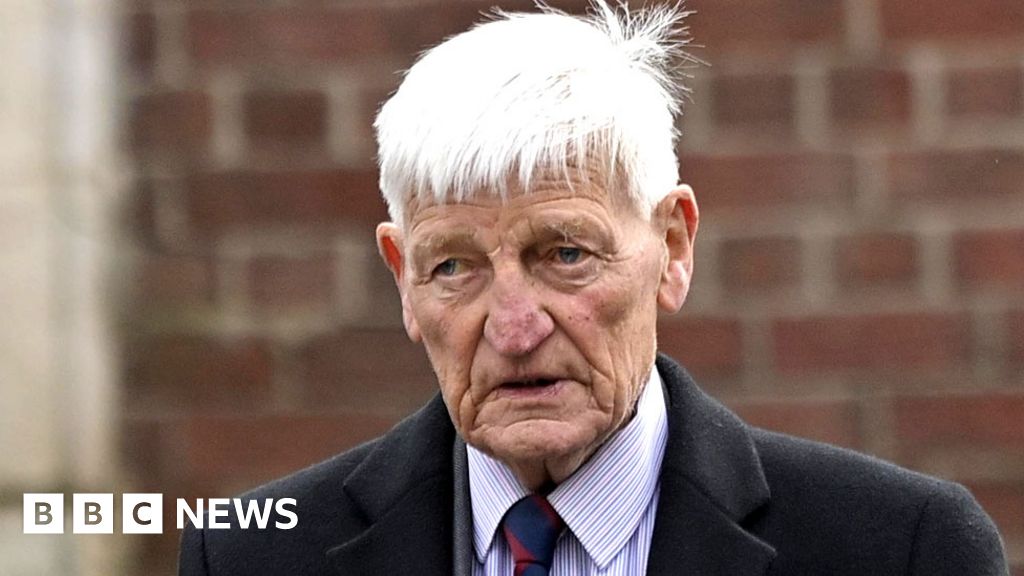
Soldier F.

The perception of the public is the charges are malicious and part of a witch hunt for political purposes.

Even if that's true, do you think that as a general principle British troops in any "conflict situation" should have a legal carte-blanche to kill whoever they like, wherever they like, whenever they like, for whatever reason they like?
 
you do not want an honest discussion that puts the situation in context

the British soldiers in Ireland were a peacekeeping force that faced danger every day, hundreds were injured and killed


when you actually want an honest discussion, then we can debate it

I do want an honest discussion, but you and others are trying to derail that by trying to drag it back to the specific case of the Bloody Sunday shootings and the specific trial of Soldier F.

If you want to have a debate and an honest discussion then the topic is

Do people think that British troops in any "conflict situation" should have a legal carte-blanche to kill whoever they like, wherever they like, whenever they like, for whatever reason they like?

Although TBH, your claim to want an honest discussion and a debate is somewhat scuppered when you post carp like this:

please stop being weird, Morqthana is you
 
Streets of Belfast? you's dont have a clue:rolleyes:

I think that "not having a clue" is a bit extreme.

Yes - I misremembered where it happened - my bad, but however inexcusable getting the location wrong is, it does not invalidate the question I asked.

Particularly when the only time I mentioned location was to clarify that my question had absolutely nothing to do with Soldier F specifically:

It was NOT "Do you think that Soldier F should have been allowed to get away with murder on the streets of Belfast?"

It was NOT "Do you think that Soldier F did get away with murder on the streets of Belfast?"
 
Anyway - I've read all the posts up to date, and I'm not going to respond to any of them individually, as there are too many where people are hell bent on dragging up the context of The Troubles, and the IRA, and the situation the troops were in, and so on, no matter how many times I point out that none of those specifics are relevant to my question, and that my question was not about Soldier F's alleged offence or his trial. Prompted by it, obviously, but not about it.

The point I'm trying to make (and I have a sneaking suspicion that some of the obfuscators know it full well, and are obfuscating because they do not want an "honest discussion and debate" about the implications of it) is this:

Unless you really believe that soldiers in any "conflict situation" should have a legal carte-blanche to kill whoever they like, wherever they like, whenever they like, for whatever reason they like, unless you believe that absolutely nothing they do should ever be considered a crime, then you cannot also say that no allegations of a crime should ever be investigated.

If you accept that there could be times when what a soldier does could be a crime (and it doesn't have to be murder, it could be manslaughter, it could be GBH, it could be armed robbery, it could be rape) then how can you not accept that, just as with any other potential crime, if an allegation is credible enough then it has to be investigated?

How can you not accept that, just as with any other potential crime, if the investigation uncovers enough evidence there should be a trial to determine guilt?

I'm not saying that the same standards of "reasonable force" that apply to me should apply to soldiers in combat, but being a soldier does not mean, cannot mean, and FGS must never be allowed to mean that they can do whatever the hell they like with total impunity.

 
Reasonable force? You are in a war to kill the enemy. No crime you are doing a job of killing. You are not going to arrest people.
 
Reasonable force? You are in a war to kill the enemy. No crime you are doing a job of killing. You are not going to arrest people.

Regardless to any political views. No soldier who is sent to serve anywhere in the world should have to face prosecution for doing his job. Unless that soldier opened fire on his own accord and committed a war crime by doing so.
 
Once you have permission to open fire you have a licence to kill. There is no murder.
 
The prosecuting proces is to determine his guilt or innocence.
You can't pronounce anyone guilty or innocent without that process.
That's true but you can't accuse just anyone without enough evidence to justify the prosecution in the first case.

This soldier F is just the latest of a line of elderly veterens who been charged, only for their trials to collapse or be acquitted.

Some haven't been so fortunate.


This bloke was suffering from kidney disease when he was forced to go to N.Ireland during the Covid epidemic to stand trial for an incident which happened decades ago, he had already been exonerated of any crime at the time of the incident.
The obvious stress and his medical condition along with Covid killed him before the trial took place.
Like the other cases , the prosecution produced no new evidence to justify a trial.
I have pointed out before that the N.Ireland public prosecution service is not fit for purpose and there should be a public inquiry to find out what on earth is going on.
 
That situation arose due to the occupier, i.e. the British in refusing to negotiate with Sinn Fein/IRA for decades,
The IRA don't represent the majority of the population, either Nationalist or Unionist.
They had no mandate from either community to use violence for political ends.
All they achieved was to start a sectarian war between Protestants and Catholics.
If the British army hadn't been there , it would have been catastrophic for everyone including people in Britain.
 
Reasonable force? You are in a war to kill the enemy. No crime you are doing a job of killing. You are not going to arrest people.

Explain how shooting unarmed civilians in the back, with intent to kill them, while they are running away from you, is "killing the enemy".


Once you have permission to open fire you have a licence to kill. There is no murder.

"I was only following orders" has been shown to not be a defence.

Explain how shooting unarmed civilians in the back, with intent to kill them, while they are running away from you, and not posing any threat to you, is not murder.
 
Back
Top