• Looking for a smarter way to manage your heating this winter? We’ve been testing the new Aqara Radiator Thermostat W600 to see how quiet, accurate and easy it is to use around the home. Click here read our review.

How to service Grant Vortex 36e, 36Kw keroscene combi boiler

Joined
9 Apr 2012
Messages
286
Reaction score
4
Country
United Kingdom
Hi,

I have a Grant Vortex 36e, 36Kw keroscene combi boiler, used to heat the house hot water and radiators. I got it in 2008, so it's 8 yrs old now.

What does a service engineer do when he services such a boiler, and I can do this myself.

Thanks

Kez
 
No are they expensive? What is he looking for and what does he change if they are out of range?
 
Hi Leakydave, I fixed a leak on the "prs-201 alco" system pressure switch this morning so I am fairly handy with it.
 
No are they expensive? What is he looking for and what does he change if they are out of range?
A flue gas analyser is about £700 and needs recalibrating annually. You'll also need a smoke pump, about £120, and the pressure gauge set is about £50

The above are used to check that the oil pump is working correctly, and that the boiler is burning correctly without producing excessive CO/CO2

Before this is done, the whole thing will be stripped, cleaned, checked for condition, nozzle replaced, supply hoses replaced, filters/gauzes checked and replaced as required, seals sealing correctly and that sort of thing

Can you do it yourself? No, not really.

If it's not been serviced for eight years it's likely to cost you more than a standard service as your service engineer is going to have a tough time cleaning it properly. You'd better hope that the lack of regular maintenance hasn't caused damage to the baffles as well, because if it has things are going to get very expensive
 
I thought this old thread was worth replying to as this is a DIY forum. The answer to 'can you service it yourself' ....'not really'... is probably given by someone with a vested interest in the remunerative work of annual servicing. Surely DIYers should be encouraged!

We have a Grant Vortex Eco 26-35 which has just turned 16yrs old. I have serviced it myself since it was commissioned, referring to the excellent servicing instructions that came with it. It has never worked hard, only burning 1500 litres p.a. As it hardly gets dirty after a mere year I have found a service, which is mainly inspection and cleaning (the filters hardly ever have debris and the baffles and turbulators never have any significant deposits), every two years to be perfectly adequate. The advice to change the nozzle every year is also unnecessary with light usage. It is difficult to know how long a nozzle should last, but 2000hrs seems to be about right with modern clean well filtered fuel. Assuming it burns around 3 litres per hour, that's 500hrs p.a. Mine have lasted around 5yrs - I have just replaced its third nozzle, also the pump filter housing 'O'ring as it was oozing kerosene here. (Why do you have to buy 10 'O' rings at once?!) On inspection with a magnifying glass the clean old nozzle looked much the same as the new nozzle. I see no burning reason to buy equipment to check the CO/CO2 levels and the flue gas temperature in the flue any more than I would check these in my woodburner's flue. I estimate I have saved myself c.£2000, which will go a long way towards the new boiler which I now need as it's developed a rusty water leak when in action - not when standing idle. I thought Grant boilers had a reputation for longevity, but having explored various sites (that's how I rediscovered this one) it seems they are failing even before 10yrs old. (The Wilson Wallflame we had in our last house did 35yrs before it started leaking). Grant seem unhelpful when I try to obtain a replacement without a burner - which should have plenty of life left. It is, after all, just a glorified blow-torch. They should have learned how to manufacture a longer lasting strong continent metal water container by now. It might be called a boiler but, unlike a stressed steam engine boiler, it doesn't even get to boiling point during normal running, so it should last longer than a mere 16yrs. Perhaps it is planned obsolescence - like the cars of the 1950s?

 
I thought this old thread was worth replying to as this is a DIY forum. The answer to 'can you service it yourself' ....'not really'... is probably given by someone with a vested interest in the remunerative work of annual servicing. Surely DIYers should be encouraged!

We have a Grant Vortex Eco 26-35 which has just turned 16yrs old. I have serviced it myself since it was commissioned, referring to the excellent servicing instructions that came with it. It has never worked hard, only burning 1500 litres p.a. As it hardly gets dirty after a mere year I have found a service, which is mainly inspection and cleaning (the filters hardly ever have debris and the baffles and turbulators never have any significant deposits), every two years to be perfectly adequate. The advice to change the nozzle every year is also unnecessary with light usage. It is difficult to know how long a nozzle should last, but 2000hrs seems to be about right with modern clean well filtered fuel. Assuming it burns around 3 litres per hour, that's 500hrs p.a. Mine have lasted around 5yrs - I have just replaced its third nozzle, also the pump filter housing 'O'ring as it was oozing kerosene here. (Why do you have to buy 10 'O' rings at once?!) On inspection with a magnifying glass the clean old nozzle looked much the same as the new nozzle. I see no burning reason to buy equipment to check the CO/CO2 levels and the flue gas temperature in the flue any more than I would check these in my woodburner's flue. I estimate I have saved myself c.£2000, which will go a long way towards the new boiler which I now need as it's developed a rusty water leak when in action - not when standing idle. I thought Grant boilers had a reputation for longevity, but having explored various sites (that's how I rediscovered this one) it seems they are failing even before 10yrs old. (The Wilson Wallflame we had in our last house did 35yrs before it started leaking). Grant seem unhelpful when I try to obtain a replacement without a burner - which should have plenty of life left. It is, after all, just a glorified blow-torch. They should have learned how to manufacture a longer lasting strong continent metal water container by now. It might be called a boiler but, unlike a stressed steam engine boiler, it doesn't even get to boiling point during normal running, so it should last longer than a mere 16yrs. Perhaps it is planned obsolescence - like the cars of the 1950s?
I really appreciate the reply, which is straight forward and to the point.

I used to repair highly complex high kV and noxious gas equipment when working in the industrial lab as a scientist.

So all I was looking for here was straight forward pointers, exactly as you have given.

Why not ask for practical pointers, from people who are doing this all the time, that gets the job done in a practical low cost way.

I am currently learning to mig weld. If you get a welding set, not very expensive, and get the exact metal composition from Grant, you can buy material matching welding wire, and have a go yourself after learning to weld, so you don't blow a hole in the metal. Or take it to a friendly welder.


Thank you
I thought this old thread was worth replying to as this is a DIY forum. The answer to 'can you service it yourself' ....'not really'... is probably given by someone with a vested interest in the remunerative work of annual servicing. Surely DIYers should be encouraged!

We have a Grant Vortex Eco 26-35 which has just turned 16yrs old. I have serviced it myself since it was commissioned, referring to the excellent servicing instructions that came with it. It has never worked hard, only burning 1500 litres p.a. As it hardly gets dirty after a mere year I have found a service, which is mainly inspection and cleaning (the filters hardly ever have debris and the baffles and turbulators never have any significant deposits), every two years to be perfectly adequate. The advice to change the nozzle every year is also unnecessary with light usage. It is difficult to know how long a nozzle should last, but 2000hrs seems to be about right with modern clean well filtered fuel. Assuming it burns around 3 litres per hour, that's 500hrs p.a. Mine have lasted around 5yrs - I have just replaced its third nozzle, also the pump filter housing 'O'ring as it was oozing kerosene here. (Why do you have to buy 10 'O' rings at once?!) On inspection with a magnifying glass the clean old nozzle looked much the same as the new nozzle. I see no burning reason to buy equipment to check the CO/CO2 levels and the flue gas temperature in the flue any more than I would check these in my woodburner's flue. I estimate I have saved myself c.£2000, which will go a long way towards the new boiler which I now need as it's developed a rusty water leak when in action - not when standing idle. I thought Grant boilers had a reputation for longevity, but having explored various sites (that's how I rediscovered this one) it seems they are failing even before 10yrs old. (The Wilson Wallflame we had in our last house did 35yrs before it started leaking). Grant seem unhelpful when I try to obtain a replacement without a burner - which should have plenty of life left. It is, after all, just a glorified blow-torch. They should have learned how to manufacture a longer lasting strong continent metal water container by now. It might be called a boiler but, unlike a stressed steam engine boiler, it doesn't even get to boiling point during normal running, so it should last longer than a mere 16yrs. Perhaps it is planned obsolescence - like the cars of the 1950s?
this boiler has only ever had failed internal danfoss pumps, which I changed when they failed.
It still runs perfectly, never serviced, and does not guzzle any more oil than the day I got it all those years ago.

When I get a moment I will look inside after a read of the service manual if I can get my hands on it.

Appreciated reply, ty again
 
Last edited:
Thanks kez1, that's an amazingly quick response! But at 75 I'm a bit beyond learning to weld.....and I doubt if I could find anyone to repair my 'boiler' (a bit of a misnomer as unlike a pressurised steam engine boiler it never actually boils). It's just a shame that in this day and age they can't make an unstressed water heater to last longer. Or perhaps it's intentional planned obsolescence?
 
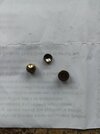
Here is a photo of one I definitely know was in service for ~ 35 years on a Riello burner in a Firebird SE Boiler, its not mine by the way.
 

Attachments

  • Danfoss 35 year old nozzle Parts.jpg
    Danfoss 35 year old nozzle Parts.jpg
    168 KB · Views: 25
Thanks kez1, that's an amazingly quick response! But at 75 I'm a bit beyond learning to weld.....and I doubt if I could find anyone to repair my 'boiler' (a bit of a misnomer as unlike a pressurised steam engine boiler it never actually boils). It's just a shame that in this day and age they can't make an unstressed water heater to last longer. Or perhaps it's intentional planned obsolescence?
You could find out what the exact composition of the metal is from Grant, likely a form of stainless, and ask someone to weld a stainless patch over it for you.
As long as it's a good weld, using stainless wire, it should be good to go.
Just ideas to try and help you get it moving
 
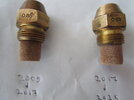
Mine (Danfoss 0.85 80degEH) are only a mere 8yrs service life. (I rarely throw things away!)
Danfoss (1).JPG
 

Attachments

  • Danfoss (2).JPG
    Danfoss (2).JPG
    258.2 KB · Views: 11
Nozzles always look good when taken out, but what you cannot see is on the inside, where there is a spinner that is actuated by the fuel passing through. This is on a bush and invariably wears distorting the flame pattern.
There was always a good reliable supply of well made longlasting boilers made, both gas and oil, but the drive for efficiency and cost saving took away the ease of maintenance . Todays units provide up to 50% improved output, with less pollution and a greater level of control which is demanded by consumers.
 

If you need to find a tradesperson to get your job done, please try our local search below, or if you are doing it yourself you can find suppliers local to you.

Select the supplier or trade you require, enter your location to begin your search.


Are you a trade or supplier? You can create your listing free at DIYnot Local

 
Back
Top