Selmar Turbo 8 battery charger help

Joined
9 Jan 2026
Messages
6
Reaction score
0
Location
Brentwood
Country
United Kingdom
Hello Everyone,

My name is Jay and I have a Big favour to ask this community so I have an Automotive friend in his 80’s who still rolls around the floor repairing and maintaining his Classic cars like his Morris Minor and Talbot Sunbeam, he bought some joblots on eBay and it had a Selmar Turbo 8 Battery charger but was completely disassembled now he has tried to put it together and I believe it’s not far off.

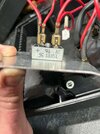
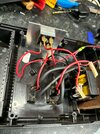
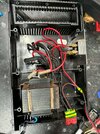
What I’m asking is I think he’s wired the Bridge Rectifier Wrong as he melted the 15 amp Thermal switch attached to the transformer which I have a new one coming for it but whilst I wait I’m reaching out to see if anyone can look at the pictures I have to see if the wiring is wrong or can show me photos of other Turbo 8’s to see the actual way the wiring goes as I don’t want this man to hurt himself or set fire to the History in his collection.

I can relay some information if needed but I don’t have much on the item itself and I have minor understanding of electrics enough to wire up things and Soldering PCB’s etc but with the age of this Charger I want to cast a call for help.

Kind regards

Jay
 

Attachments

  • att.Zy0UphE7FIp0vvmSJz49tv8DZEgeG3xHYsej9BRijfY.jpeg
    att.Zy0UphE7FIp0vvmSJz49tv8DZEgeG3xHYsej9BRijfY.jpeg
    559.1 KB · Views: 24
  • att.ErpBiHt49fBL9CtjJBTgAt1m59c7lZwcq9lWNAE9vHU.jpeg
    att.ErpBiHt49fBL9CtjJBTgAt1m59c7lZwcq9lWNAE9vHU.jpeg
    609.4 KB · Views: 23
  • att.ArkpRSKwND7Uu4MOqubTssODKLMBCVajB6qZ8k7N9ZE.jpeg
    att.ArkpRSKwND7Uu4MOqubTssODKLMBCVajB6qZ8k7N9ZE.jpeg
    386 KB · Views: 21
The AC transformer outputs should go to diagonally-opposite terminals of the bridge rectifier. The other pair of terminals are the rectified DC outputs. Observe that one of the terminals is rotated compared to the other three; I think that one is the positive output (Edit: indeed it is marked as such in your last photo).

Does that help?
 
My name is Jay and I have a Big favour to ask this community so I have an Automotive friend in his 80’s who still rolls around the floor repairing and maintaining his Classic cars like his Morris Minor and Talbot Sunbeam, he bought some joblots on eBay and it had a Selmar Turbo 8 Battery charger but was completely disassembled now he has tried to put it together and I believe it’s not far off.

To be honest, I really wouldn't bother with it - modern, smart chargers are so much better, and not expensive. Old chargers like that, are a great way to ruin batteries, they just keep on charging, whether the battery is fully charged or not. Modern ones, stop charging once charged.

However - Selmar were made and supplied by a company called Tadmod Ltd. They might still be around, and if you are lucky, they might even be able to provide a circuit for the charger....

Tadmod Ltd.
Exchange House, 54-58 Athol Street, Douglas Isle of Man, IM1 1JD. U.K.
Top range quality products from Selmar
Tel: +44 (0) 1624 618 718 Fax: +44 (0) 1624 618 719

A more recent address, is

 
Last edited:
To be honest, I really wouldn't bother with it - modern, smart chargers are so much better, and not expensive. Old chargers like that, are a great way to ruin batteries, they just keep on charging, whether the battery is fully charged or not. Modern ones, stop charging once charged.
Spot on, the only problem with the new chargers, is they will not charge a battery which has been completely discharged. So I still have one, to revive forgotten about batteries.
 
To be honest, I really wouldn't bother with it - modern, smart chargers are so much better, and not expensive. Old chargers like that, are a great way to ruin batteries, they just keep on charging, whether the battery is fully charged or not. Modern ones, stop charging once charged.

However - Selmar were made and supplied by a company called Tadmod Ltd. They might still be around, and if you are lucky, they might even be able to provide a circuit for the charger....

Tadmod Ltd.
Exchange House, 54-58 Athol Street, Douglas Isle of Man, IM1 1JD. U.K.
Top range quality products from Selmar
Tel: +44 (0) 1624 618 718 Fax: +44 (0) 1624 618 719

A more recent address, is

Hi there believe me when I say I agree with modern chargers being more efficient at reconditioning and charging in a safer manner with all of the protections it has built in to detect and warn you about……

But he’s that type of guy that’s attached to his items never throws anything away and I just wanted to do something nice for him.

I will look into that company and go from there.

I appreciate the help you gave me I will investigate that company and go from there.

Regards

Jay
 
The AC transformer outputs should go to diagonally-opposite terminals of the bridge rectifier. The other pair of terminals are the rectified DC outputs. Observe that one of the terminals is rotated compared to the other three; I think that one is the positive output (Edit: indeed it is marked as such in your last photo).

Does that help?
So the + on the side indicates that spot is for the +Dc output (aka Red lead) and if I’m reading what you say correctly your saying the -dc is diagonal to the positive and
The AC on the side case means +AC goes there and diagonally to its counter part ?

I appreciate your help with this

Regards

Jay
 
So the + on the side indicates that spot is for the +Dc output (aka Red lead) and if I’m reading what you say correctly your saying the -dc is diagonal to the positive and
Correct!

The AC on the side case means +AC goes there and diagonally to its counter part
There is no positive or negative to AC, either on either terminal, is fine they are marked by a.....
Alternate current, AC symbol
 
They don't have to be smart, just voltage controlled, to prevent damaging the battery. Connect, and not worry about.
I seem to remember 2N3015 power transistor and 7812 voltage regulator, and a red LED and a 36 watt 12 volt bulb, the idea was once the voltage when over 13.2 volt it would start to turn on the bulb, and hold the voltage down not very power efficient, but easy to add to a standard battery charger to stop it over charging. Tried to control output, but the 0.6 volt drop was too much.
 
Hello Everyone,

My name is Jay and I have a Big favour to ask this community so I have an Automotive friend in his 80’s who still rolls around the floor repairing and maintaining his Classic cars like his Morris Minor and Talbot Sunbeam, he bought some joblots on eBay and it had a Selmar Turbo 8 Battery charger but was completely disassembled now he has tried to put it together and I believe it’s not far off.

What I’m asking is I think he’s wired the Bridge Rectifier Wrong as he melted the 15 amp Thermal switch attached to the transformer which I have a new one coming for it but whilst I wait I’m reaching out to see if anyone can look at the pictures I have to see if the wiring is wrong or can show me photos of other Turbo 8’s to see the actual way the wiring goes as I don’t want this man to hurt himself or set fire to the History in his collection.

I can relay some information if needed but I don’t have much on the item itself and I have minor understanding of electrics enough to wire up things and Soldering PCB’s etc but with the age of this Charger I want to cast a call for help.

Kind regards

Jay
These rectifiers are usually constructed with opposite pins AC but the markings do need to be checked.
'A' spec sheet for them
1768007745628.png
confirms that but do try to check the device you have.

The markings seem to be clear so the 2 AC pins need to be wired to the centre of both switches (via the thermal trip) and polarity doesn't matter. Shown yellow

The black output wire via the fuse and meter to the '—' pin shown black
The red output wire to the '+' pin shown red
1768007563524.png


It does look as if the 2 top spade connectors are swapped over

Does this help with how I think it should be
1768008433617.png


My concern is the 4 black wires from the transformer have been moved which would require very carefull testing to put right
 
Looking at other posts on this battery charger, it would seem around 35 years old, back then we tended to use metal rectifiers which had a much higher resistance than the modern type, also the transformer was low quality, and it relied on this poor quality so the current with a discharged battery was reduced to a safe level.

If the rectifier is replaced with a modern square lump as you show, this can result in too much current being delivered. One's nose is about the best inspection device, does anything smell burnt out? But job one is to test it, as don't want to spend money if a transformer has failed, in general even back in the last century buying a new charger was cheaper than getting a new transformer.

I know it goes against the grain to dump it and buy new, even the new battery chargers of that type, say on the adverts
1768020587037.png
which means really no fit for purpose, and never have been. They could be used to give an hour's charge to boost an ailing battery, but the idea of giving a battery an equalising charge for 24 hours, they would over charge the battery, so only suitable with a floated battery which could be topped up.
 
These rectifiers are usually constructed with opposite pins AC but the markings do need to be checked.
'A' spec sheet for them View attachment 404152 confirms that but do try to check the device you have.

The markings seem to be clear so the 2 AC pins need to be wired to the centre of both switches (via the thermal trip) and polarity doesn't matter. Shown yellow

The black output wire via the fuse and meter to the '—' pin shown black
The red output wire to the '+' pin shown redView attachment 404150

It does look as if the 2 top spade connectors are swapped over

Does this help with how I think it should beView attachment 404154

My concern is the 4 black wires from the transformer have been moved which would require very carefull testing to put right
So as far what he’s told me was the transformer connections (black cables) where never touched or removed from the 6v-12v or 4amp-10amp switches it was the original main lead was junk all Red leads were removed from the Bridge Rectifier as well as the Rectifyer and the base reverse polarity Blade fuse.

Yes the diagrams you provided have helped drastically I know i don’t have a wealth of knowledge in this area but appreciate all the help with this as I would rather me make a mistake than him in case he dies and I have on many occasions said he needs a more modern charger doesn’t have to be the latest models but something better than this but like many Classic Car enthusiasts he stuck in his ways so if I can get this working properly I know he will be safer than what he tried to do.
 
Correct!


There is no positive or negative to AC, either on either terminal, is fine they are marked by a.....
Alternate current, AC symbol
I may be blind but I couldn’t see the Tilde symbol on the rectifier or the spades can you see them in any of the pictures I uploaded so I can be aware of the area for future reference.

Kind regards

Jay
 
Looking at other posts on this battery charger, it would seem around 35 years old, back then we tended to use metal rectifiers which had a much higher resistance than the modern type, also the transformer was low quality, and it relied on this poor quality so the current with a discharged battery was reduced to a safe level.

If the rectifier is replaced with a modern square lump as you show, this can result in too much current being delivered. One's nose is about the best inspection device, does anything smell burnt out? But job one is to test it, as don't want to spend money if a transformer has failed, in general even back in the last century buying a new charger was cheaper than getting a new transformer.

I know it goes against the grain to dump it and buy new, even the new battery chargers of that type, say on the adverts View attachment 404156which means really no fit for purpose, and never have been. They could be used to give an hour's charge to boost an ailing battery, but the idea of giving a battery an equalising charge for 24 hours, they would over charge the battery, so only suitable with a floated battery which could be topped up.
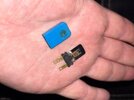
Yes he melted the Otter G6 Thermal switch
 

Attachments

  • image.jpg
    image.jpg
    233.4 KB · Views: 7
I may be blind but I couldn’t see the Tilde symbol on the rectifier or the spades can you see them in any of the pictures I uploaded so I can be aware of the area for future reference.

Kind regards

Jay
The rectifier in the picture is marked with ' AC '
1768040379771.png
rather than
1768039605356.png
 
Last edited:

If you need to find a tradesperson to get your job done, please try our local search below, or if you are doing it yourself you can find suppliers local to you.

Select the supplier or trade you require, enter your location to begin your search.


Are you a trade or supplier? You can create your listing free at DIYnot Local

 
Back
Top