Neutral-Earth Voltage 120V

Joined
22 Dec 2020
Messages
215
Reaction score
12
Country
United Kingdom
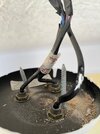
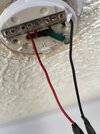
I'm decorating my upstairs bedroom and decided to replace the light fitting (it's been there for 25yrs). I disconnected the old fitting which was only connected to live and neutral. (See pictures below). I checked the voltages and noticed the neutral- earth voltage was 120V which doesn't look right. Live- Neutral was 240V as expected.

I've switched off circuit from fuse box and trying to figure out next steps. Should I call in electrician or are there some simple checks I can do?

Any help/advice appreciated.

Thanks.
 

Attachments

  • Lightfitting_1.jpg
    Lightfitting_1.jpg
    78.2 KB · Views: 16
  • Light_2.jpg
    Light_2.jpg
    98.8 KB · Views: 17
Yes this needs to be addressed.

The next step would be to test the continuity of the earth wiring from that fitting location back to the main earth terminal. This is not teriiblly difficult but does requilre a long temporary cable to be set up. If that is bad, then the fault is within the lighting circuit and it becomes a matter of searching and testin different parts of the circuit until you find it.

If the connection to the main earth terminal is good, then this suggests a serious problem with your supply earthing setup. If that's the case post a picture of the CU/meter setup for further advice.
 
Can you confirm your earthing arrangement? If not, maybe post a photo of consumer unit area. Maybe test something else, like a socket?
 
The Earth isn’t connected back to the CU is my best interpretation of what’s being reported
I agree, that is the most likely cause, but it needs to be confirmed. It's also possible (but less likely) that the issue affects the entire installation.
 
You have a multimeter, right?

Turn off the main switch.

Get an extension lead, plug it in to a socket near this light fitting.

Set meter to continuity (low resistance).

Poke one probe into the extension lead’s earth hole.

Toch other probe on light’s earth.

There should be continuity, but presumably there won’t be.

Repeat at other light fittings and light switches. Work out the pattern.
 
You have a multimeter, right?

Turn off the main switch.

Get an extension lead, plug it in to a socket near this light fitting.

Set meter to continuity (low resistance).

Poke one probe into the extension lead’s earth hole.

Toch other probe on light’s earth.

There should be continuity, but presumably there won’t be.

Repeat at other light fittings and light switches. Work out the pattern.
Start by measuring the voltage between the extension lead earth and the light fitting earth.
 
No. The voltage will either be zero, or it will be some confusing floating voltage induced by something.
But at least you will know you are shoving mains across your ohmmeter.

Personally when I'm doing this test I go round looking for voltage and when it's zero I know it's good then work outwards from there and to be honest I'd probably be starting it with the power on and a LED screwdriver, not a wander lead as it's so much easier and less cumbersome. Then moving on to the dead tests.

On one job which was very confusing due to the machinary around, I powered the faulty earthwire with a 24V transformer to earth via a small bulb and measured for 24V to the water pipes as my most reliable reference but that was an exceptional situation
 
Last edited:

If you need to find a tradesperson to get your job done, please try our local search below, or if you are doing it yourself you can find suppliers local to you.

Select the supplier or trade you require, enter your location to begin your search.


Are you a trade or supplier? You can create your listing free at DIYnot Local

 
Back
Top