45A Cooker Switch - Back Box Size & Filler

Surely it's only chases which are regulated. A hole doesn't matter.
Hmmm - definitions again! What's a hole for a back box if not a 'short and wide chase' - or is there a definition of 'chase' which requires a minimum length? The structural integrity of a wall presumably doesn't care what one calls the deficiency one has created in it!
I don't think he's going to need a concrete lintel over that wee box! :wink:
 
I don't think he's going to need a concrete lintel over that wee box! :wink:
I'm sure he doesn't (but it's interesting to note that it looks that at least two of the bricks above it are probably loose).

I only mentioned this because some people here are only too quick to mention the regs about chopping into walls, but maybe I shouldn't have bothered!

Kind Regards, John.
 
Its a case of deciding whats reasonable I suppose.

If I drill a 25mm hole in the wall to route a cable through, what does that count as?!
 
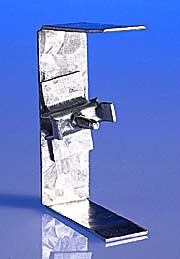
Maybe somebody invented these for just the purpose of compromising structural integrity of walls:

AP604.JPG
 
Maybe somebody invented these for just the purpose of compromising structural integrity of walls:
Well, to be serious, if one used several of those to create a horizontal run of 2G back boxes, it would be hard not to regard the resulting 'hole' in the wall as 'a chase', and probably one with at least as much potential to impact on the wall's structural integrity as would a conventional horizontal chase for a cable of the same length - so I presume it would be subject to the usual Building Regs' restrictions on its depth.

As I said, particularly given the lack of detail in the regs, I think that common sense is (or should be) the name of the game. On that basis, I wouldn't dream of being concerned about one or two adjacent deep boxes, but if it were a lot more than two, horizontally contiguous, ones, then I might.

Kind Regards, John
 
Would be interesting to know if any walls have collapsed / moved due to excess socket boxes being chased in?!
 
Would be interesting to know if any walls have collapsed / moved due to excess socket boxes being chased in?!
It would, and I very nearly made the same comment myself earlier. If serious structural compromise has ever happened, I'm sure that it is unbelievably rare. There is an amazing amount of redundancy in the structure of buildings - many of us have seen massive holes (real holes, not just 'chases'!) in structural walls which were still standing, and supporting things.

Kind Regards, John
 
I'm thinking big screen TV/Hifi/AV with a string of 3x double sockets, coax sockets and RJ-45 ports in a nice long string in the corner of a room.
 
I'm thinking big screen TV/Hifi/AV with a string of 3x double sockets, coax sockets and RJ-45 ports in a nice long string in the corner of a room.
Yes, I guessed that was the sort of thing you're thinking of.

However, if you were talking horizontal, that would probably be about 600mm. If I proposed running a horizontal chase for cables, 600mm long and with a depth, say, of 20%-30% of the wall thickness (or more), I think it pretty likely that some 'Jobsworth' would point out to me that such was non-compliant with the Building Regs. A 600mm wide horizontal 'hole' for back boxes, of the same depth would presumably represent at least as much a hazard to the wall as did the chase for cable - so, although EFLI started all this by suggesting that a 'hole' for a back box did not count as a 'chase' as far as the regs concerned, it would make little sense to me that it didn't - certainly when multiple contiguous 'back box holes' were involved.

I have never suggested that I personally think that anything we've talked about represents a significant risk to the wall. I don't. However, as far as the regs are concerned, I don't see why 'chases' for back boxes should be exempt from the requirements just because they are usually 'wider' (in the other dimension) than chases for cables, conduits or pipes. Do you?

As I keep saying, I think a common sense approach is required - and the lack of explicit detail in the regs probably often helps to facilitate that.

Kind Regards, John

 
This is all a bit over the top.

Mvc-006s.jpg


As can be seen, the removal of one brick will have no effect on the wall.
The removal of two (side by side) may cause the centre one above to drop if the mortar is soft but that doesn't matter.
Even the removal of three will only result in the two above and one above them having any likelihood of dropping.
If the wall is very poor then care must be taken.

A chase, on the other hand, is normally a lot longer than this and removal of the mortar under several bricks obviously may cause the bricks above to drop.
So, a chase across the whole wall is a lot different than a couple of holes.

I don't know where the 'sixth' came from or why (a sixth of 100mm. is only 17mm. leaving 83mm.) and, as there is no minimum length of chase given for this limit, I can only suggest it is a very conservative figure with five sixths of the mortar still in place.
 
This is all a bit over the top.
Indeed it is.....
If serious structural compromise has ever happened, I'm sure that it is unbelievably rare. There is an amazing amount of redundancy in the structure of buildings - many of us have seen massive holes (real holes, not just 'chases'!) in structural walls which were still standing, and supporting things.
I have never suggested that I personally think that anything we've talked about represents a significant risk to the wall. I don't. However, as far as the regs are concerned, I don't see why 'chases' for back boxes should be exempt from the requirements just because they are usually 'wider' (in the other dimension) than chases for cables, conduits or pipes. Do you? ... As I keep saying, I think a common sense approach is required - and the lack of explicit detail in the regs probably often helps to facilitate that.
A chase, on the other hand, is normally a lot longer than this and removal of the mortar under several bricks obviously may cause the bricks above to drop. So, a chase across the whole wall is a lot different than a couple of holes. ... I don't know where the 'sixth' came from or why (a sixth of 100mm. is only 17mm. leaving 83mm.) and, as there is no minimum length of chase given for this limit, I can only suggest it is a very conservative figure with five sixths of the mortar still in place.
As you say, I suspect it's just ultra-conservative. As we have both said/implied, they have really made life almost impossible for themselves (to create a sensible regulation) by not bringing length of 'chase', as well as depth, into the equation - since the relevance of a very deep, but short, chase is clearly totally different from that of a deep chase which goes right across a wall.

Kind Regards, John
 
To answer your question John, yes I think the definition of chase should include, if it does not already somewhere, a row of back boxes.

As to the current 'rule' for chase limit depth, I'm sure this is probably the worst case, and if you actually looked at each horizontal chase on an individual basis, examining the load of the wall and the compressive strength of the brick/block, you could make them a lot deeper.
 
To answer your question John, yes I think the definition of chase should include, if it does not already somewhere, a row of back boxes.
As I've said, there is no attempt to define a 'chase' and, crucially, no mention of length of 'chase', or any variation of the 'rules' according to chase length. We seem agreed that it would be ridiculous for it not to apply to bits chopped out of walls for a line of back boxes, whilst it does apply to a 'chase' of equal length for a cable or pipe. As written, the rule' applies to anything chopped out of a wall - even for a single back box (even if for an architrave switch!), which I would say is plain daft!
As to the current 'rule' for chase limit depth, I'm sure this is probably the worst case, and if you actually looked at each horizontal chase on an individual basis, examining the load of the wall and the compressive strength of the brick/block, you could make them a lot deeper.
That's essentially what I've been saying. It's the same as with the electrical stuff - if one is able and prepared to design from first principles, on an individual case basis, it is often possible to be much less conservative than one would by working to 'deemed-to-satisfy' 'rules'/regulations/guidances.

Having said all that, remember that we are talking about guidance, not 'rules', laws or 'regulations', since (AFAIAA) these figures about chases exist only in Approved Doc A.

Kind Regards, John
 

If you need to find a tradesperson to get your job done, please try our local search below, or if you are doing it yourself you can find suppliers local to you.

Select the supplier or trade you require, enter your location to begin your search.


Are you a trade or supplier? You can create your listing free at DIYnot Local

 
Back
Top