• Looking for a smarter way to manage your heating this winter? We’ve been testing the new Aqara Radiator Thermostat W600 to see how quiet, accurate and easy it is to use around the home. Click here read our review.

Bay window damp/condensation

Joined
27 Apr 2016
Messages
26
Reaction score
1
Country
United Kingdom
Hi,

Having issues with condensation and damp in my terraced bay window - not uncommon I know.

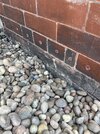
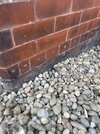
The previous owner had decorative stones out the front which were very close up to the DPC. Pictures attached.

I’ve stated to remove these - they had the original air brick covered too - and I was wondering if anyone could advice if this was a likely contributing factor?

We’re also getting a dehumidifier for the colder months which is when I’ve noticed serious levels of condensation on the wall inside.

The stones were right up to the top of the brick below the DPC.

I’m looking to get it down to a minimum of 150mm but should I go lower?

Thanks
 

Attachments

  • image.jpg
    image.jpg
    533.7 KB · Views: 30
  • image.jpg
    image.jpg
    522.3 KB · Views: 25
I’ve stated to remove these - they had the original air brick covered too - and I was wondering if anyone could advice if this was a likely contributing factor?

I’m looking to get it down to a minimum of 150mm but should I go lower?

Yes, because the relative humidity inside the house would be higher.

You could do an initial removal, then see what happens, then remove more if necessary.
 
In a house with a suspended ground floor, ALL air bricks must be allowed a free flow of air at all times. Lowering the surround ground to 6" below DPC will be sufficient.
 
Thanks for the replies.

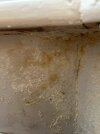
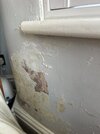
Some images of under the bay internal. Just in case there is anything else you might think I need to do.

Thanks
 

Attachments

  • image.jpg
    image.jpg
    272.3 KB · Views: 33
  • image.jpg
    image.jpg
    246.1 KB · Views: 32
We’re also getting a dehumidifier for the colder months which is when I’ve noticed serious levels of condensation on the wall inside.
Airbricks aside, you need to be mindful of just how much of your natural living activities dump water into the air. Cooking, showering, drying clothes on radiators, breathing.. not an exhaustive list but as the weather cools, people shut themselves inside the living box and then do all these things and more that load the air up with moisture. It has to go somewhere, and usually condensation on a wall or window is the way it goes.

Insulating your walls so the surface temperature of the wall stays above 14 C, improving glazing efficiency, cutting down on moisture loading (use extractors for cooking and showering, use a tumble drier or peg out) and ensuring your house is well ventilated (regular opening of every window, let all the stale moist air out, is a cheap solution but mechanical ventilation systems can recover your paid-for heat and ensure a supply of fresh warm air to the house at all times)

There isn't a silver bullet for this, everything must improve. Start with the blocked air bricks but examine the rest of your use of the house too
 
Is that inside wall damp to the touch where all the damage is?
Nope! Not at all.

However, I’ve noticed sometimes in the winter it can be soaking wet. We do try to have the windows open/on the security latch we often as possible but when it’s get really cold it’s difficult
 
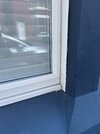
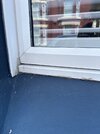
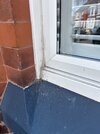
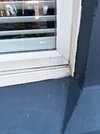
That looks like it might be water ingress from the outside of the windows.

Can you take a series of photos of the windows (from the outside).
 
That looks like it might be water ingress from the outside of the windows.

Can you take a series of photos of the windows (from the outside).
 

Attachments

  • image.jpg
    image.jpg
    218.3 KB · Views: 30
  • image.jpg
    image.jpg
    220.4 KB · Views: 35
  • image.jpg
    image.jpg
    288 KB · Views: 37
  • image.jpg
    image.jpg
    228.6 KB · Views: 34
  • image.jpg
    image.jpg
    204.3 KB · Views: 30
  • image.jpg
    image.jpg
    278 KB · Views: 29
An easy test is to tape some bacofoil to the wall at those points. Leave it for a few days. If it is condensation the moisture will be on the side facing into the room, if it is water ingress, the other side will be damp.

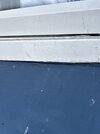
Those round dots in the exterior faces of the brick suggest that someone has drilled and injected a liquid DPM.
 
Thanks, from those images I cannot see any obvious flaws.

I would still recommend the bacofoil test though.

Best of luck.
 
You need to identify whether you have a water ingress (from rain) or rising damp issue.

When does the inside wall get damp, and when does condensation appear? Is it after rain?
 
You need to identify whether you have a water ingress (from rain) or rising damp issue.

When does the inside wall get damp, and when does condensation appear? Is it after rain?
The condensation tends to appear in the winter months during the evening. Especially when we have a busy house - for example Christmas Day. I originally thought it was the rain but tbh, I’ve noticed it when it hasn’t rained. I’ll keep a diary this winter to be sure.

That said, I’m pretty confident it’s tied to increased water in the air. Which is why it’s particularly bad on Christmas Day! 12 people in a mid terrace!!!
 
Having zoomed in on my laptop... it looks like the silicone may have failed on the underside of the uPVC. Try to see if you can push in a thin filling knife at any point.

That said, I don't know if that is the root cause.
 

If you need to find a tradesperson to get your job done, please try our local search below, or if you are doing it yourself you can find suppliers local to you.

Select the supplier or trade you require, enter your location to begin your search.


Are you a trade or supplier? You can create your listing free at DIYnot Local

 
Back
Top