Birdmouth in middle of rafter

Joined
21 Jul 2012
Messages
4
Reaction score
0
Location
Buckinghamshire
Country
United Kingdom
Hello folks.

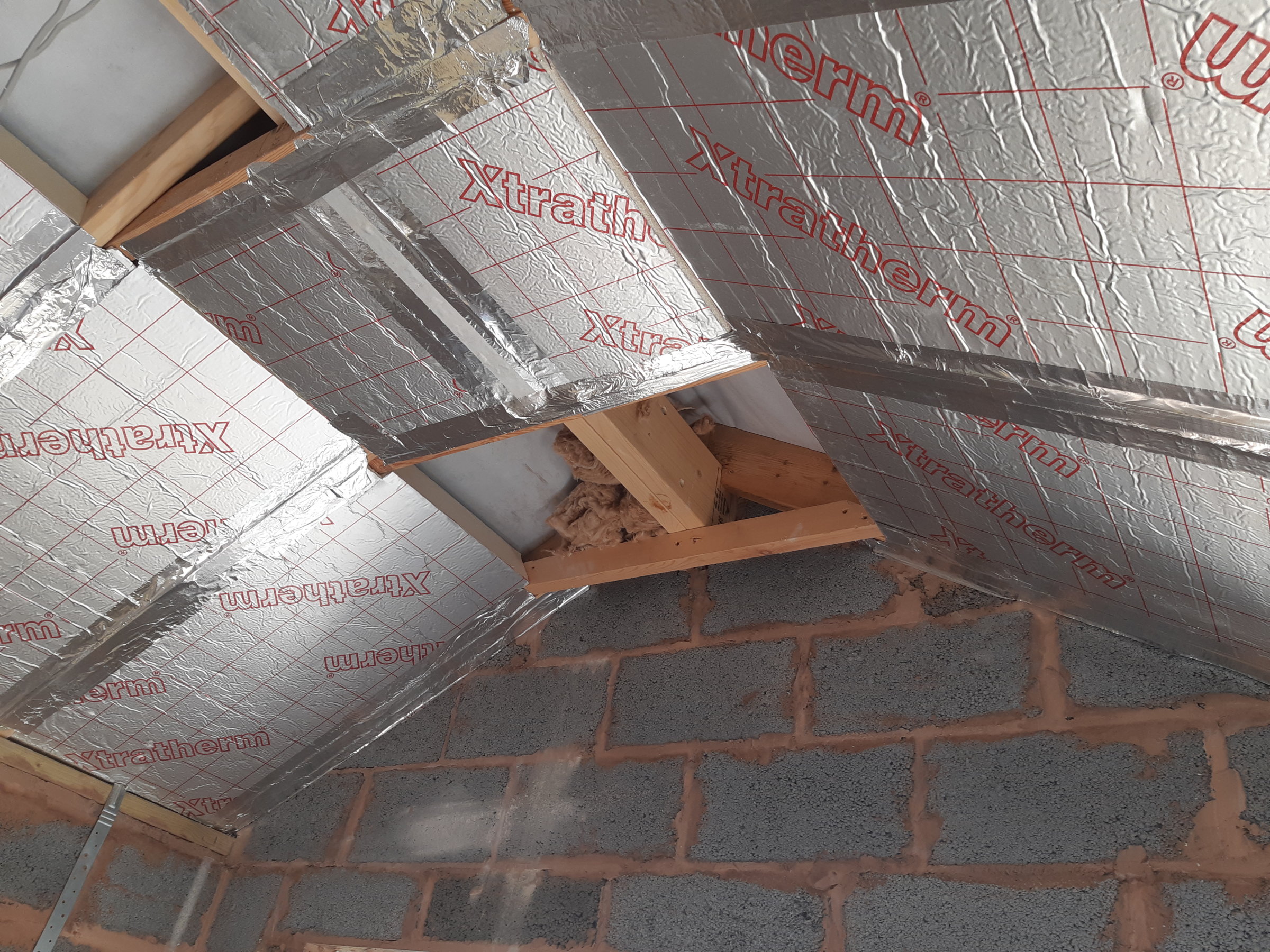
I’m having a lift conversion done. On one side the carpenter has cut birdsmouth notches into the middle of the rafters to fit a stud wall. Does this look ok, to me it seems a bit pointless putting up a huge piece of wood to suspend the roof and then cutting a notch into it.

IMG_1930.jpeg
 
Hello folks.

I’m having a lift conversion done. On one side the carpenter has cut birdsmouth notches into the middle of the rafters to fit a stud wall. Does this look ok, to me it seems a bit pointless putting up a huge piece of wood to suspend the roof and then cutting a notch into it.

View attachment 411435
It might be a structural requirement (restraint?) as the floor joists go in the opposite direction to the rafters?
 
Is there a load bearing wall under the studs? The base plate seems to be set way down so there may be support provided by the studwork but those are huge rafters so not obvious quite what's going on.

For peace of mind, I would get confirmation from your designer before you go any further
 
That studwork, if not designed to be load bearing, certainly is now and should be in turn supported by a suitable beam.
 
For the rafters themselves, structurally it isn't a problem. Assuming its a loft conversion, its probably easier to use deeper rafters to accommodate the ridiculous thicknesses of PIR now required for insulation, without having to put too much more under the rafter.
As above, the stud wall will be supporting some weight - assume there is an adequate beam underneath it?
 
For the rafters themselves, structurally it isn't a problem. Assuming its a loft conversion, its probably easier to use deeper rafters to accommodate the ridiculous thicknesses of PIR now required for insulation, without having to put too much more under the rafter.
As above, the stud wall will be supporting some weight - assume there is an adequate beam underneath it?
I can't agree Tony. Broadly speaking the more iinsulation goes between the rafters the greater the overall thickness needed to attain the reqiuired U value. Greater cost of wood, with more effort to install then more faffing around cutting strips of insulation.
 
I can't agree Tony. Broadly speaking the more iinsulation goes between the rafters the greater the overall thickness needed to attain the reqiuired U value. Greater cost of wood, with more effort to install then more faffing around cutting strips of insulation.
Generally speaking, BC were accepting (even after the June 2022 changes) 100mm PIR between the rafters and 50mm across the rafters. This meant that we were using 150mm (145mm actual) rafters as a minimum start size on all vaulted roofs.
 
Last edited:
That's as may be but 50 between 100 rafters and 100 over will give better U value if you flog through the calcs
 
Last edited:
I'm sure we could all debate the thicknesses of insulation 'til the cows come home, but it seems to me that even many inspectors now don't appear to know what type and thickness of different insulation products will give the required U-value.
They keep increasing the standards every 2 or 3 years but TPTB don't seem to understand that insulation is subject to the law of rapidly-diminishing returns, at exponential increases in costs.
O for the days of the old pre-72 regs when they would tell us what was required, eg 3" of fibreglass in the flat roof, picture windows as big as you want, and that's it. Life were simpler in the old days.
 
BCO's will (not always) expect a U Value calc to prove whatever spec has been mooted is being installed is up to standards, its not their job to do your donkey work.
 
That's as may be but 50 between 100 rfatres and 100 over will give better U value if you flog throught he calcs
No doubt. Why not just stick 150mm beneath, have less headroom (lofties), fix with ridiculous length screws, risk creep (because of the length of screw) but have a fantastic looking U value number. (y)
 
and then spend more x thousands putting 100 between and have it 0.02 lower again

Spending time and money on air tightness detailing is usually better these days; the insulation regs are good enough, but have long been let down by overly permissive draughtiness
 

If you need to find a tradesperson to get your job done, please try our local search below, or if you are doing it yourself you can find suppliers local to you.

Select the supplier or trade you require, enter your location to begin your search.


Are you a trade or supplier? You can create your listing free at DIYnot Local

 
Back
Top