• Looking for a smarter way to manage your heating this winter? We’ve been testing the new Aqara Radiator Thermostat W600 to see how quiet, accurate and easy it is to use around the home. Click here read our review.

Box Gutters... good or bad idea?

I'd prefer a flat roof to that.

Will you be up on your ladder every six months when you're 93?
These are valleys...

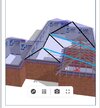
View attachment 394678

This is absolutely no problem, as a leaf or dead bird landing anywhere on that lot will get flushed away by the rain.

I don't know what the name is for what you're proposing. I'd suggest "potential disaster". Anything falling into it will sit there, indefinitely.

I've seen it done though, but it always looks weird, and is definitely risky.
Thanks for the feedback.

My builder says he has done it before. The valley gutter starts off wider at the back of the roof and then narrows towards a hopper where the gutter is. He steps the gutter structure down for using lead. He said I'd actually be able to walk in the valley gutter as it would be wide enough and any crap would be flushed out by rain owing to the fall. This is a bungalow as well so no really dangerous scaling of heights. I could drag any leaves out with a brush or some such from a step ladder a few times a year.

My house already has four or five valleys on it as it is a hipped roof with different out riggers coming off it. Not had any problems with them, although they are normal roof valleys, some with GRP closed valley style and some with traditional open ones with lead and mortar. This proposed one would of course be different.

The flat roofed extension looks ugly and the trouble with keeping a flat roof (which was done badly two years ago by a bad excuse for a roofer) is that it will cost just as much to recover it by a competent person as it will cost for my builder to just put a hipped roof on it. Truss system will be £650, plus roofing felt, tiles, guttering, labour... probably will come in at no more than £5K.

Since noseall says this isn't a box gutter, I gather we can say it is a type of valley gutter that is more shallow than usual, requiring different design features.
 
Doesn't have to be lead; industrial gutters aren't

You could put a pitched roof slope between the other two pitches. It's just a bit of timber work, not really any extra tiles needed etc

1759815931446.png


But hey, if it's wide enough to walk on cleaning it out would be a simple job using a step ladder, some drain rods and the rod end that is a hinged flap that goes flat when you push it out then stands up and stops at 90 when you pull back. Screw a bigger flap to it the profile of the gutter and clearing it would be a quick job once every X years. Absence of trees will help significantly

No. Box gutters are distinct.
Not sure I agree but feel free to explain in some more; to me a box gutter is a gutter between two parallel features of a roof such as two roof slopes as here or a roof slope and a parapet wall. A valley gutter is a gutter between two non parallel roof features such as in Ivor's picture where perpendicular slopes meet

In the OP's original proposal he seeks a box gutter. In the "orange triangle representing pitched roof" above (my picture) there are two valley gutters.

What's your definition?
 
Last edited:
I can't imagine how that sloped infill could work in reality. It would require a section of roof with a really low gradient, as the back of the box/gutter thing already has a pitched roof beyond its inner end.

I'd just chuck a rubber sheet over the flat roof and call it done, definitely wouldn't cost £5k, you're being given a sales pitch about it costing the same. The stuff seems to last pretty well these days, it's synthetic rubber so doesn't degrade. The same stuff that car window seals have been made from for about 30 years - if you remember the old days, they used to turn crusty and cracked but don't any more.

Any water path that narrows is likely to block, as things get stuck. I guess the theory is that the flow rate will increase, but it also means that things that can fit into the top won't be able to get out of the bottom.
 
Doesn't have to be lead; industrial gutters aren't

You could put a pitched roof slope between the other two pitches. It's just a bit of timber work, not really any extra tiles needed etc

View attachment 394831
I like this idea a lot. So your block of red Leicester would create two valley troughs - the left hand one replacing an existing one so I'm no worse off there. It removes the "box gutter" problem and all the complexity and potential maintenance issues of that. The only part I'm not sure about is how the top part of your infill ties in with the big hip roof behind it. Would that need to be a valley as well, albeit a fairly flat one? I guess the Box gutter is transferred to that part in effect, albeit could presumably be done much more like a normal valley trough, ensuring enough fall.
 
If you choose a box gutter / valley I wouldn’t choose lead, the flat bottom would need a 50mm step every 1500 run making complex internal corners need brazing (could be wrong, but I can’t see an alternative). Also there is a complication in regards to whether the lead needs a ventilated cold roof or warm. Lead can corrode if it gets condensation

There are easier option to use such as GRP, EPDM etc


assuming the proposed tiled roof and existing would be cold, I’m not sure how ventilation would be dealt with.
 
If you choose a box gutter / valley I wouldn’t choose lead, the flat bottom would need a 50mm step every 1500 run making complex internal corners need brazing (could be wrong, but I can’t see an alternative). Also there is a complication in regards to whether the lead needs a ventilated cold roof or warm. Lead can corrode if it gets condensation

There are easier option to use such as GRP, EPDM etc


assuming the proposed tiled roof and existing would be cold, I’m not sure how ventilation would be dealt with.
Good points.

The run would be about 3m overall so not too many steps... why exactly are steps needed? Wouldn't a slope be better, even a shallower one?

If the underneath of the valley or box bottom has a gap under it to the roof insulation then I suppose it would benefit from the general ventilation in the roof space - soffit vents and whatever roof felt vents I put in to encourage air flow.
 
It would require a section of roof with a really low gradient
The black lines of roof from the OP seem approximately square, which would result in the angle of the orange infill having some similar gradient to the black outlined slope..?

The only part I'm not sure about is how the top part of your infill ties in with the big hip roof behind it. Would that need to be a valley as well, albeit a fairly flat one?
I had n mind that it was running up to a gable wall.. is that not what is meant by the higher peak of black lines here? :
1759875646783.png


(Are you saying that all your black lines are either hips, ridges or valleys? None are verges?)

-

Maybe just go the whole hog and square the roof off, get rid of all the valleys, create a covered area to house the barbecue etc

1759875866477.png
 
Last edited:
The black lines of roof from the OP seem approximately square, which would result in the angle of the orange infill having some similar gradient to the black outlined slope..?


I had n mind that it was running up to a gable wall.. is that not what is meant by the higher peak of black lines here? :
View attachment 394911

(Are you saying that all your black lines are either hips, ridges or valleys? None are verges?)

-

Maybe just go the whole hog and square the roof off, get rid of all the valleys, create a covered area to house the barbecue etc

View attachment 394912
Yes that's right. The roofs are all hipped and the one your orange infill went against at its back is a big pyramid.

Yes, that big roof would do it and neighbouring houses were built that way originally... but it would require far more materials, labour and planning permission. Plus there would end up being a box gutter on the left hand part at the back where an extension has just been built, also with a hipped roof. Although that could be solved by having the big roof stop short of the covered area and then having a hip come forward on the right hand extension.

How about some kind of mono pitch across the flat roofed extension, beginning at the ridge of the existing left hand hip? Front area then needs dealing with... I think it could look weird and there would be an awkward gable infill with the left hand hip.

Damn!

I should say, my builder is confident in doing the box gutter for original idea, but there are A LOT of trees around me, including a massive TPOd silver birch which dumps millions of seeds and other crap every autumn. So even if perfectly executed, the box would need some clearing out most likely.
 

Attachments

  • Screenshot_20251008_080114_Pocket Paint.jpg
    Screenshot_20251008_080114_Pocket Paint.jpg
    432.6 KB · Views: 13
but it would require far more materials, labour and planning permission
Planning is an obstacle, but I wouldn't necessarily agree on the "far more" jump. So long as agreed parameters such as overall height aren't being exceeded and other houses on the street have similar shapes as proposed it probably wouldn't have any material considerations and could be permitted via an NMA .

Valleys take more time than hips, and more planes take more time overall, so I don't think the difference would be as great as you anticipate. Materials tend to be a lower proportion of the cost of roofing jobs than other aspects and the simpler the roof can be made the faster it goes on and easier it is to maintain/keep trouble free

Lot of factors to consider and I think any builder would tell you that simpler shapes in roofing would be preferable

Although that could be solved by having the big roof stop short of the covered area and then having a hip come forward on the right hand extension.
Honestly, it's so much more faff than just roofing over, but your money/aesthetic/choice!

How about some kind of mono pitch across the flat roofed extension
It can all be done, but where two planes at different angles intersect, you have a valley, and it's more complex and more maintenance than a hip or gable

So even if perfectly executed, the box would need some clearing out most likely.
C'est la vie. Everything you build generates a maintenance task Only you can know how much free time you have for maintaining
 
Last edited:
...but there are A LOT of trees around me, including a massive TPOd silver birch which dumps millions of seeds and other crap every autumn. So even if perfectly executed, the box would need some clearing out most likely.

Don't do it. You already know it's a terrible idea!

I used to hate flat roofs on principle. All else being equal, a pitched roof is almost always preferable. Your situation is the sort of thing that requires that "almost" word.

We have a flat roofed extension under a pitched roof, just as you have. I probably wouldn't have built it but it was already here. It inevitably gathers leaves and whatever, but then when it's dry the wind will clear it. But even while bits sit there, the water can just go around it. Neither would apply to your intended design.

Like yours, ours would also need major changes in overall roof shape to put it under a roof pitch, that is without creating a toblerone bar shaped disaster-in-waiting.
 
OP,
I always called them Box Gutters, and I've worked to SE and Architects reports that called them box gutters. However, some in the trades call them valley gutters or valley troughs.
Any carpenter would know instantly whats required no matter the name.
They are simple framing constructions that nowadays, as above says, can be lined with EPDM rubber.
 
Are all GRP valley’s equal because I have some that are about 15 years old and and are showing signs of age, the fabric is sort becoming visible like the final coating is getting thinner. If I have to replace its going lead - or I will do a lot of research into the quality of different GRP valley's
 

If you need to find a tradesperson to get your job done, please try our local search below, or if you are doing it yourself you can find suppliers local to you.

Select the supplier or trade you require, enter your location to begin your search.


Are you a trade or supplier? You can create your listing free at DIYnot Local

 
Back
Top