Canada does deal with Japan on gas exports

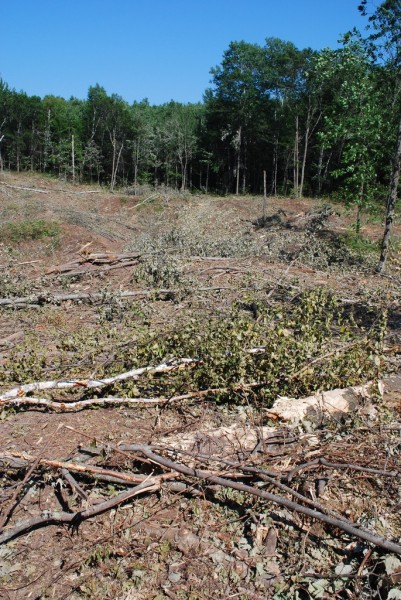
Canadian trees, cutting down trees, shipping them halfway round the world then burning them might not be as ecologically friendly as some suggested.
As long as it's not as disastrous as burning fossil fuels, then I don't see an issue? I'd imagine it's a light (weight) cargo. Probably hitch a ride with some EV's and a couple of hydro-electric generators - problem solved.
 
Why is biomass counted as green energy when it gives out more CO2 than coal?
No idea. Seems silly if that's the case. Do you have some numbers?
I don't think most people are aware that hydropower can produce massive amounts of greenhouse gases.
Can? Or reliably often does? As long as it's below fossil fuels in numbers - bonus.
 
No idea. Seems silly if that's the case. Do you have some numbers?


Nevertheless, even in the case of Drax, carbon emissions per unit of energy are higher for woody biomass than for coal. Table 2 shows the figures for fuel use, electricity generation and carbon dioxide emissions reported by Drax for 2013. As can be seen, the carbon dioxide intensities of the fuels are 856 kg CO2/MWh (coal) and 965 kg CO2/MWh (biomass), i.e. a level of emissions from biomass about 13 per cent higher than from coal.

There is a complex scientific argument about why biomass is still better overall. And you have to hope the science is correct. But there are many doubts. I will dig out an old post of mine which has a link to a very good explanation.
 

Biomass is considered a renewable energy source because its inherent energy comes from the sun and because it can regrow in a relatively short time. Trees take in carbon dioxide from the atmosphere and convert it into biomass and when they die, it is released back into the atmosphere. Whether trees are burned or whether they decompose naturally, they release the same amount of carbon dioxide into the atmosphere. The idea is that if trees harvested as biomass are replanted as fast as the wood is burned, new trees take up the carbon produced by the combustion, the carbon cycle theoretically remains in balance, and no extra carbon is added to the atmospheric balance sheet—so biomass is arguably considered “carbon neutral.” Since nothing offsets the CO2 that fossil fuel burning produces, replacing fossil fuels with biomass theoretically results in reduced carbon emissions.

In fact, the reality is a lot more complicated. In 2014, the U.S. Environmental Protection Agency (EPA) found that “carbon neutrality cannot be assumed for all biomass energy a priori.” Whether or not biomass is truly carbon neutral depends on the time frame being studied, what type of biomass is used, the combustion technology, which fossil fuel is being replaced (since the combustion of both fossil fuels and biomass produces carbon dioxide), and what forest management techniques are employed in the areas where the biomass is harvested.

In 2010, a group of prominent scientists wrote to Congress explaining that the notion that all biomass results in a 100 percent reduction of carbon emissions is wrong. Biomass can reduce carbon dioxide if fast growing crops are grown on otherwise unproductive land; in this case, the regrowth of the plants offsets the carbon produced by the combustion of the crops. But cutting or clearing forests for energy, either to burn trees or to plant energy crops, releases carbon into the atmosphere that would have been sequestered had the trees remained untouched, and the regrowing and thus recapture of carbon can take decades or even a century. Moreover, carbon is emitted in the combustion process, resulting in a net increase of CO2.

 
Can? Or reliably often does? As long as it's below fossil fuels in numbers - bonus.

One of the problems is that they don't know. This has only relatively recently come to light and is a developing field within climate science. But they have found some hydro power stations already built which give out a lot more greenhouse gases than burning natural gas. And the worry is that there is a massive push to use hydro and a lot of the proposed sites are causing concern because they are in the wrong climate.
 
My response was to Notch's statement about avoiding trade with America. If it were to seriously affect many US companies who import and export - do you imagine that ordinary people won't be the ones to suffer?
But, but, China and others will pay the tariffs. Is that not what Trump says?
 
How is that good? It will be ordinary Americans who will suffer, not The Don.
Sadly it's ordinary Americans that have created the monster.

Trump is intent on a trade war and the rest of the world are realigning trade to protect their economies.

Trump loves tariffs nor because they work (they dont) but because they make simple nationalistic rhetoric....which works.


Ordinary Americans will suffer bigly putting a thin skinned man child in power.....and the only way to stop that damage is to put Americans off supporting him
 
My response was to Notch's statement about avoiding trade with America. If it were to seriously affect many US companies who import and export - do you imagine that ordinary people won't be the ones to suffer?
I agree with you, see above.

The only way to stop Trump is to make American voters suffer. Populists can't push their lies if people don't vote for them
 
Sales of EV are going up in Europe.
Where did you get your information from? I could only find this:

"Electric cars
Registrations of battery-electric cars fell by 10.2% to 144,367 units in December 2024. This decline was primarily driven by a significant decrease in registrations in Germany (-38.6%) and France (-20.7%), leading to a 5.9% decrease in market volume for 2024 compared to 2023. As a result, the total market share for battery-electric cars stood at 13.6% for 2024".

 
Back
Top