
• Looking for a smarter way to manage your heating this winter? We’ve been testing the new Aqara Radiator Thermostat W600 to see how quiet, accurate and easy it is to use around the home. Click here read our review.

Comando Socket for EV charging (In Scotland)

  • Thread starter Thread starter iep
  • Start date Start date

iep

Joined
5 Apr 2010
Messages
438
Reaction score
15
Country
United Kingdom
I have a hybrid van that charges at a max rate of 16A. A full wall mount EV Charger will cost me £1100 (installed). This will give me up to 32A but I won't need that any time soon.

I have a redundant 40A RCBO in my consumer unit that used to feed a cooker (no longer used). It is of the type below:
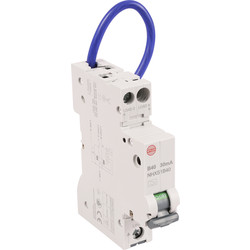

The consumer unit sits on the external wall of the garage pretty much behind the ideal spot for a comando socket. If I repurpose my 40A RCBO (DP Type A above) and run a 6mm cable out to a comando socket, can I then use that to drive a charger like this one?


Since I already have the RCBO, a spare comando socket and a roll of 6mm cable, I'd be saving ~£1k.

Since I wouldn't be touching the consumer unit and simply rerouting an existing spur, I think I'm even allowed to do this myself (in Scotland).

Cheers.
 
Thanks, that all looks reasonably straightforward.

I guess what is not clear to me is which sections I can ignore since I am technically installing a comando socket rather than a fixed EV charger.

For example, sections 5 through 9 would appear to relate to installing a dedicated fixed EV charger:

1762342063948.png


Cheers.
 
Since I already have the RCBO, a spare comando socket and a roll of 6mm cable, I'd be saving ~£1k.
Is it worth the effort to go from 10A to 16A charging, on a hybrid vehicle, which presumably doesn't have a particularly big battery anyway? How much time will you save on a 0-100% charge?
 
Is it worth the effort to go from 10A to 16A charging, on a hybrid vehicle, which presumably doesn't have a particularly big battery anyway? How much time will you save on a 0-100% charge?

100% valid question and that's part of the reason I'm hesitent to drop £1.1k on this.

Basically, going to 16A would drop our charge time from ~4 hours to ~2.5hours. Basically means you could get a couple of full charges in per day rather than one. There's enough benefit there to make me at least curious. If I can do it for ~£200 it would make a lot more sense.

Sure, we can run at 13A with the existing granny charger but the plug and socket do end up running a bit hot. I liked the idea of using a 32A rated socket at 16A so everything is overspecced.
 
If parked in a garage while being charged, there is no problem, the problems only arise if being charged outside of the equipotential zone.

The big question is what protecting is built into the lead, we need it to auto disconnect with earth leakage, and the earth leakage device needs to protected from DC, so the two devices need to match. So a 6 mA DC detections for a type A, and 10 mA for type B etc.

In the main, loss of PEN is done with under and over voltage, since it says 110 - 250 volts, it seems unlikely to have the required loss of PEN detection for use outside.

However, these problems do not change with a 13 amp or 16 amp lead, or even a 32 amp lead, the question is if the use of a 13 amp lead is safe?

If my son visits, he can use my 13 amp outlet to charge his car, it is on a type A RCD, and we can turn the supply off before touching the car, plus the chance of a loss of PEN just when my son visits is rather low, but to use it every day is another story.
 
A bit more research/understanding highlights the need to notify the DNO to tell them we're going to be using more power on average (irrespective of fixed EV charger of Comando tin which to plug a charger). Only a spark can do that apparently.

As above though, does the jump from 13A to 16A really constitute an issue? Definitely not. On the other hand, as @ericmark says, maybe the lack of regs for the 13A charger is the issue? On the other (other) hand, the local grid never falls apart when I plug in a 3kW heater at home (which we often need to run for far longer than a 2.5 hour charge).

Maybe I'm just being tight but £1.1k seems pricey for a fairly trivial bit of work.
 
On the other (other) hand, the local grid never falls apart when I plug in a 3kW heater at home (which we often need to run for far longer than a 2.5 hour charge).
Is this a patio heater? In doors not so much a problem, it is outdoors where the problems arise.

I charge a battery 6.4 kWh every night, no special permission required, and that is 4.5 kW for around 2 hours, it is the car being outside which is the problem.
 
£1100 is on the pricier side but likely includes an expensive charger like the Zappi or hypervolt. You could get a much cheaper charger with the required pen fault protection installed for probably around the £7-800 mark
 
If I repurpose my 40A RCBO (DP Type A above) and run a 6mm cable out to a comando socket, can I then use that to drive a charger like this one
Yes, it's just a device which connects to that particular 32A socket, much like anything else.
It's not a 'charger' either, it's a box which detects that a vehicle is connected and then turns on the 230V AC to the vehicle. Actual charging and conversion to DC is done inside the vehicle.
That also means it's not necessary to alter any current settings on that device, the vehicle is what will determine the charge current.

Sure, we can run at 13A
More like 10A, which is why charge time is 4 hours to 2.5 hours, as it's 10A to 16A.

Only a spark can do that apparently.
Incorrect. Anyone can notify the DNO of anything they want.

I guess what is not clear to me is which sections I can ignore since I am technically installing a comando socket rather than a fixed EV charger.
Most of those apply to any electrical installation, they are not EV specific.
 
Okay, I've done a frankly geeky level of reading on this and maybe it's useful to someone else so, here goes:

Products like the Voldt Comando Socket charger are UK legal. They pass the required product standards (EN 62752). Indeed, Voldt will send you their certificateof UK compliance.


It's not a bad product, and does include DC protection and SPD (according to their customer support). It does not include PEN protection though and that is where they are quick to say it is not needed since they pass EN 62752. This is 'technically true'.

However! EN 62752 refers only to the charger (cable, plug, socket and 'box') not the installation. The installation must comply with the more onerous BS 7671:2018+A2:2022 standard and that means PEN protection (or TT earth etc) for use cases where the electrical equipment (as @ericmark says) sits outside of the equipotential zone of the property. Since most people park their car outside, you have to assume the charger is used outside of this zone.

This means that if you use a standard portable charger (IC-CPD compliant with EN 62752) plugged into a normal 13A or 16A socket that is supplied by a PME earthing system and is located outdoors (which is the default assumption for any charge point connection), you are non-compliant with BS 7671 unless the upstream circuit protection already contains an O-PEN fault detection and isolation device.

The solution for compliant portable charging on a PME supply is not in the cable, but in the socket it plugs into.

What I find fascinating here (and I apprecitae other posts have already highlighted this) is that this means pretty much all 'granny chargers' are non-compliant since they are rarely used with a pen protected socket (typically routed through letterboxes etc from internal house/garage sockets).

It also implies that, really, all outside sockets should have PEN protection on them? At least when our house was rewired and signed off (10 years back) this was not required since none of our outside sockets feature this protection.

To my mind, there is a bit of a gap in the standards here (at least reagrds PEN) since it is very easy to buy and use a granny charger (many people do) in a non-compliant system. Are all these people somehow invalidating insurance etc? Or, is the risk overblown and the requirement to have PEN on all sockets driving EV chargers a bit OTT?

I'm not advocating either way but I'm certainly surprised to find, now that I understand PEN protection, how widely this rule for plug in EV chargers is ignored.
 
Last edited:
Based on above, and assuming I want to stick with a comando socket based solution, can anyone comment on whether this plan would form the basis of a safe system?:

Additional consumer unit featuring dedicated PME (swap out the 40A RCBO for a 32A one):


Portable charger that includes SPD and 6mA DC protection:

https://voldt.co.uk/products/type-2...-phase-adjustable-8a-32a-7-4kw-charging-cable

If I then run this out to a 32A Comando socket (correctly conduited etc) I think I can meet all the required specs.

Obvs, this goes beyond DIY so I'll need a spark to install.

Why would I do this vs spending £1k - £1.5K on a dedicated wall charger? It might be a bit cheaper. I have friends who've had to replace wall mounted chargers which requires another electrician callout whereas here I'd just buy a replacement comando charger (since the install relates to the socker which is unlikely to fail). I'd also have a convenient (and safe) wall mounted socket that I can use (via camping adapter) to run 13A tools etc.

Not really decided whether to do it or not at this point but curious whether it is a goer at all?
 
Yes, it's just a device which connects to that particular 32A socket, much like anything else.
It's not a 'charger' either, it's a box which detects that a vehicle is connected and then turns on the 230V AC to the vehicle. Actual charging and conversion to DC is done inside the vehicle.
That also means it's not necessary to alter any current settings on that device, the vehicle is what will determine the charge current.

Doesn't it also mean that it's a 2.3kW charger, and won't suddenly become a 3.6kW one just because its plugged into a socket rated for 16A?
 
Both my son and I have an EV tariff from the same supplier, I pay 8.5p, and he pays 6p for off-peak, as his charger was fitted by the supplier, I do not have a linked charger, so the supplier can select when the off-peak is used.

I note Intelligent Drive Pack is currently oversubscribed. Join Intelligent Octopus Go instead. So it seems the 6p/kWh not available at moment, have to pay at least 7p/kWh.
 

If you need to find a tradesperson to get your job done, please try our local search below, or if you are doing it yourself you can find suppliers local to you.

Select the supplier or trade you require, enter your location to begin your search.


Are you a trade or supplier? You can create your listing free at DIYnot Local

 
Back
Top