
You are using an out of date browser. It may not display this or other websites correctly.
You should upgrade or use an alternative browser.
You should upgrade or use an alternative browser.
Dual tariff unit
- Thread starter petend
- Start date
A pic of your cu and meter setup will help.

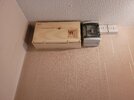

Do you have storage heaters?
No, it won't magically switch.
You can get external contactors, so I would go with one of them, switched by the signal provided

You can get external contactors, so I would go with one of them, switched by the signal provided
Proteus EHC1 100A Single Pole Enclosed Heating Contactor | eBay UK
SPECIALISTS ADVISE.
www.ebay.co.uk
Links in this post may contain affiliate links for which DIYnot may be compensated.
You have grey tails currently.

- Joined
- 27 Jan 2008
- Messages
- 29,645
- Reaction score
- 3,668
- Location
- Llanfair Caereinion, Nr Welshpool
- Country

I found the tariff question not as straight forward as I would have liked. It needs some careful sums.
The peak tariff, is higher than a standard tariff, it varies area to area and provider to provider, but if we consider standard at 25p, off-peak 20p and peak 30p then simple maths shows half or more of the power used needs to be off-peak.
But the maths is not that simple, if not using storage radiators then no need to heat rooms when not being used, There must be a formula to work out how long a room needs to be used for, to be worth using storage radiators. But in real terms, one has to test, and also consider what else can use off-peak.
I only have 5 hours, not 7 hours, off-peak, and around 8.5p and 31p per kWh, today I ran out of off-peak at 3:30 pm as very little solar, and batteries not that large, but 00:30 to 15:30 off-peak so just 8.5 hours using peak power, as the battery means using off-peak for 5 + 10 = 15 hours, so 9 hours peak power, would be hard even on bad days to use more peak power to off-peak.
The peak tariff, is higher than a standard tariff, it varies area to area and provider to provider, but if we consider standard at 25p, off-peak 20p and peak 30p then simple maths shows half or more of the power used needs to be off-peak.
But the maths is not that simple, if not using storage radiators then no need to heat rooms when not being used, There must be a formula to work out how long a room needs to be used for, to be worth using storage radiators. But in real terms, one has to test, and also consider what else can use off-peak.
I only have 5 hours, not 7 hours, off-peak, and around 8.5p and 31p per kWh, today I ran out of off-peak at 3:30 pm as very little solar, and batteries not that large, but 00:30 to 15:30 off-peak so just 8.5 hours using peak power, as the battery means using off-peak for 5 + 10 = 15 hours, so 9 hours peak power, would be hard even on bad days to use more peak power to off-peak.
There is a rule of Thumb. For example, if you use 70% of energy at night rate in winter, then you are better of on E7
- Joined
- 27 Jan 2008
- Messages
- 29,645
- Reaction score
- 3,668
- Location
- Llanfair Caereinion, Nr Welshpool
- Country
Thank you, @AndyPRK what I was trying to say, is before looking at new consumer unit, relays etc. Need to work out what is the best way forward, what I did was work out what I want in 5 years time, then what steps to take each year to get there, so I am not fitting anything which will need replacing within those 5 years.
I looked at my house, 14 rooms, plus hall and landing, which includes an unheated room, and realised I am unlikely to use every room every day, and some rooms will only be used for a very short time. Other rooms only overnight, and of course some only in the day, so for me being able to select when and by how much each room is heated is important.
Storage heaters are not all the same, but in general you can't turn them off, you can only turn them down, they release heat all the time, as an old age pensioner I want a warm living room around 18 hours a day, but when working, it was only used 6 pm to 11 pm, so 5 hours a day. Kitchen used around 1 hour a day, other than few minutes to make coffee, and bedroom around 7 hours per day.
The chance of a storage heater having any heat left at 10 am is slim, so can't see a storage heater really working in a bedroom, heating the room all day so warm 1 hour before off-peak switches on seems daft. Of course, children may use a bedroom to do homework in, so sometimes it is wanted in the evening.
Also in summer when heating not required, one is still paying a premium for peak electric supply. If I look back to the summer I see my use is mainly during the day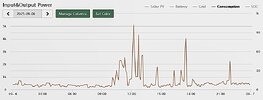 so you need to use around 90% in winter, so the average is 70% all year round. Unless one fits an inverter and battery. If I look at my grid use for the same day
 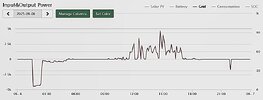 the below line is from grid, above line it to the grid, so hardly any power drawn from the grid during the day, the main draw is recharging battery with off-peak. So for me, even in summer, most of my electric is used as off-peak. Because I have solar panels, summer electric bill is a minus figure, so for me no question off-peak is well worthwhile, but without the solar panels and batteries, it would not be so cut and dried. Out of interest, this is what I look at for the whole day
 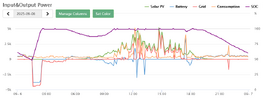 the interesting bit for me is state of charge of the battery, which is why the smart meter display for me is useless, but if I did not have solar and battery, I can see how the display would be handy, same day from smart meter
 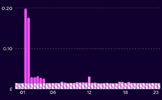 showing main bill was the standing charge. The year display is better,
 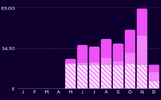 I moved supplier so only from May, this is the bit you need
 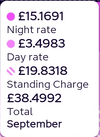 which tells you your total use, showing I use far more off-peak to peak all year round.
Some providers let you swap without paying, others you are fixed for a year, but this all needs looking at first, no point swapping things around if you're better off without a split tariff.
I looked at my house, 14 rooms, plus hall and landing, which includes an unheated room, and realised I am unlikely to use every room every day, and some rooms will only be used for a very short time. Other rooms only overnight, and of course some only in the day, so for me being able to select when and by how much each room is heated is important.
Storage heaters are not all the same, but in general you can't turn them off, you can only turn them down, they release heat all the time, as an old age pensioner I want a warm living room around 18 hours a day, but when working, it was only used 6 pm to 11 pm, so 5 hours a day. Kitchen used around 1 hour a day, other than few minutes to make coffee, and bedroom around 7 hours per day.
The chance of a storage heater having any heat left at 10 am is slim, so can't see a storage heater really working in a bedroom, heating the room all day so warm 1 hour before off-peak switches on seems daft. Of course, children may use a bedroom to do homework in, so sometimes it is wanted in the evening.
Also in summer when heating not required, one is still paying a premium for peak electric supply. If I look back to the summer I see my use is mainly during the day
so you need to use around 90% in winter, so the average is 70% all year round. Unless one fits an inverter and battery. If I look at my grid use for the same day the below line is from grid, above line it to the grid, so hardly any power drawn from the grid during the day, the main draw is recharging battery with off-peak. So for me, even in summer, most of my electric is used as off-peak. Because I have solar panels, summer electric bill is a minus figure, so for me no question off-peak is well worthwhile, but without the solar panels and batteries, it would not be so cut and dried. Out of interest, this is what I look at for the whole day the interesting bit for me is state of charge of the battery, which is why the smart meter display for me is useless, but if I did not have solar and battery, I can see how the display would be handy, same day from smart meter showing main bill was the standing charge. The year display is better, I moved supplier so only from May, this is the bit you need which tells you your total use, showing I use far more off-peak to peak all year round.Some providers let you swap without paying, others you are fixed for a year, but this all needs looking at first, no point swapping things around if you're better off without a split tariff.

DIYnot Local
Staff member
If you need to find a tradesperson to get your job done, please try our local search below, or if you are doing it yourself you can find suppliers local to you.
Select the supplier or trade you require, enter your location to begin your search.
Please select a service and enter a location to continue...
Are you a trade or supplier? You can create your listing free at DIYnot Local
Similar threads

- Replies
- 6
- Views
- 4K


- Replies
- 35
- Views
- 26K