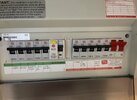
An EICR is not like an MOT for a car, in that there are no clear rules as to coding. The IET who with the BSi publish the regulations changed the coding from 1 to 4 to C1 to C3 in order to remove code 4 which was does not comply with current edition of wiring regulations.
However, the landlord law has one edition listed, so it has pointed to an, at the moment, new edition. The wording is still, C1 = Dangerous and C2 = Potentially dangerous, it says nothing about any regulation. But also what is included, the IET have separated out installation testing, and equipment testing, both need testing, but often it is done by different people, and an EICR would not normally include washing machines, tumble driers, cookers etc, they are considered as equipment, and this works out well where equipment needs a specialist as with the central heating boiler. But the landlord law divides into portable and non-portable, and the recognised demarcation is portable is not fixed, and under 18 kg or on wheels. Also, the IET EICR includes the DNO equipment, where the Government one does not. So government EICR would not have a fail even if meter handing off the wall.
Potentially dangerous is a daft label, as all 230 volt electrics are potentially dangerous, but to my mind, if not dangerous in 1992 when BS 7671 first came out, then to be dangerous today, something has to have changed, things have changed, like in 2008 when as long as RCD protection is used, bathroom bonding can be omitted, this was mainly due to use of plastic pipes, and today plumbers expect to have RCDs so are likely to use plastic pipes and omit bonding. We have stopped using tungsten lamps, so people can change a bulb with it switched on without burning their hands, inverter controls have arrived which can allow DC in the supply, EVs have arrived, and the list goes on.
So if an inspector says this outside socket could be used to charge an EV and to do so would be potentially dangerous, he could code it C2, never heard of that being done, but one could not say he was wrong if he did.
So looking at the consumer unit, if he were to code it C2 as no RCD, then it needs correcting by someone who is deemed as being qualified to correct it. And he would issue a paper trail which can be attached to the EICR to show corrected. But if you swapped all the MCBs for RCBOs before the inspection, then there would be no need to get someone qualified to change it.
So there is a good reason to get the home so it will have no C2 or C1s, however although wrong, I have known inspectors to be told, always find something to fail the inspection, this means someone has to work on the electrics after the inspection, so any faults missed can be blamed on someone else.
I have only seen one court case where a home was passed when clearly it should not have passed, and he was taken to court under consumer protection laws, as he had charged for something he had not done, not electrical laws.
As an inspector, as long as I list the faults, I have not broken any law, so code as C3 not C2 or LIM not FIR and there is little they can take me to court over, with a C1 fault, the inspector must make safe before leaving, so would need to lock it off, or disconnect, so it is no longer a C1. This has always been a problem when testing and inspecting premises in use, if premises not in use, then locking the door on leaving could be seen as making safe.
Personally, I think looking at a home, and saying will this pass, is the wrong approach, it should be is the home safe, be it slippery steps, no handrails on stairs, cupboards which can fall over, or electrical safety, and in the 1990's my son passed his RAE, and as well as being proud to have a 14-year-old radio ham in the family, I also wanted to protect him. So fitted all RCD protection.
In the 2000's I tried to get my dad to upgrade his house, he dug in heals and said I am not living in a building site, and refused, after he died, mother with macular degeneration, and dementia, was found to have put an extension lead with a flickering neon into a bucket of water as she thought it was on fire, lucky no one got a shock, but it was a wake-up call for me, to get house rewired and RCDs fitted.
This is the problem with a rented house, we have no idea who will be in the house, we are not there to say don't play with that, or No, that OK it not on fire. We don't know who may visit the home, and if care workers visit, it then becomes a place of work, and the electricity at work act kicks in.
When I was a little boy, my parents taught me not to play near the open fire, I was taught what to avoid from an early age, but as a landlord, you have no control over what the tenant teaches their children, so a rented house needs to be safer than an owner occupied as you have no control.