Fuses protect the supply cables, not devices/appliances. Unless you had cable rated at 11.5A, then a standard 13A fuse will do.
The fuse may be in the appliance, rather than the plug, but 2700/230=11.7 amp so would think it has nothing to do with fuse size, it is quoting the maximum current it can use.
But the point is we have no idea as it stands to what the power rating is.
As to extension lead, that has also raised questions about the definition, in order that should I get water ingress I can disconnect my outside socket, I have the SWA terminated into an adaptable box and then flex to a socket, so easy to isolate the outside socket, does that mean the outside socket is considered as an extension lead? I could have used a FCU, which would have done the same thing, and then it would be called a fused spur, until plug-in solar, it did not matter, it was only after the plug-in solar law, that the definition of an extension lead mattered. Personally I would have called it a fixed socket, or wandering lead, also I would have in the law refereed to a distribution unit, not a consumer unit, then it would not need case law to define it.
However, even my old copy of BS 7671 says it is recommended non portable items over 2 kW should use a dedicated supply, so to reduce the chance of a prolonged overload, with some thing like a dish washer or washing machine, the high power is for a short time, so plugging in is not a problem, but with an immersion heater, where it can run for 4 hours or more, then yes, need a dedicated supply.
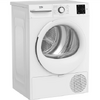
If we look for the next appliance to use between 2 and 3 kW for an extended time, it would be the tumble drier, unless you consider an EV on a granny charger, and the granny charger often has a sensor in the plug to stop over heating.
So the big question is, should the older non heat pump tumble driers be on a dedicated circuit? The only reason they are not, is history, when we got married, we had a twin tub, this was dragged into the centre of the floor, and we had a washing day. On washing day there was no cooking, as whole of kitchen taken over with washing, food preparation and clothes being washed simply do not go together, my grand parents had a wash house, but typically these had no power, the boiler was coal fired, so as the twin tub arrived, we had to move operations into the kitchen, to be able to plug it in.
Then we got the front loader washing machine,
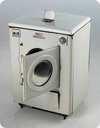
the Bendix, it would not fit under the counter, and was bolted to the floor, and washing machine detergent has not been marketed then, so often that lid at the top would lift and soap suds pour out of it like a volcano. But power wise it did not use much, as it was hot and cold fill, so it used the domestic hot water, but it established where the washing machine was located, OK, larger homes like mine, we still have a utility room to do the washing in, the modern name for the out house.
But, the kitchen is not really where we should be doing the washing, and any other appliance using as much power as the pre-heat pump tumble driers would have had a dedicated supply, so we are trying to get around the problem that it has not got a dedicated supply.
With an oven, which uses less power, if a 13 amp socket is used, it is either in the air stream of the cooling fans, or in free air, so we can see it. The tumble drier is the only appliance where we tend to hide the plug, so it can over heat without us seeing there is a fault.
So we are in essence trying to advise on how to do something, we all know should never really be done, we all do it, we have no option, but we know we shouldn't.
So basic rules, any socket, plug or extension lead should be in free air, and as long as it is in free air, the risks are low, to increase safety we should use an RCD on the supply, even them, the old versions would trip with arcing, and we have tried to stop the nuisance tripping, so today they do not trip with arcing so much, so we now add a separate device to detect that, oh what a tangled web we weave.