• Looking for a smarter way to manage your heating this winter? We’ve been testing the new Aqara Radiator Thermostat W600 to see how quiet, accurate and easy it is to use around the home. Click here read our review.

Extension Leads in the Kitchen

Personally I question the need for a surge protector for a kettle toaster and microwave. It’s not as if any of those things have particularly sensitive electronics inside them - they’re not computers after all.
Certainly in the case of kettles and toasters (and probably also the microwave), it's not just you personally, nor something to be 'questioned' - as you imply, it's really more of a case of it being quite ridiculous to believe that such things would/could benefit in any way from 'surge protection'.
I suspect the tenants have heard “Surge Protection” as one of the big “buzzword” phrases (up there with “gluten free”, “organic” and “natural”) and have decided that this is definitely a bandwagon they wish to jump on without even understanding the meaning of the phrase.
Exactly. I never cease to be amazed by how naive and gullible a lot of the general public can be!

They are going to start hearing about "arc fault detection/protection" soon, so we are doomed :-)
Yes, I’m a cynical g*t.
You're not alone.
 
Well, yes, but that's not really any different from any other situation of 'multiple sockets', whether 'mounted in the same plate' or 'scattered around', is it?
It does raise the question of how a plate with multiple independent double sockets (as is common on media plates) should be treated, whether each should be tested individually, or whether it should be treated as a multiple outlet socket with more than two sockets (which IIRC would mean that the two 14A loads had to be placed in the least-favourable sockets).

In any case, the closest thing I've seen to an "unfused triple socket" is a plate for mounting in a floor box, with three independent sockets pre-wired together https://www.comms-express.com/products/triple-socket-for-3-compartment-floor-box/,

MK also make a 6 module Euro plate which fits on a triple box and could be filled with three sockets (BS1363 or otherwise).
 
In any case, the closest thing I've seen to an "unfused triple socket" is a plate for mounting in a floor box, with three independent sockets pre-wired together
But then, we're talking about socket modules that will each have been individually tested to an appropriate current...
1744904960072.jpeg
 
It does raise the question of how a plate with multiple independent double sockets (as is common on media plates) should be treated, whether each should be tested individually, or whether it should be treated as a multiple outlet socket with more than two sockets (which IIRC would mean that the two 14A loads had to be placed in the least-favourable sockets).
As I wrote, if the outlets are 'separate'(physically separate, and separately wired) I really don't see that 'on the same plate' makes any difference to anything.

I've seen many situations in which three or more (sometimes many more) separate sockets/outputs have been mounted in very close proximity to one another on the same wall, board, piece of furniture, trunking etc. and I don't think anyone would dream of thinking of them ther than as 'separate sockets/outlets, so I don't see why it should be any different if they are 'on the same plate'
In any case, the closest thing I've seen to an "unfused triple socket" is a plate for mounting in a floor box, with three independent sockets pre-wired together https://www.comms-express.com/products/triple-socket-for-3-compartment-floor-box/,
Again, I would simply regard that as "3 separate sockets", which happened to be attached to one plate.
 
But then, we're talking about socket modules that will each have been individually tested to an appropriate current...
Exactly - and each of them would be physically separate and separately wired, so I see absolutely no reason to regard them as any different from any other 'individual sockets'.
 
Personally I question the need for a surge protector for a kettle toaster and microwave. It’s not as if any of those things have particularly sensitive electronics inside them - they’re not computers after all.
All new microwaves have electronics in them. Even the old microwaves without active electronics can get damaged due to a surge.
I suspect the tenants have heard “Surge Protection” as one of the big “buzzword”
I wouldn't favor something without knowing the meaning of it.
 
All new microwaves have electronics in them. Even the old microwaves without active electronics can get damaged due to a surge.
I'm sure they do (and, as you say, not just 'new' ones) - as do an amazingly high proportion of 'electrical' items of any sort these days, including ones far less 'likely' (yes, even including some kettles :)) than microwaves. For a start, anything with a digital display must contain 'electronics'. However, I suspect that few of them contain electronics which are at particular risk from 'surges'.

Indeed, it wouldn't surprise me if, with appliances like microwave ovens, some of them were more likely to produce high voltage transients ("surges") than to suffer as a result of them!
Even the old microwaves without active electronics can get damaged due to a surge.
As below, I don't know how we can be at all sure about that.
I wouldn't favor something without knowing the meaning of it.
As I recently wrote, we do not know (and probably never will) whether "surges" are responsible for a significant amount of damage/destruction of electronic equipment, nor whether SPDs significantly reduce any risk which exists - so I doubt that there is, or ever will be, a particularly rational ('evidence-based') way in which we could 'know' .... and even worse in relation to AFDDs
 
Update and apologies:
I misunderstood the scenario. The MCB tripped last Friday with a loud noise. It was reset and been fine since. Following the incident, tenant purchased extension with surge protection, they say they use one appliance at a time.
There was no burn sign on sockets or spurs and no issue for 8 days, shall I consider a one off trip and move on or needs further investigation?
If there was fault in wiring, surely would have tripped again, no?
 
Last edited:
Update and apologies: I misunderstood the scenario. The MCB tripped last Friday with a loud noise. It was reset and been fine since. Following the incident, tenant purchased extension with surge protection, they say they use one appliance at a time. There was no burn sign on sockets or spurs and no issue for 8 days
Fair enough. Do you know, or can you find out, what was happening 'electrically' in the kitchen at the time the MCB tripped - in particular what electrical appliances were 'on', and whether any of them had been turned on soon before the trip occurred?

... shall I consider a one off trip and move on or needs further investigation? If there was fault in wiring, surely would have tripped again, no?
Are you sure that it is an MCB and not an RCBO (the latter will have some sort of test button)? If you're not certain, a photo would be helpful for us.

If it were an RCBO, then 'unexplained trips' are far from unknown, so a 'wait and see' approach may well be appropriate. However, it takes a lot to trip an MCB (e.g. up to 160 amps to produce a rapid trip of a 32 amp one), so it is probably more important to 'investigate'.

MCB trips are rarely due to faults in 'the wiring' and, if that does happen, as you say, trips would recur (or, more likely, could not be reset after tripping). Such trips are far more likely to be faults in connected items (cookers, ovens, microwaves, fridges etc.) and they can sometimes be 'intermittent' faults.
 
Fair enough. Do you know, or can you find out, what was happening 'electrically' in the kitchen at the time the MCB tripped - in particular what electrical appliances were 'on', and whether any of them had been turned on soon before the trip occurred?


Are you sure that it is an MCB and not an RCBO (the latter will have some sort of test button)? If you're not certain, a photo would be helpful for us.

If it were an RCBO, then 'unexplained trips' are far from unknown, so a 'wait and see' approach may well be appropriate. However, it takes a lot to trip an MCB (e.g. up to 160 amps to produce a rapid trip of a 32 amp one), so it is probably more important to 'investigate'.

MCB trips are rarely due to faults in 'the wiring' and, if that does happen, as you say, trips would recur (or, more likely, could not be reset after tripping). Such trips are far more likely to be faults in connected items (cookers, ovens, microwaves, fridges etc.) and they can sometimes be 'intermittent' faults.
There is fridge, air fryer, kettle, toaster and microwave, hood, washing machine, hob ignition fused spur, boiler fused spur on same mcb.
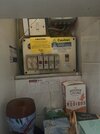
It is MCB, photo attached.

The fridge freezer is frost free, there was excessive ice built up fridge compartment which needs to be addressed, would that trigger the MCB? I don't think so, still working with no issues.

Tenant removed washing machine and put it in balcony left in the elements for few months and re installed on 24 Mar, mcb tripped 11 Apr, could washing machine be the cause but tenants say machine wasn't working when tripped? The machine was working normal for over 30mins when I was there this week.

BUT: if 32A plus to trip an mcb; why non of fuse appliances was blown?!
 

Attachments

  • IMG_7207.jpg
    IMG_7207.jpg
    107.2 KB · Views: 44
Last edited:
BUT: if 32A plus to trip an mcb; why non of fuse appliances was blown?!
Check the fuse in the plug for the washing machine. If its blown, that suggests the machine was at fault which could have caused the tripping and if the fuse is blown it will be isolated from the electrics that's why it doesn't trip anymore.
 
Check the fuse in the plug for the washing machine. If its blown, that suggests the machine was at fault which could have caused the tripping and if the fuse is blown it will be isolated from the electrics that's why it doesn't trip anymore.
The fuse in the plug for the washing isn't blown, the machine was on being used when I was there on Wednesday, 5 days after the incident.
Tenant hasn't reported another mcb trip , is there a need for electrician to investigate? I spoke to my electrician, he said no need if only once.
 
Tenant hasn't reported another mcb trip , is there a need for electrician to investigate? I spoke to my electrician, he said no need if only once.
He’s right - and you should probably believe him, rather than some random people on the internet.
 
Tenant hasn't reported another mcb trip , is there a need for electrician to investigate? I spoke to my electrician, he said no need if only once.
It may appear somewhat inconsistent with what I wrote previously, but I essentially agree with your electrician - primarily because, given what you have now told us, it seems incredibly unlikley that he would actually find anything that could have caused the MCB trip, even if he did come and 'investigate', if the problem never shows its face again..

However, that doesn't really alter what I said previously ... as I wrote, if it were a single (not repeated) trip of an RCD or RCBO, I wouldn't dream of suggesting that it should be 'investigated' unless it happened again fairly soon, or repeatedly. However, as I also wrote, it takes a very considerable amount of current (hence a pretty major 'fault') to trip a 32 A MCB - so one has to wonder, and potentially be a little concerned about, what was the reason.

One (seemingly uncommon) possible reason would be a malfunction of the MCB (i.e. tripping when it shouldn't have). However, MCBs essentially cannot be tested - so, again, nothing for an 'investigating electrician' to find. If trips were happening repeatedly, with no reason that could be found, then, as a 'final resort', the MCB could be replaced - but it would make little sense to do so after just one trip - and, even if one did that, one would never know whether or not there would have been a second trip had the MCB not been replaced!

So, yes, 'watch and wait' seems to be a very reasonable strategy.
 

If you need to find a tradesperson to get your job done, please try our local search below, or if you are doing it yourself you can find suppliers local to you.

Select the supplier or trade you require, enter your location to begin your search.


Are you a trade or supplier? You can create your listing free at DIYnot Local

 
Back
Top