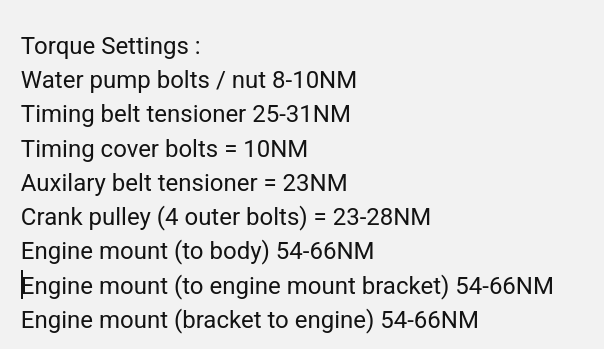
That's why tightening to a torque isn't an exact science. When you pull on the torque wrench, you have no idea how much of that torque is overcoming friction in the threads, or between the underside of the fastener and its washer, or a bit of swarf down the hole, or whatever. The values are quoted for new (usually plated, sometimes lightly oiled) fasteners. The minute you work with an old, rusty one, or you put some Copperslip on the threads, the manufacturer's original figure goes out of the window! Even without torque-to-yield ("stretch bolts"), manufacturers are increasingly just quoting a relatively small "seating torque", plus an additional angle to turn the fastener through to arrive at the right clamping force.
Stretch bolts take it to a new level, exploiting that peculiar "double yield" point that steel has. They give a much more consistent clamping force than a conventional bolt. (...But of course, you need new bolts each time then)!





 www.fiatforum.com