Garage to utility room.

Joined
19 Feb 2023
Messages
14
Reaction score
0
Country
United Kingdom
Hi, Hopefuly someone can offer some advice. I am about to convert part of my garage into a utility/downstairs W.C. The house is a typical late 1940’s semi with a garage on the side. The garage is 9” solid external wall. I propose to take about a third of the existing garage to form the new room, the garage is 2.6m wide and I intend to make the new room 2.2m long. There is a step down from the house to the garage floor (existing floor of garage is concrete and assumed to have no d.p.m) of 230mm falling away to 280mm at the position where the new stud wall will go.

My plan was to take the slope out of the floor with sharp sand and then lay a layer of visqeen with 100mm Celotex on top and 25mm Celotex around the perimeter. On top of the Celotex I will fit a thin layer of polythene (slip layer?) and then pour a 100mm of concrete. I understand that normally a 50mm sand cement screed would be put on top of this but I don’t think I will have the room for this and so wondered if I can just use a thickish self leveller over the concrete? I realise there are ways of using sand and cement down to 25mm by bonding it to the concrete or possibly by adding fibres etc. but as I’m doing it myself I think that I will get a better finish using self leveller (I don’t really have much experience with laying a sand/cement screed and don’t trust my ability).

The second question I have is would it be or sensible to build my stud dividing wall first and then fit some ply to the bottom of this to form a shuttering for the new slab or is this not an acceptable way to do things? The alternative would be to form a shuttering across the width of the garage using timber (or brick) approx. 280mm high and then after the floor cures fit the stud wall on top of the floor. The first method just seems more straightforward to me but I just wonder whether it would be acceptable.

I understand I will have to get building control involved at some point but I would like to get things straight in my head before that stage.

Any advice would be very much appreciated.

Thanks.
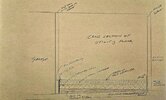
 

Attachments

  • floor.jpg
    floor.jpg
    515.4 KB · Views: 26
I don’t think I will have the room for this and so wondered if I can just use a thickish self leveller over the concrete?
Save yourself the hassle, don't bother with the sand, put your insulation (seconds grade; cheaper - don't need perfect boards for under a floor, they can be all sorts of wobbly wobbly and you'll never see it) down on the floor (cut it into thicker and thicker strips so it itself takes out the slope, or buy stuff that is already sloping, as one often finds on seconds grade websites) and pour on top. See if you can get a local concrete co to supply a small amount of self levelling liquid screed off the tail end of another job; super easy to lay, but I wouldn't necessarily have any qualms about getting a small pad of concrete flat enough to just use as a utility floor without much effort. You'd get it most of the way there just by vibrating the insulation board with an SDS drill if you have one..

Or by all means do your proposal with the sand etc if you'd be happier with it!

The second question I have is would it be or sensible to build my stud dividing wall first
Sure. The normal route would be to come up level with ffl in block, put a DPC and stud off that, insulate the perimeter before the pour but this is a utility room in a garage after all
 
Last edited:
My plan was to take the slope out of the floor
Don't bother if you are going to concrete or screed on top. You can level up with that.
the new slab or is this not an acceptable way to do things? The alternative would be to form a shuttering across the width of the garage using timber (or brick) approx. 280mm high and then after the floor cures fit the stud wall on top of the floor. The first method just seems more straightforward to me but I just wonder whether it would be acceptable.
Build a small retaining wall (off some dpc) up to floor level. Do as much as you can internally before building your stud wall on top. We built our stud wall to this spec' on our last one....

 
Wow, quick reply! Thanks. Good advice. I have seen loads of other posts where people brick up to dpc layer and build the stud wall off that but obviously it is a more starightforward process to just build a stud from the existing floor to the existing ceiling and then put the new floor in. I just wasn't sure if it was the "done thing".
 
You have to keep perspective; this is a utility room in a garage, not an exposed-to-the-elements extension that forms a new part of the heated envelope. You could even dispense with the concrete entirely and level up in sand and insulation and then put a floating chipboard or ply floor over it (probably in one sheet?) - kingspan will bear the weight of a washing machine without needing a massive whack of concrete self levelled to the point you can play snooker on it
 
Last edited:
Don't bother if you are going to concrete or screed on top. You can level up with that.

Build a small retaining wall (off some dpc) up to floor level. Do as much as you can internally before building your stud wall on top. We built our stud wall to this spec' on our last one....

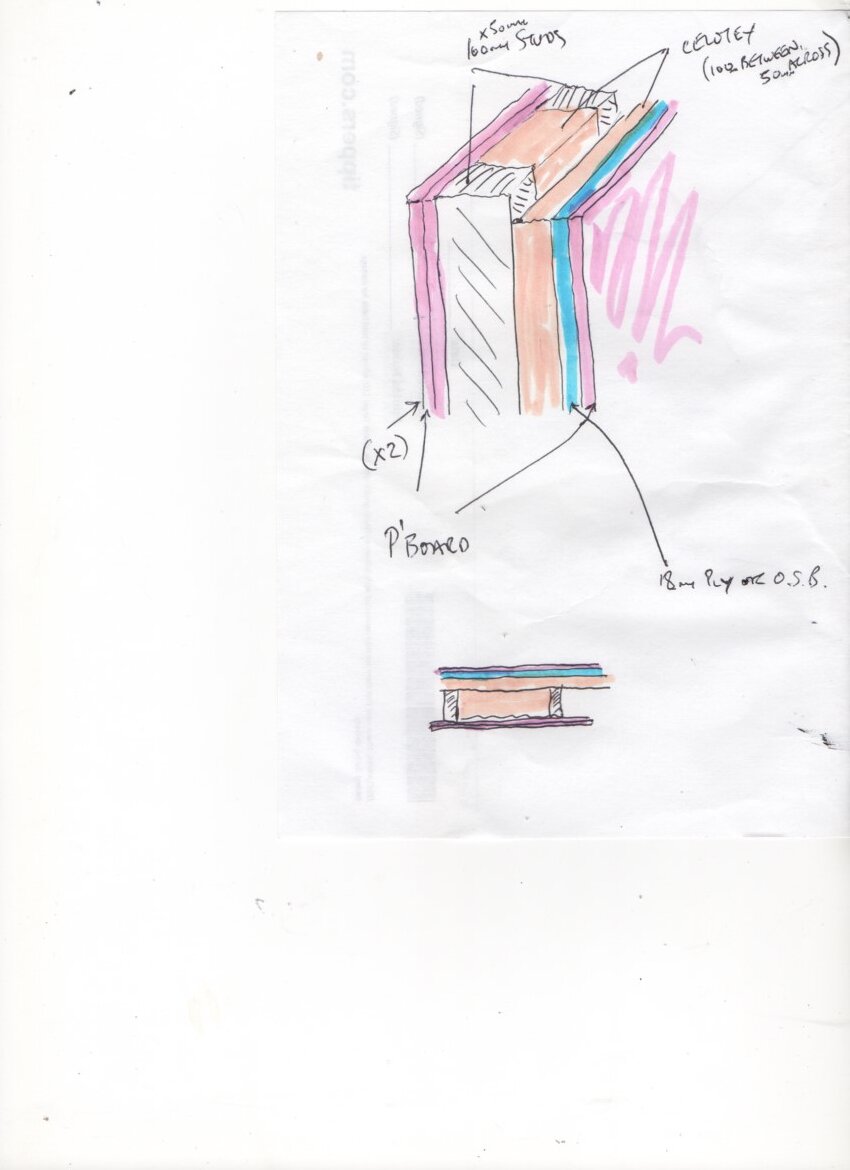
Great advice, Does the 25mm celotex go on the new room (ie warm side) or on the cold existing garage side. I assume the OSB is just to give you something to screw kitchen units etc. to? I also assume the double plasterboard is for fire regs?
 
You have to keep perspective; this is a utility room in a garage. You could even dispense with the concrete entirely and level up in sand and insulation and then put a floating chipboard or ply floor over it (probably in one sheet?) - kingspan will bear the weight of a washing machine without needing a massive whack of concrete self levelled to the point you can play snooker on it
Thanks Robin. My snooker is worse than my concreting! I take your point thoug.
 
Are you installing heating(eg extending the radiator circuit) in the utility room? If yes, why. If no, it doesn't have a "warm side
Don't bother if you are going to concrete or screed on top. You can level up with that.

Build a small retaining wall (off some dpc) up to floor level. Do as much as you can internally before building your stud wall on top. We built our stud wall to this spec' on our last one....

This is all great advice. I like the idea of the small wall to build the stud on, it will also give me something to level the floor to. One thing concerns me about it though. If it is only a 250mm (approx.) high wall and built on a strip of dpc will it not just push over as it's not tied in and has no real weight?
 
If you are mixing the concrete yourself, roughly level it as you go with a rake, make the final couple of batches with sharp sand instead of ballast, you'll effectively have a very thin screed layer on top of the concrete, but if you do it all together it will bond as one. It just means you wont have any stones sticking out of the top of the concrete and you'll have a decent surface to work from.

Invest in a flooring trowel.

You are best building the wall off the existing slab and putting dpc between top of wall and timber. Make your visqueen lap up to meet the dpc strip.
Use engineering bricks.
 
Last edited:
Great advice, simple and clever idea re putting a layer of sharp sand and cement as the final layer (I suppose I could even throw a bit of grano in) which should bond nicely to the wet concrete. I will probably leave it all a few mm below finished level and then there is always a contingency of a few mm of self leveller if my slab isn't good enough for the final flooring.
I had already decided I would go with engineering brick mortered to the existing garage floor and a dpc on top of this underneath my stud wall. All this advice is really helpful as I have a pretty good understanding of what I'm doing but getting advice from others with more experience means I can tackle the job with more confidence!
 
If you want to be really clever you can resin fix some threaded rod down to the floor, and build the wall in line with it. This then gives you something to fix the sole plate of your stud wall onto. The holes in the bricks go over the studs.
 
Love that tip re the resin rods! I was wondering how to fix the sole onto such a small wall without disturbing the bricks. It pulls the wall down onto the bricks rather than the bricks up to the wall..... Nice.
 
Just wondering if the 25mm celotex is necessary. I get that any additional insulation is a bonus and I get the science behind the fact that you are covering cold bridges caused by the studs. I just seems that when about 25% of the wall will be a door (fire door required I assume) through to the garage which is essentially a cold spot in the wall the additional 25mm may be overkill? In a room this size I suppose every inch saved is important.
 

Attachments

  • wall.jpg
    wall.jpg
    68.7 KB · Views: 15

If you need to find a tradesperson to get your job done, please try our local search below, or if you are doing it yourself you can find suppliers local to you.

Select the supplier or trade you require, enter your location to begin your search.


Are you a trade or supplier? You can create your listing free at DIYnot Local

 
Back
Top