Garden pond wiring

Joined
17 Aug 2011
Messages
4
Reaction score
0
Location
Essex
Country
United Kingdom
I have a small to medium sized garden pond. Of which I've done most of the aesthetic work to.

However i'm not too sure about how to go about wiring the pump I've bought to a power supply. The pump is a hozelock cyprio, and is a fountain and waterfall type.

It has a 3m flex, of which I've also bought an additional 7m to run through the garden to the house.

The part i'm not too sure about is, from the pump's adapter, can I not just put on a normal plug on the end of it, and plug it straight into a socket inside of the house?

I've read some things telling me that I should connect this to the mains. but i'm not really sure why? [/b]
 
What voltage is the pump?

All pond pumps I've had have been mains voltage (230v) and had a 10 metre flex.

Your saying that yours has a 3 metre flex (and it has an "adaptor") makes me think its extra low voltage (12 volts) and therefore this length shouldnt be extended due to voltage drop. Instead you should use an adaptable box in the garden and plug it into a socket/extension lead in there.

You dont need to wire it into the mains. You shouldnt if it has a transformer for a plug (big black thing like a big phone charger) as you'd be putting 230 volts into a 12 volt pump!
 
It has a 3m flex, of which I've also bought an additional 7m to run through the garden to the house.
How do you plan to route 10m of flex through the garden, to the house, safely?

How do you plan to join the two lengths of flex together safely?

Have you considered whether voltage drop will be an issue if you extend the supply cable from 3m to 10m?

Are you aware of the legal requirements for outside electrical installations?


The part i'm not too sure about is, from the pump's adapter, can I not just put on a normal plug on the end of it, and plug it straight into a socket inside of the house?
If that "adapter" is an ELV power supply then if you do swap it for a normal plug your pump will have a very short, but spectacular, life. You might like to video it for YouTube.


I've read some things telling me that I should connect this to the mains. but i'm not really sure why?
If you don't, how will you power it? Generator? Batteries and an inverter?
 
Well, on the box it says that the pump size is 1500LV, and that it has a 24v low voltage system. which i'm not sure what that means.

The wiring from the pump then goes into the transformer (big black box). On the transformer itself it has written on it 'PRI.:230v', and 'SEC.:24v' which i'm guessing is for primary and secondary coils in the transformer.

Coming out from the transformer is another two wires, brown and blue, wrapped in black wire, for live and neutral, however these are bare wires. Which made me question in the first place, do i have to connect it straight into the mains, or can i just put a normal 13amp fuse plug on the end of it and just plug it into a socket?

The extra flex's i bought is an extension wire from Hozelock themselves, which comes with male and female connectors so thats all easy to connect with the pump. I was then going to wrap insulation tape over the connection which will be in the garden. I plan to bury all the wiring in the garden in soil at about 20 inches under, running alongside a fence, and then bring it into the house via a wall. I read some people using armored cabling, is this necessary for the job i'm doing?

I also read somewhere, that i would have to notify the council about the job i'm doing, but was not too sure as i thought this was just a small minor job. Anyone know where I can find more information about this?[/quote]
 
Well, on the box it says that the pump size is 1500LV, and that it has a 24v low voltage system. which i'm not sure what that means.
http://www.diynot.com/wiki/electrics:voltage-bands


do i have to connect it straight into the mains, or can i just put a normal 13amp fuse plug on the end of it and just plug it into a socket?
When you say "connect it straight into the mains", what do you mean?

TBH, I think you have too shaky a grasp of electrical installation work to be doing this sort of thing.

I was then going to wrap insulation tape over the connection which will be in the garden.
Insulation tape will not keep water out. If the connector is not itself waterproof then it'll need to go into a waterproof enclosure.

And if you want to bury that it will be even harder to keep water out.


I plan to bury all the wiring in the garden in soil at about 20 inches under, running alongside a fence, and then bring it into the house via a wall. I read some people using armored cabling, is this necessary for the job i'm doing?
It's absolutely essential - you must not bury ordinary flex.

 
What the hell was wrong with 230 volt pumps? They are sealed for life, your fish wont die of electric shock! I dont know why they have to pollute the market with this tat.

Anyway, with your 24 volt pump and overpriced extension cable, where they join you should put them in an adaptable box and use cable entry glands.

http://www.tlc-direct.co.uk/Products/LB9025.html
with
http://www.tlc-direct.co.uk/Products/EK251B.html

Would be ok. But if you want to bury this it should be filled with sealing compound (like your pump is).

If the plug looks like this:
psu_unreg_500ma_postip_side.jpg

You MUST use this and not cut it off.

If it looks like this:
TLPT13.JPG

You may cut it off and wire the flex into a fused spur. But I'd be happier with you just plugging it in. Pump suppliers have no concept of cables being routed through walls when they supply this extra low voltage stuff unfortunately.
 
OK, so you have an in-line transformer with an incoming flex that wasn't supplied pre-terminated into a 13A plug. Your suggestion of fitting a 13A plug to the supply side sounds fine, and pop in a 3A fuse. Keep the transformer indoors and run the 24v supply outside via the extension you purchased and the 3m flex already fitted to the pump.

Technically speaking, you still shouldn't be burying standard unarmoured flex, even if it is only 24v, but it certainly won't be dangerous and is a far better option than a DIY install of 230v wiring outdoors.
 
To 'ban-all-sheds'; by straight into the mains, i meant, because the end of the transformer is just given as bare wires (the live and neutral), does it mean that i have to manually wire those into a socket.
you said not to bury the wire in the ground due to water, but is there anything else i could enclose the wire in and then bury it? plastic tubing of any kind?

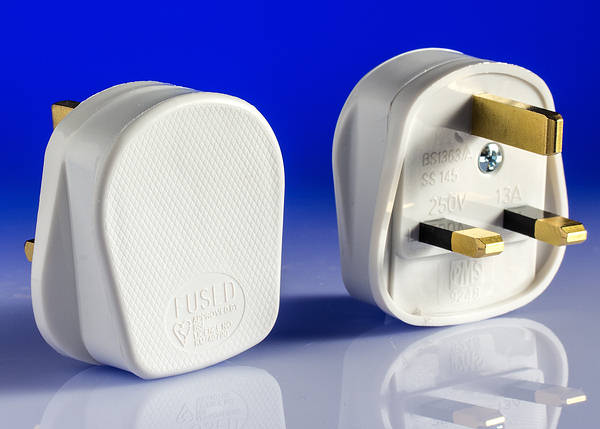
To Steve; the transformer actually came with the live and neutral wires bare, and has no socket currently attached onto it. However i bought the plug in the second picture, which i planned to connect to the transformer.

To electronicsuk; I will be keeping the transformer indoors, and will take your advice on fitting a 3amp fuse
 
To 'ban-all-sheds'; by straight into the mains, i meant, because the end of the transformer is just given as bare wires (the live and neutral), does it mean that i have to manually wire those into a socket.
NO!


If you did that there would be no overcurrent protection for the cable other than the fuse/MCB in your CU, and that will be far too high a rating.

I'm not trying to put you down, but honestly you really don't know enough about the fundamentals of electrical installation work to be doing any yet.

No reason to think you can't learn, but learn you must, and until then the only advice you'll get from me is to please call an electrician.

I know they sell this stuff in DIY stores, but they also sell gas boilers, and everything you would need to build an entire house.

Just because they sell these things, does that mean that you are safe to do gas installation work, or design and build a house that won't collapse?

Others here may well think it's OK to encourage you to insert wire A into hole B even though they know you don't have a genuine understanding of why, and how it works, but I think they are very mistaken, and do not have your best interests at heart.

Please call an electrician.
 

If you need to find a tradesperson to get your job done, please try our local search below, or if you are doing it yourself you can find suppliers local to you.

Select the supplier or trade you require, enter your location to begin your search.


Are you a trade or supplier? You can create your listing free at DIYnot Local

 
Back
Top