Indeed - but as bernard has said, in the (I would think incredibly improbable) event of their being negligible load on the whole of the local network, one PV installation could make a second one think that a normal grid supply was still there, and vice versa, such that neither would shut down?As far as I am aware, under or over voltage will cause a shut-down ...

You are using an out of date browser. It may not display this or other websites correctly.
You should upgrade or use an alternative browser.
You should upgrade or use an alternative browser.
Has plug and play solar now been passed, I see adverts?
- Thread starter ericmark
- Start date

- Joined
- 27 Jan 2008
- Messages
- 29,563
- Reaction score
- 3,641
- Location
- Llanfair Caereinion, Nr Welshpool
- Country

I think we would need a rotating load, like a grinding wheel running to smooth the supply enough for that to happen, but clearly we could have a rotating load which could do that. But still nothing to do with being plug in or installed.vice versa, such that neither would shut down?
Well, I suppose it depends on the relative 'shut-down speeds' of the two or more inverters - but, as you say, the same would apply to any PV installations, whether 'plugged in' or not.I think we would need a rotating load, like a grinding wheel running to smooth the supply enough for that to happen, but clearly we could have a rotating load which could do that. But still nothing to do with being plug in or installed.
- Joined
- 27 Jan 2008
- Messages
- 29,563
- Reaction score
- 3,641
- Location
- Llanfair Caereinion, Nr Welshpool
- Country
The worry has been the use of units which would not be acceptable to apply for G98. But law change or not, that can still happen, and with the law change there would be less reason for hiding what has been done.Well, I suppose it depends on the relative 'shut-down speeds' of the two or more inverters - but, as you say, the same would apply to any PV installations, whether 'plugged in' or not.
What it seems is the real problem, has nothing to do with electrics. It is people hanging them off balconies which are not strong enough, and using batteries and solar without declaring to insurance, or without landlord consent.
- Joined
- 27 Jan 2008
- Messages
- 29,563
- Reaction score
- 3,641
- Location
- Llanfair Caereinion, Nr Welshpool
- Country
I keep seeing reports about balcony solar going to be permitted, one I read said G98 would still need applying for? That does not make sense, the whole idea is plug and play is portable, and tenants can take it with them home to home.
It would be like saying the EV granny charger can only be used in homes registered for their use.
It would be like saying the EV granny charger can only be used in homes registered for their use.

In worst case where there is no load on the network then all plug in generators will see the 230 V on the nework and will not shut down.
There would never be a situation of no load, to pull the voltage down. Even during the night hours, there is lots of offpeak load, but then there would be no solar. All an engineer needs do is check for volts, and if none, the solar cannot restart producing - and so it should be safe.
Indeed - but as bernard has said, in the (I would think incredibly improbable) event of their being negligible load on the whole of the local network, one PV installation could make a second one think that a normal grid supply was still there, and vice versa, such that neither would shut down?
When not tied to grid frequency, the output could be deliberately designed to drift high or low, so it is out of bounds, and switch off.
- Joined
- 27 Jan 2008
- Messages
- 29,563
- Reaction score
- 3,641
- Location
- Llanfair Caereinion, Nr Welshpool
- Country
When not tied to grid frequency, the output could be deliberately designed to drift high or low, so it is out of bounds, and switch off.
I think we would need a rotating load, like a grinding wheel running to smooth the supply enough for that to happen, but clearly we could have a rotating load which could do that. But still nothing to do with being plug in or installed.
So what we are saying is, there needs to be a standard which must be complied with, and it does not matter if plugged in or hard-wired.Well, I suppose it depends on the relative 'shut-down speeds' of the two or more inverters - but, as you say, the same would apply to any PV installations, whether 'plugged in' or not.
So an installed inverter has dip switch options
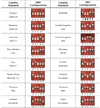 where it is set for the country where it is being used. This is why the installer has to be trained, and licensed in some way. So to be used in the UK, we will need some sign that they are configured for UK use, be it a UKCA label or some British standard, something will need to be written on the unit to show safe for use in the UK. And I would hope the options can't be set by the user, or someone is sure to fiddle with them.
In the early days of solar, we saw this, mainly with the rent a roof system, if the inverter is designed to cut out at 253 volts, and by altering the setting you can make it trip at 254 volts, then you can ensure everyone else solar inverter trips before yours, so you get more solar than your neighbours.
I have even seen a video of someone using an auto transformer to kid the system that the voltage is lower than it is. And this guy should have known better, he has been very quick in the past to slate off other peoples work, then he no only did this, but made a YouTube video about doing it.
And then the DNO actually paid for the single phase supply to be swapped to three-phase, as they had accepted the G99 in error, I would have expected to see the guy's licence revoked even if the problem was due to a DNO error, two wrongs do not make a right.
So this has happened with electricians, what will happen when Joe Public gets involved? The only way is for the inverter to be a sealed unit, that the seller has signed to say it complies. And since we as yet don't know what rules it must comply with, no supplier can build up a stock, as we simply don't know what will be permitted.
With early solar, the output was not monitored, it was assumed a percentage of the generation would be exported, and they were paid on that assumption. Then we go things like the iboost+ which were designed to let the householder use a larger percentage of the solar themselves.
The question has to be, will we also see this with plug and play solar, some device marketed to get around the design parameters? As to how we will PAT test these devices, not sure, it is in service electrical equipment so should be inspected and tested in any rented property. But as it stands, only the landlord is forced to inspect and test, items owned by the tenant don't by law require inspecting and testing.
So as a tenant who has jumped the gun, and bought plug and play solar panels today, which will likely even if they comply with the electrical requirements, will not have any insignia to show they comply, will they still use the units anyway? I would think they will, as it stands, if next door gets plug and play, the supplier will see at some point some export, so they will know that since no G98 or G99 issued, they are breaking the rules, solar panels shown on Google Earth may not be grid tied in and illegal way, so that does not help, so as it stands, I could fit plug and play, and since already have a G99, no one without visiting the home could tell if I have broken any rules or laws.
Since whole idea of plug and play is tenants can use them and take them home to home, the whole idea of applying for a G98 goes out of the window, if that is required, they are not plug and play.

Overhead supply to 4 properties was cut when the cable was snapped by a fallen tree. The "island" remained energised until engineers shut down the "plug in" solar micro generators.There would never be a situation of no load
Overhead supply to 4 properties was cut when the cable was snapped by a fallen tree. The "island" remained energised until engineers shut down the "plug in" solar micro generators.
Then it didn't meet basic requirements, in regard to detecting loss of sync,
I don't know whether it can/does happen in practice, but I think bernard's suggestion was that if two or more installations with local generation remain connected together (but none of them connected to the grid), then its possible that the generators may remined synched 'to each other' - but, as I said, I think that could probably only happen if there were appreciable differences in the 'shut down speeds' of the two or more inverters.Then it didn't meet basic requirements, in regard to detecting loss of sync,
- Joined
- 27 Jan 2008
- Messages
- 29,563
- Reaction score
- 3,641
- Location
- Llanfair Caereinion, Nr Welshpool
- Country
One hopes the new regulations will state must comply with, and some BS number.
That may well be the case, but to what extent it will be useful (or even 'adequate') would depend upon how sensible the "BS number" was in terms of what it had to sayOne hopes the new regulations will state must comply with, and some BS number.

- Joined
- 27 Jan 2008
- Messages
- 29,563
- Reaction score
- 3,641
- Location
- Llanfair Caereinion, Nr Welshpool
- Country
I am sure Edward Miliband did not make the announcement without consulting some technical experts, no one would surely be that daft, so I am sure the criteria is already written, but with the IET we get advanced warning of what is likely to be in the new edition of BS 7671, but new with plug and play seems to have been kept close to the chest, so as it stands we have no idea what will be required.
The problem with Chinese whispers is they can be wrong. We hear it will have a limit of 800 watts, for example, but if 800 watts with a 16 amp socket, I would have expected 650 watts with a 13 amp socket.
Everyone seems to be jumping onto the bang wagon
So we read here what it all means but there is no reference to what payment will or will not be received, for export, I expect BG will do what they did with me, get the export from my panels, but not pay for it, that must be a good deal for them!
The problem with Chinese whispers is they can be wrong. We hear it will have a limit of 800 watts, for example, but if 800 watts with a 16 amp socket, I would have expected 650 watts with a 13 amp socket.
Everyone seems to be jumping onto the bang wagon
well they failed to get my panels up and running in 20 months, I only got paid for export after moving to Octopus.At British Gas, we’re already building the compatible tariffs and smart services that make this effortless. We’re helping customers use more of their own clean solar power, store it intelligently, and cut their grid use at the most expensive times.
So we read here what it all means but there is no reference to what payment will or will not be received, for export, I expect BG will do what they did with me, get the export from my panels, but not pay for it, that must be a good deal for them!
- Joined
- 27 Jan 2008
- Messages
- 29,563
- Reaction score
- 3,641
- Location
- Llanfair Caereinion, Nr Welshpool
- Country
It seems I am not the only one to question if the law has now been changed due to reading adverts
seems at least one advent has been withdrawn.

DIYnot Local
Staff member
If you need to find a tradesperson to get your job done, please try our local search below, or if you are doing it yourself you can find suppliers local to you.
Select the supplier or trade you require, enter your location to begin your search.
Please select a service and enter a location to continue...
Are you a trade or supplier? You can create your listing free at DIYnot Local
Similar threads

- Replies
- 1
- Views
- 707

- Replies
- 10
- Views
- 489