Installing generator transfer switch

For emergancy light I have one of these,

1794311889930.png
I really need some more, but they light for 4 hours after a power cut, and can be used to find other touches etc.

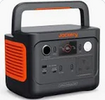
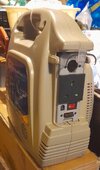
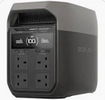
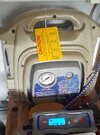
I inherited this Battery pack and charger.jpg the inverter is only 300 watt, so of limited use, but the 15 Ah lead acid battery will power an up-lighter for quite some time, today we have these 1794312169140.pngwhich do basic the same thing, it is called EPS rather than UPS (uninterruptible power supply) as its change over time is slightly longer, still less than a second.
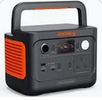
Due to weight, in the main limited to around 3 kW in the portable form as shown, you can get a Tesla power wall etc, at 10 kWh, but they can't be put in the boot of your car, as to if 300 watt or 3 kW is required is down to what you want to run, the cheap freezers has a high start inrush, maybe 6 amps (1.4 kW) where the more expensive inverter control models may be around 200 watt, less than 1 amp when in defrost mode, rest of the time less than 100 watts.

I have solar panels, so my inverter is 5 kW and part of the solar install, with 6.4 kWh of battery, which will stop discharging at 10% so always 640 Wh how much more depends on time of day I get a power cut.

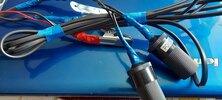
The old 12 volt to 230 inverter is only 150 watt, I made up a lead, Emergancy power kit.jpg so I can use old car batteries to power anything using a cig lighter plug, hope I will never need it, but I have two old 90 Ah batteries which would keep me going some time.
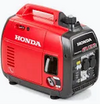
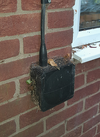
The inverter generator 1794313086620.pngreasonable sound level, but needs to be outside, so first consideration is how to get power in the house, 1794313574097.png1794313630650.png I have the same problem, even with an inverter, can't get the cables through the house internally, so done external. Under that window I have a box for mail, could put a generator or battery in a box like that, as it stands I can manage for around a day with no power in winter, and weeks in summer due to solar. I do have an open grate fire, which could be opened up, but having the central heating still working seems a better idea, which I have until battery goes flat.
But the main point is how far do you go just in case? Window cracked open with an extension lead into the house is likely good enough, with generator sitting outside. I have a gas camping stove, and one would hope any loss of power will not be for long.
 
I was about to write a few lines explaining how to identify AI generated posts, but I recall that this apparently will 'tip off' the poster. To be fair all the points about are quite valid.
 
Except I don’t think anyone has mentioned a lead with plugs on both ends. All I can remember is a plug wired to an appropriate transfer switch.
 
@JasperW Please stop immediately and read this carefully before purchasing or plugging anything in. What you have described contains multiple critical life-safety hazards and misunderstandings of UK electrical regulations (BS 7671):...
Thanks, this is exactly the sort of information I was looking for!

1. What you are suggesting as a connector is what I was assuming I needed but didn't know what to ask for.

2. Yes, this makes complete sense and has taught me something (quite a lot actually)!

3. Point 2 now explains why the earthing rod is so important.

4. I would never try installing this myself! But I do want to understand why things need to be done in a certain way so when I do get an electrician to quote for the work I understand what I am paying for and can have a sensible conversation about the work.

In the mean time I'll just go with the original plan to run an extension lead into the house and power lamps and the fridge freezer off that.
 
Except I don’t think anyone has mentioned a lead with plugs on both ends. All I can remember is a plug wired to an appropriate transfer switch.
Yes, that is correct, but it still looks incredibly "Wrong" to my eyes even if it is functionally behaving just like an Appliance Inlet
 
Ref post #17 by Homesecurity I had not considered that you meant the "Widow Maker" type of circuit.
Perhaps you did mean this.
I do not know.

Homesecurities caution is indeed correct.
Any lead with a plug each end is potentially fatal for mains voltages.
Any lead with an electrical potential (say on the output terminals of a generator or other source) of mains electricity is also potentially fatal if it has a plug on the end too.
I do hope you are not considering having any lead anywhere with a voltage approaching or exceeding 50 volts anywhere if it has a plug on it. In normal dry conditions - in other conditions such as bthrooms, swimming pools and outside then half that voltage to 25v max , better still do not do it anyway.
Anything with any voltage on it should not have a plug on the end.
 
It seems it is OK if on a solar panel? I have seen the widow maker used a lot in Turkey, and the deaths don't seem to be that high, the problem is we are educated that if dangerous it would not be allowed, so we are not as careful with electric as those living in Turkey.
 
It seems it is OK if on a solar panel?
The only reason that is allowed; is that the solar inverter must comply with the specification that it switches off in less time than you could touch the pins, if you pull the plug out. That won't happen with any generator you can buy at the moment.
 
The solar inverter is classed as a generator, I personally don't think it is safe to allow reverse flow, not only due to live pins, but also damaging safety equipment like RCDs, but the government has allowed it.
 
The solar inverter is classed as a generator,
Calling it that does not change the fact that the inverter must meet EN 50549 and EREC G98, and disconnect in 1 sec, which a generator doesn't (and let's face it, couldn't).

I would agree that the new rules were made by politicians who didn't really understand electrical safety. They could have enforced a much better connection system, but their hand was really forced by this already becoming the norm in the EU.
 
Calling it that does not change the fact that the inverter must meet EN 50549 and EREC G98, and disconnect in 1 sec, which a generator doesn't (and let's face it, couldn't).

An inverter generator could, if so designed.
 
I asked AI (Gemini) about the need to upgrade my 1980s consumer unit as part of connecting a generator. What do people think of its answer?

" My electrics was considered safe when it was installed and works fine now. I do not want to spend the extra money at this stage to upgrade it. Does adding a generator make it less safe than it was before"


Yes—running your 1980s circuits on a 3.3 kW generator without RCD protection is significantly less safe than running them on the mains grid, even though your existing fuse box works fine day-to-day.

The difference comes down to how much fault current the power source can push through a fault to trip your old breakers.

Why Your 1980s MCBs Work on Mains Power, But Fail on a Generator​

  • On Mains Power (High Fault Current): The street transformer can deliver hundreds or thousands of amps in a split second during an earth fault. A standard 32A circuit breaker (MCB) needs 96A to 160A to trip instantaneously. The grid easily supplies that surge, cutting power in milliseconds.
  • On Your 3.3 kW Generator (Low Fault Current): Your generator tops out at roughly 14 Amps. If a live wire touches the metal casing of your boiler or fridge while on generator power, the generator cannot produce enough current to trip a 16A or 32A breaker. Instead of tripping, the generator simply bogs down—leaving the metal appliance casing continuously live at a lethal voltage.
Because a 30mA RCD trips on tiny leakage currents (0.03 Amps) rather than massive overloads, it is the only device sensitive enough to cut power during a fault on a small portable generator.
 
Last edited:
An inverter generator could, if so designed.
The whole point about a generator that turns off if it doesn't see any mains present, is that it can't be used as a backup generator.

'Plug-in solar' can't. A basic generator such as Eric was describing (that doesn't turn off in the absence of mains) can, by definition.

If you look again you will see that I was addressing Eric's specific point that he didn't understand why plug-in solar was allowed, but widow makers were generally frowned upon.
 
Last edited:
If I use a battery pack 1794578211047.pngBack-up-power.jpg with only one output, it is basic an IT supply, but like the shaver socket, with only one item, reasonably safe, both shown are 300 watt units.

As the units get larger 1794578463872.pngthen we have to consider how to earth, and if RCDs are required.

We have to remember whole reason for a back-up supply is because there is some thing wrong with the grid supply, so we can't use the PME/TN-C-S earth, and if we sink an earth rod connected to the PME/TN-C-S earth, with a loss of PEN we can be looking at a high current, with no overload protection.

I found my own earth rod had a faulty clamp on it, and had to change it, but it is under a paving slab, so not easy to inspect, and one would need expensive equipment to test.

With non rental property we should get an EICR done every 10 years, (rental 5 years) but when I went to work on my dad's house, I could not find a single sign that the property had ever been earthed, it clearly had been, as at around 12 years old I had blown a fuse with a live to earth fault, playing at trying to repair a tape recorder.

A new consumer unit had been fitted, so maybe some thing done then, but no installation certificate issued, and electrician had been found by builder fitting wet room, who in turn was dismissed, so did not even know the electricians name.

But it seems likely original earth was the water supply, and when this was replaced with plastic, the house earth was lost, so likely 40 years without an earth, or for that matter any RCD.

Only earth found was put in by GPO for the party line telephone.

Not the only time found a home without an earth, also found homes where the ELCB-v was never going to trip, as earth short circuited.

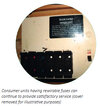
So we have two things, one clearly one can get away without an earth for an extended time, and an old fuse box fuse-box-1.jpgmay have been OK when fitted, but today it could be a death trap if not tested, to get a shock in the main we need two or more faults, so because it has been OK for 40 years, does not mean fault one has not already happened, and you only need fault two to get a shock.

The debate is how long of a power outage are we planning for? If 24 hours or less, torches and a battery pack to run central heating is likely enough, the main point is to ensure the central heating is plugged in, and is not using a FCU which would stop you using a portable power unit.

I would also test, with my own central heating I found the Nest Gen 3 thermostat was in the wrong place, if I had used a USB cradle and moved the thermostat, then my heating would have stopped in a power cut, as no power for the thermostat, such an easy error to make.
 
I asked AI (Gemini) about the need to upgrade my 1980s consumer unit as part of connecting a generator. What do people think of its answer?

Essentially correct that the generator would have more trouble blowing a fuse (or circuit breaker, what do you actually have?) than the mains in the event of a fault.

I would challenge its statement that "your existing fuse box works fine day-to-day" - we don't care how well it works "day-to-day", we care about how well it works on the rare occasion when something goes wrong. Your non-RCD installation is (probably?) still legal but it's overdue for replacement.

As I said before, getting RCD protection should be a much higher priority for you than worrying about a generator.
 

If you need to find a tradesperson to get your job done, please try our local search below, or if you are doing it yourself you can find suppliers local to you.

Select the supplier or trade you require, enter your location to begin your search.


Are you a trade or supplier? You can create your listing free at DIYnot Local

 
Back
Top