I don't think there is any mix-up. To quote Mr Googe ...I imagine you have mixed that one up

"I refuse to join any club that would have me as a member."

I don't think there is any mix-up. To quote Mr Googe ...I imagine you have mixed that one up
"I refuse to join any club that would have me as a member."

Yes indeed - In my enthusiasm I left caps lock on too - sorryI imagine you have mixed that one up


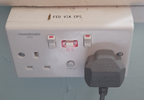 This one is clearly marked fed via EPS, so if items should not be plugged into a UPS, or EPS supply, then yes the instructions should say so.
The towns christmas lighting was controlled by din rail timers at various pointsYEP
I have a permanently running timer for my Christmas lights and like Eric the instructions are tucked in adjacent. However they cover a number of different timers in the range and list my model... however they are so idiot proof that some idiot forgot to include my particular models details which are subtly different to those shown. The online instructions were always identical but no longer exist on mfrs site.
Without the instructions I'd stand no chance


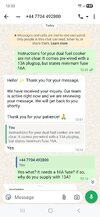
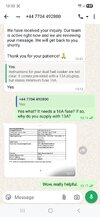
Presumably that refers to circuit protection ?I had install a dual fuel gas cooker today. The instructions are clear as mud. It comes pre-wired with a 13A plug, but states a minimum fuse of 16A - 25A. I'm guessing that is for being hard wired, but why muddy the waters?
Could be. Here is what I have had back via WhatsApp messaging with them. I also meant to provide a link above, but here it is: FerrePresumably that refers to circuit protection ?
Not sure why they need to specify anything on a socket circuit
They're referring to the circuit protection but it's pretty much irrelevant on a socket circuit all being wellCould be. Here is what I have had back via WhatsApp messaging with them. I also meant to provide a link above, but here it is: Ferre
Gas hob electric oven?I remember a multi-fuel boiler, it was German reparations after first world war, would work on coke ovens gas, blast furnace gas, oil or coal, although it was hardly ever used with coal. And it powered a 12 MW generator which at the time we thought was big, I have since worked on 750 MW so really quite small.
But I just wonder what the duel fuels are? North Sea gas and Calor gas? I was trying to work out how one could switch between electric and gas, and could not really see how it could be done.
Gas and electric seems worlds apart. I suppose it allows it to be used when the electric supply is not good enough?
Or is the dual fuel coke and gas, or something like that. Or is it simply the gas is controlled by electric.
Or is it just the oven, I have seen a gas oven with a microwave built in. Many years ago, around 1981.
We have only used gas in a caravan, which put us off gas cookers for life, super slow, hard to control, and made the whole caravan like an oven. Give me an induction hob and electric oven any days, more controllable and safer.
It's not for being"hard wired" as its supplied with a plug so should be fused at 13 amp
Still not clearly written though. I presumed as much, customer wanted it checking for belt and braces, so a spark is attendingThey're referring to the circuit protection but it's pretty much irrelevant on a socket circuit all being well
Exactly thisGas hob electric oven?

If you need to find a tradesperson to get your job done, please try our local search below, or if you are doing it yourself you can find suppliers local to you.
Select the supplier or trade you require, enter your location to begin your search.
Are you a trade or supplier? You can create your listing free at DIYnot Local