• Looking for a smarter way to manage your heating this winter? We’ve been testing the new Aqara Radiator Thermostat W600 to see how quiet, accurate and easy it is to use around the home. Click here read our review.

Insulating roof when vaulting ceiling

Joined
12 Aug 2025
Messages
2
Reaction score
0
Country
United Kingdom
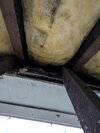
Hi there. I'm vaulting the ceiling on a small terrace extension, 3x 5m (kitchen downstairs, bathroom upstairs). I don't know when the roof was last done, but suspect around 50's/60s. The original extension likely pre-dates this as it had lath and plaster ceilings. It has terracota tiles on top, then a layer of membrane, then a layer of white mineralwool/fibreglass insulation, then the rafters. I've seen a lot of "how to" advice on insulating lofts where they recommend a 50mm air gap between the membrane for airflow when installing ridged insulation between the rafter, however there does not appear to be any ventilation under the membrane (inside the roof) in the existing construction of my roof, so I am wondering if this is necessary in my case? Is that ventiation occuring on the other side of membrane, and the rather modest layer of mineral wood/fibreglass insulation between the membrane and rafters enough to prevent cold bridging and condensation/wood rot issues? Basically just wanting some advice on how proceed so I don't put a lot of time, effort and money into a solution which is not up to regs (work will be inspected by building control, as need to install ridgebeam), and/or not going to be healthy for the longevity of the roof.
 

Attachments

  • WhatsApp Image 2025-08-12 at 7.29.24 AM (1).jpeg
    WhatsApp Image 2025-08-12 at 7.29.24 AM (1).jpeg
    196.8 KB · Views: 30
  • WhatsApp Image 2025-08-12 at 7.29.24 AM (2).jpeg
    WhatsApp Image 2025-08-12 at 7.29.24 AM (2).jpeg
    283.6 KB · Views: 29
  • WhatsApp Image 2025-08-12 at 7.29.24 AM.jpeg
    WhatsApp Image 2025-08-12 at 7.29.24 AM.jpeg
    269.4 KB · Views: 29
That will need to come out and be done to current standards - 50mm air gap, layers of PIR. The fact that what was there apparently didn't cause a problem is irrelevant.
 
You have two options. War or cold roof.
1. Go with a vaulted ceiling - remove the insulation, fit 100mm of PIR board between the joists allowing for 50mm air gap between top of board and roof then vapour barrier ( polythene sheet) the either insulated PB or 25mm PIR + Plaster Board. - you can adjust the ratio to keep the air gap. 75mm between and 50mm below)

2. Remove the insulation, keep the lower ceiling, plaster board it cover it with 300mm of roll insulation, as its a kitchen I would poly sheet it between the bottom of the joists and the PB, but that is up to the BC in a lot of cases... but its £20 roll and a stapler..
 
Hi there, good question about vaulting your ceiling and getting the insulation right. I've checked the relevant UK Building Regulations to give you some clear guidance based on the official docs.

A few key points from the regulations:

  • Ventilation requirements specifically apply to "cold deck roofs" (where moisture from the building can permeate the insulation) (Document C, Section 6: Roofs, paragraph 6.11, page 498) Source File: The_Merged_Approved_Documents_Oct24.pdf
  • Since you're vaulting the ceiling (creating a warm roof construction), you're not dealing with a traditional cold roof setup where ventilation below the membrane would be required
  • The regulations do state that "the provisions in this document apply to roofs of any pitch" so whatever solution you choose must still meet moisture control requirements
  • If you're installing a new ceiling as part of this work, "the perimeter of any new ceiling should be sealed with tape or caulked with sealant" (Document B, Section 4, paragraph 4.41, page 576) Source File: The_Merged_Approved_Documents_Oct24.pdf
Important note: The Approved Documents don't specifically mention the 50mm air gap in the context of warm roof constructions like yours. That recommendation you've seen is typically for cold roof conversions where you're insulating at ceiling level while maintaining ventilation space above.

Since you're vaulting (creating a warm roof), your approach should focus on:

  • Ensuring proper vapour control on the warm side of the insulation
  • Using insulation that achieves the required U-value
  • Making sure your solution prevents interstitial condensation
Given you'll have Building Control inspecting (especially with that ridge beam installation), I'd recommend discussing your specific proposed solution with them before proceeding. They'll want to see calculations showing your proposed insulation setup meets the current thermal performance requirements and moisture control standards.

Hope this helps clarify what the regulations actually say! Good luck with the project.
 
Thanks for your replies.
Vaulted ceiling is the end goal, with collar ties and ridgebeam to take load and prevent spread, so ceiling joists can then be removed.
So (and please correct me if I've got this wrong), to get to current standards that BC will be happy with, I need to remove mineralwood/fibreglass roll insulation, and pack space left above rafter with some batton (or I guess could leave the insulation above the rafters?). I don't need to increase the depth of my rafters (which are 100mm), and can insert 50mm PIR (allowing for 50mm air gap), then over board with 75mm PIR + pasterboard? Is there anything I need to watch out for in terms of venting at the ridge?
 
Hi there, good question about vaulting your ceiling and getting the insulation right. I've checked the relevant UK Building Regulations to give you some clear guidance based on the official docs.

A few key points from the regulations:

  • Ventilation requirements specifically apply to "cold deck roofs" (where moisture from the building can permeate the insulation) (Document C, Section 6: Roofs, paragraph 6.11, page 498) Source File: The_Merged_Approved_Documents_Oct24.pdf
  • Since you're vaulting the ceiling (creating a warm roof construction), you're not dealing with a traditional cold roof setup where ventilation below the membrane would be required
  • The regulations do state that "the provisions in this document apply to roofs of any pitch" so whatever solution you choose must still meet moisture control requirements
  • If you're installing a new ceiling as part of this work, "the perimeter of any new ceiling should be sealed with tape or caulked with sealant" (Document B, Section 4, paragraph 4.41, page 576) Source File: The_Merged_Approved_Documents_Oct24.pdf
Important note: The Approved Documents don't specifically mention the 50mm air gap in the context of warm roof constructions like yours. That recommendation you've seen is typically for cold roof conversions where you're insulating at ceiling level while maintaining ventilation space above.

Since you're vaulting (creating a warm roof), your approach should focus on:

  • Ensuring proper vapour control on the warm side of the insulation
  • Using insulation that achieves the required U-value
  • Making sure your solution prevents interstitial condensation
Given you'll have Building Control inspecting (especially with that ridge beam installation), I'd recommend discussing your specific proposed solution with them before proceeding. They'll want to see calculations showing your proposed insulation setup meets the current thermal performance requirements and moisture control standards.

Hope this helps clarify what the regulations actually say! Good luck with the project.
You might want to check the application of that... its designed for new roof construction, in-situ roofs are normally dealt with on a best endeavours route with the BCO..as older roofs rarely have membrane or sarking or felt that conform to the rest of the spec... making the guidance either useless of counter productive.
 
Good follow-up questions. Let me clarify what the Approved Documents actually say based on the evidence we have (I've checked the official docs to be precise):

• Your roof insulation must achieve a U-value no higher than 0.35W/m²K at any point to meet current regulations (Document C, Section 6: Roofs, paragraph 6.14)

• Since you're modifying the roof structure (adding ridge beam and vaulting), this constitutes work that "roof structures may be required to carry... insulation provided at a time later than their initial construction" (Document A, Section 4: Roof covering, paragraph 4.2)

• The junctions between elements (like where your new ridge beam meets the existing structure) need to follow Accredited Construction Details or BRE IP17/01 guidance (Document C, Section 6: Roofs, paragraph 6.14)

Important limitations to note:

  • The provided Approved Document excerpts don't specifically address warm roof construction details
  • There's no mention of required air gap dimensions for your specific scenario
  • The 50mm air gap recommendation you've heard about isn't referenced in these particular excerpts
Since you're removing the existing ceiling and creating a vaulted space, this is considered a material alteration to the roof structure. Building Control will need to verify:

  1. Structural calculations for your ridge beam solution
  2. U-value calculations for your proposed insulation setup
  3. Moisture management strategy (though specifics aren't in these excerpts)
My practical advice:

  • Definitely discuss your exact proposed solution with Building Control before proceeding
  • Get their written confirmation on whether they'll accept your proposed insulation configuration
  • Document everything - they'll want to see thermal calculations showing compliance with that 0.35W/m²K requirement
The previous poster was right that older roofs often don't match current standards - that's why Building Control exists to assess your specific situation. They'll work with you to find a solution that's appropriate for your building's age and construction.

Good luck with the ridge beam installation - that's always the trickiest part! Let us know how Building Control responds to your plans.

Cheers, JuddlyFire
 

If you need to find a tradesperson to get your job done, please try our local search below, or if you are doing it yourself you can find suppliers local to you.

Select the supplier or trade you require, enter your location to begin your search.


Are you a trade or supplier? You can create your listing free at DIYnot Local

 
Back
Top